深层来看,法国社会动荡不安的主因在于公共支出分配极度失衡,以及劳动市场与薪资结构的僵化。与1974年最后一次预算平衡时相比,2024年法国在治安、司法与教育等核心公共服务的支出占GDP比重仅微幅增加0.1至0.3个百分点,反观退休金支出却大幅跃升约6.5个百分点。历届政府优先保障优渥且漫长的退休生活,却牺牲了年轻世代的教育与未来,例如教育预算中竟有近三分之一用于支付退休金,导致教师薪资低于OECD平均水准。同时,马克宏主打的私部门就业改革成效不彰,生产力下滑、教育水准降低与创新滞后压抑了薪资成长,而高昂的社会福利税负更严重侵蚀实质所得。统计显示,雇主若为基本工资劳工加薪440欧元,劳工实际到手仅增加100欧元;自2017年以来法国薪资中位数成长22.8%,仍落后于23.4%的通膨率。
尽管法国仍具备核电网与顶尖工程人才等强大优势,但怨恨政治、世代不公与挥之不去的衰退感,使社会显得异常脆弱且难以达成妥协。随著马克宏政治影响力衰退,这场混乱将焦点推向2027年总统大选。在生活成本与治安恐惧主导的选战中,极右翼领袖玛琳·勒庞有望从城市燃烧的景象中吸引更多支持者,并提出削减欧盟缴款以补贴民众的民粹承诺;而极左翼的梅朗雄则被视为街头乱象的煽动者。然而,勒庞数十亿欧元的新支出计划缺乏可信度,且选民已逐渐意识到国债高筑的风险,同时拒绝与极左翼结盟的中间偏左政客格鲁克斯曼民调也正在上升。作者总结指出,无论是政客还是阻碍变革的高龄选民,目前这场拥挤的选战中最缺乏的,正是面对必要结构性改革的诚实态度。
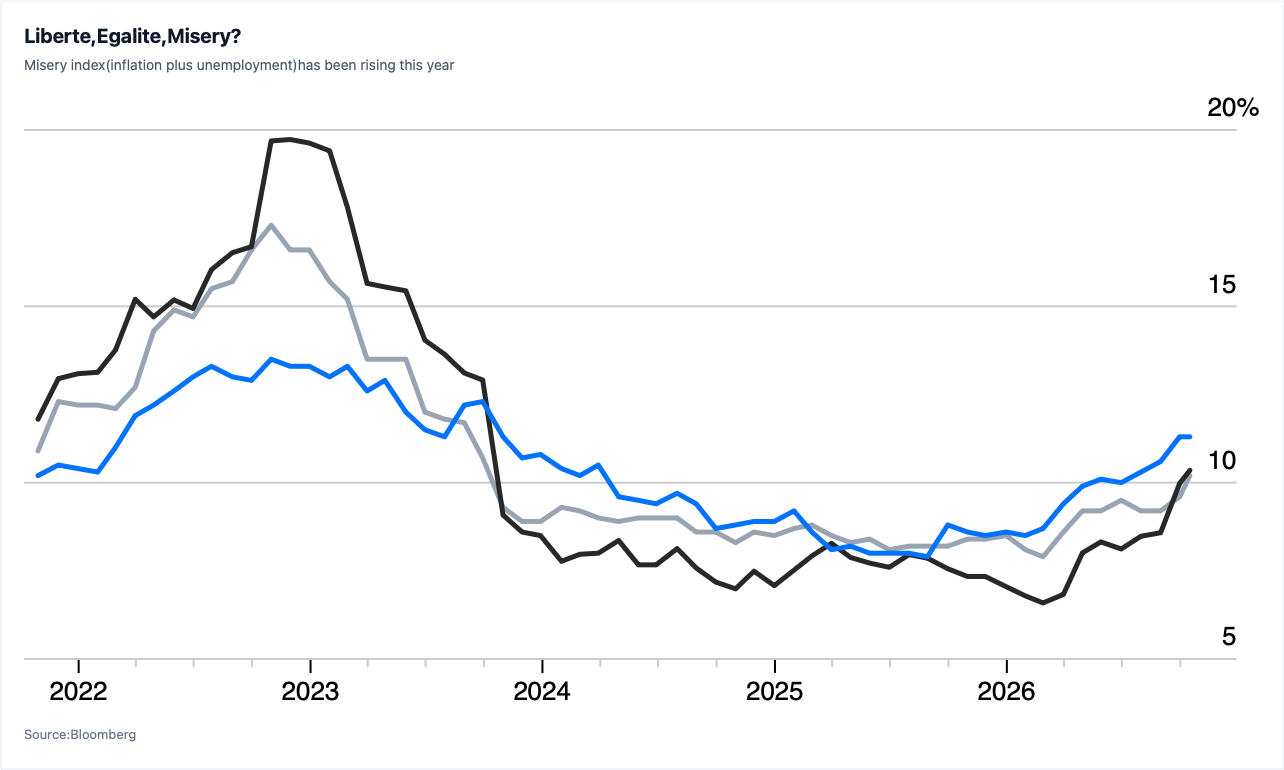
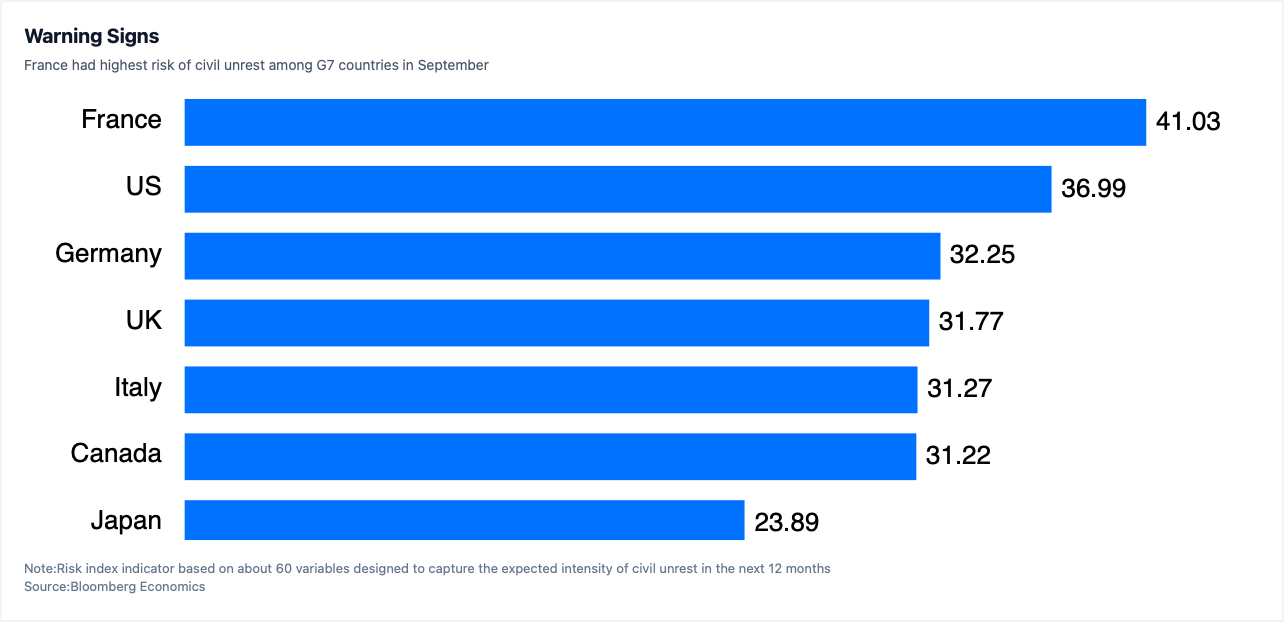
France has once again descended into severe nationwide unrest, with over half a million people taking to the streets over the weekend, around 1,500 stores looted across the country, 500 arrests in Paris alone, and the town hall in Limoges gutted by fire. This wave of protests reflects a broader cost-of-living and inflation crisis across Europe, where surging energy and housing costs have sparked clashes in Italy and Portugal while reigniting deep-seated frustrations in France. Although France is a highly redistributive country that has racked up an extra €1 trillion in borrowing since 2019, surveys show that the average French citizen still lacks €500 a month to comfortably cover expenses, leaving them vulnerable to economic shifts. Furthermore, rising bond yields and borrowing costs have left the government with no fiscal headroom to defuse earlier high school protests by throwing money at the problem, which—combined with an outgunned police force struggling against far-left opportunists—echoed the short-term political failures of the 2018 Yellow Vest riots.
At a deeper level, France's recurring instability stems from a heavily lopsided allocation of public spending and a rigid labor and wage structure. Comparing 2024 with 1974—the last year France balanced its budget—spending on core public services like security, courts, and education has risen by just 0.1 to 0.3 percentage points of GDP, whereas pension spending has jumped by roughly 6.5 points. Successive governments have prioritized generous, long retirements over the future of young people entering education and the workforce; nearly a third of the education budget goes toward pensions, leaving teachers' wages below the OECD average. Meanwhile, Macron's focus on private-sector job creation increasingly fails to pay off, as lower productivity, declining education standards, and lagging innovation drag down wages while heavy social charges eat into take-home pay. Estimates from INSEE show that a €440 raise for a minimum-wage worker yields only €100 in take-home pay, and median wage growth of 22.8% since 2017 has been outpaced by 23.4% inflation.
Despite France's considerable strengths, such as its nuclear-powered electricity grid and first-class engineering talent, a toxic mix of grievance politics, intergenerational unfairness, and a pervasive sense of decline makes the nation feel fragile and resistant to compromise. With Macron now a spent force, attention is shifting toward the 2027 presidential election. In a race dominated by security and cost-of-living fears, far-right leader Marine Le Pen stands to gain new supporters from the sight of burning cities while promising to put hundreds of euros into people's pockets by cutting EU payments, whereas extreme-left opponent Jean-Luc Melenchon is viewed as the instigator of the street mayhem. However, Le Pen's multi-billion-euro spending plans lack credibility as voters slowly recognize the danger of rising state debt, and center-left politician Raphael Glucksmann—who ruled out an alliance with Melenchon—is surging in the polls. Ultimately, what remains missing across the political spectrum and among aging electorates blocking change is honesty about the structural reforms France desperately needs.