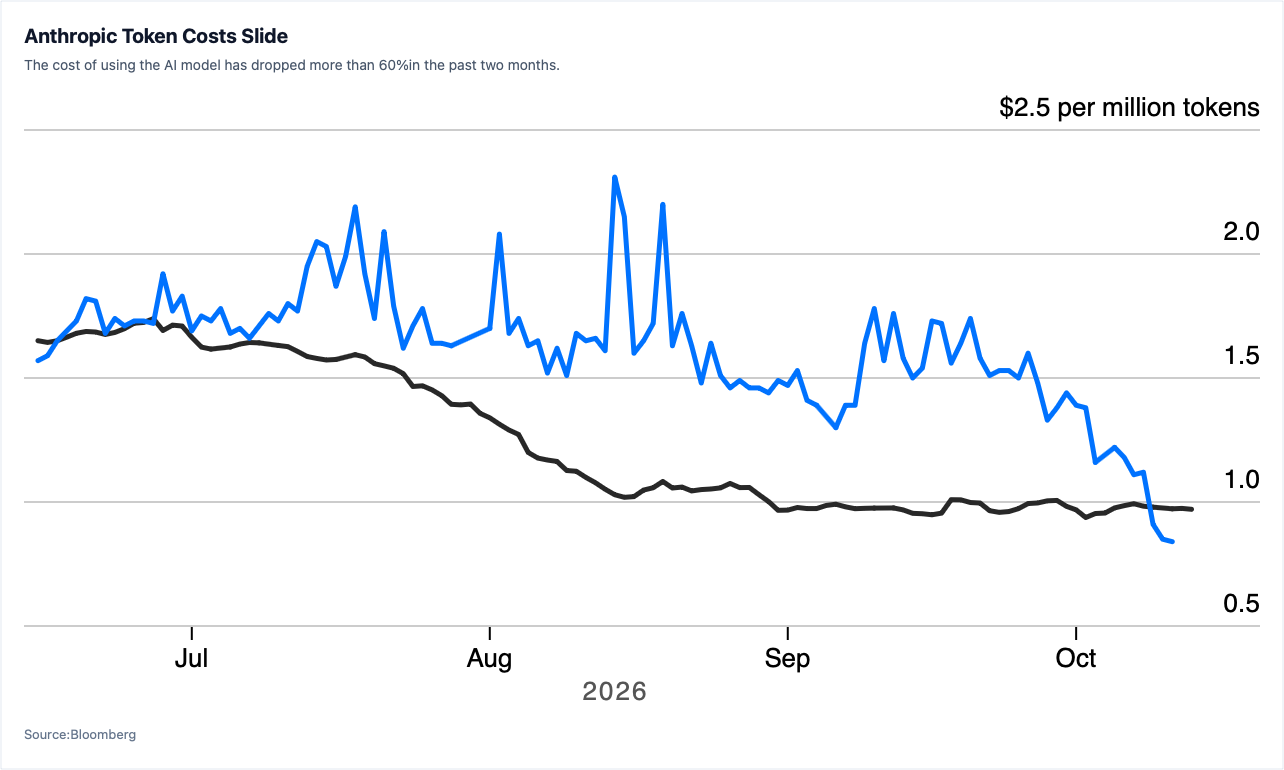
Anthropic 预计于 11 月进行首次公开募股(IPO)并寻求 2 兆美元的估值,但其第三季营收成长率已从今年早些时候的 140% 放缓至 50% 左右。此外,前沿 AI 公司正面临严峻的经济困境:底层运算成本居高不下,但代币(token)价格却大幅滑落。同时,越来越多企业转向使用「够用就好」且更便宜的开源权重模型,甚至连微软与 Meta 等大客户也为削减庞大成本而减少内部对 Claude 的依赖,改用自家解决方案。
预计到 2030 年底,OpenAI 与 Anthropic 在资料中心、晶片与算力上的总支出将高达 1.3 兆美元,这与它们目前的营收存在巨大落差,使市场面临潜在的修正风险。尽管若市场信心崩溃与廉价模型普及也会挤压云端巨头的利润,但这些老牌大厂拥有 AI 以外的获利业务与深厚的企业客户关系,抗风险能力远胜新创公司。如同网路泡沫时期,最终的大赢家可能不是试图打造「机器神」的先驱,而是最有韧性、能够承受漫长等待的基础设施掌控者。
Silicon Valley has spent recent years believing that whoever built the smartest artificial intelligence system would rule the industry, a calculation that now looks misguided. As the cost of building frontier models rises and the price of using them falls, revenue growth at leading AI firms like OpenAI and Anthropic is slowing down. Real industry power increasingly lies with cloud giants such as Microsoft, Alphabet, and Amazon, which control the infrastructure, customer relationships, and distribution channels, allowing them to profit regardless of which AI model businesses choose to use.
Anthropic is aiming for a $2 trillion valuation in its planned November IPO, yet its quarterly revenue growth rate has decelerated from 140% earlier this year to around 50% in the third quarter. Furthermore, frontier AI companies face a painful economic trap where underlying computing power grows more expensive while token prices plunge. At the same time, more enterprises are opting for cheaper open-weight models that are simply good enough, and major customers like Microsoft and Meta have cut back on internal use of Claude in favor of proprietary solutions to reduce astronomical token costs.
OpenAI and Anthropic are expected to spend a collective $1.3 trillion on data centers, chips, and computing power through the end of 2030, creating a yawning gap against their current revenues and making a market correction seem inevitable. While a collapse in confidence and the shift toward cheaper models would also squeeze the margins of cloud giants, these established players are far better positioned to weather a storm thanks to their profitable non-AI businesses and longstanding corporate relationships. Much like in the dot-com era, the biggest winners may not be the pioneers trying to build a machine god, but the resilient infrastructure providers that can afford to wait for long-term monetization.