在高度标准化与例行性任务集中的金融业中,高达 84% 的职业暴露于 AI 自动化的风险之下,这对斯温顿(Swindon)、伯恩茅斯(Bournemouth)和布莱顿(Brighton)等依赖银行与保险后勤服务中心的英国城镇构成直接威胁。虽然目前金融业在这些城镇的就业占比(5% 至 10%)低于 1980 年代煤炭或制造业城镇的单一产业依赖度,且仍有如摩根大通在伯恩茅斯扩大投资的案例,但当地金融职缺已出现急剧下降。一旦自动化引发大规模失业,不仅会打击直接从业人员,还可能因地方消费萎缩而对餐饮、零售等在地商业造成连锁冲击。
AI 将深刻改变各地区的工作性质,部分高阶职位(如基金经理)能借助技术提升产出价值,而其他职位(如客服与稽核)则可能降级为监督机器运作。面对转型,大城市因个人财富缓冲较高及商业密集度高而更具韧性,小型城镇则相对脆弱,这已引起英国财政部与伦敦市长办公室等官方机构的重视与研究。从宏观经济来看,英国高度依赖服务业出口来平衡商品贸易逆差,更是全球受 AI 威胁服务的第二大净出口国;AI 究竟会强化英国的服务出口优势,还是让知识型工作的价值崩盘并重创出口,使英国成为全球观察下一波工业革命走向的关键指标。
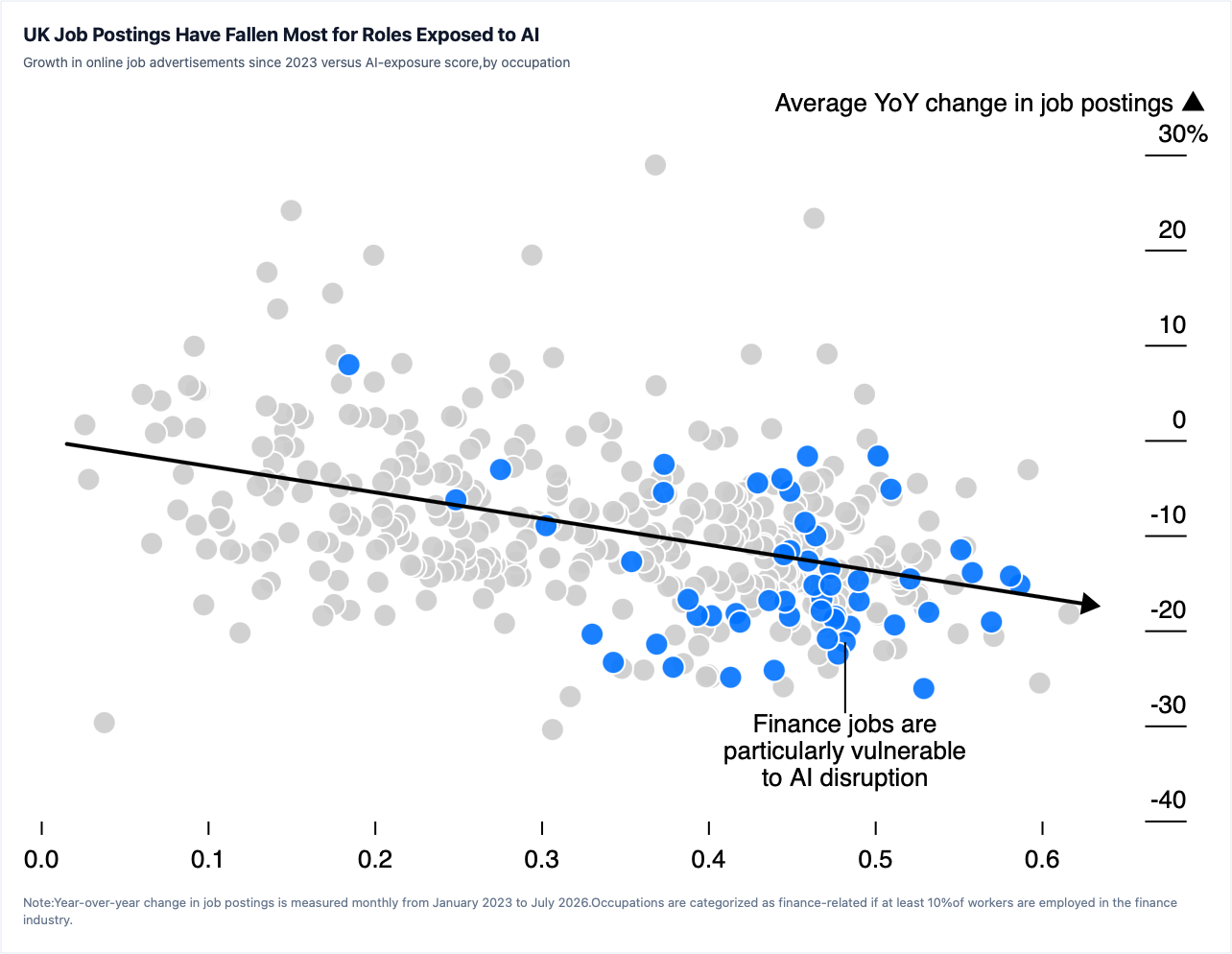
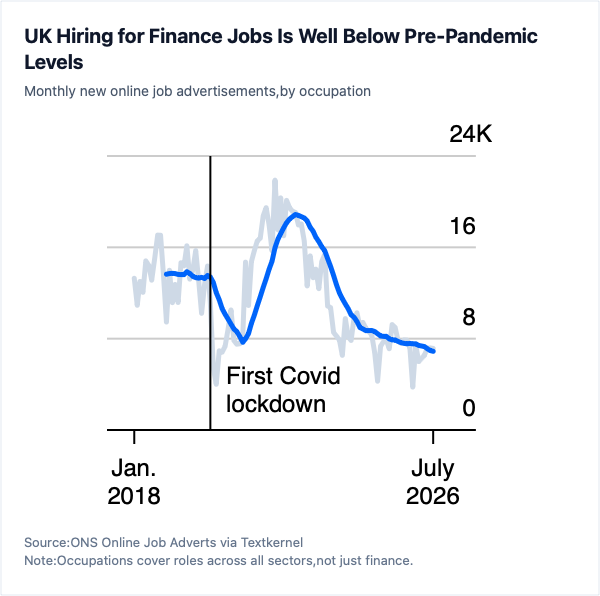
The United Kingdom stands at the forefront of artificial intelligence and automation-driven transformations, primarily because its vital financial sector is both a major employer and one of the industries most exposed to AI disruption. Surveys indicate that British firms reported a net staff reduction of about 8% due to AI in 2025—double the average of peer nations like the US, Germany, Japan, and Australia—alongside the lowest hiring rates. Overall UK job vacancies have nearly halved since their 2022 peak, with the steepest declines occurring in AI-exposed roles such as accountants, investment analysts, and financial administrators, prompting major institutions like HSBC and JPMorgan to cut or redeploy staff, even if post-pandemic over-hiring and remote work costs also play a role.
With 84% of its occupations exposed to AI, the finance sector is full of routine, trackable tasks ripe for automation, posing a acute threat to British towns like Swindon, Bournemouth, and Brighton that serve as back-office hubs for banks and insurers. Although finance accounts for a smaller share of local employment today (5% to 10%) than coal mining did in affected towns during the 1980s, and despite bright spots like JPMorgan's £300 million investment in Bournemouth, local financial job postings have fallen sharply. Major job losses to automation in these service-center towns could trigger wider economic pain by depressing local spending and causing cascading losses across restaurants, pubs, and area businesses.
AI is set to reshape the nature of work across regions, enhancing high-level roles like fund managers while deskilling others such as customer relations and audit staff into machine supervisors. Because workforce resilience relies heavily on personal wealth cushions and business density, major cities are much better positioned to adapt than smaller, less-connected towns like Swindon, prompting UK policymakers to study regional labor market impacts. Nationally, because Britain relies heavily on service exports to offset goods imports and ranks second only to Israel as a net exporter of AI-vulnerable services, whether AI empowers UK knowledge exports or collapses their value makes the British economy a critical global bellwether for the next industrial revolution.