在战场进展有限之际,俄罗斯加大了对民用能源基础设施的攻击:在阿布达比会谈前夕,它在 -20 C (-4 F) 的条件下对电网发动 450 架无人机与 71 枚飞弹攻击,之后又在数日后再度打击关键高压输电线路。乌克兰最大民营发电商 DTEK 表示,其约 80% 的火电发电能力已被摧毁或受损;这些燃料发电厂约占战前火电能力的 2/3,并同时供应电力与区域供热。据报导,基辅居民每天仅有数小时供电,市长称近 600,000 人已逃离首都。
文章称其策略是把平民冻到屈服,并让外界相信援助徒劳,但也指出在将近 4 years 后,俄罗斯仅控制乌克兰约 1/5 的领土,自战争初期以来进展不大,却承受估计 1.2 million 人死亡、受伤或失踪,并将约 40% 的联邦支出转向国防与安全。文中呼吁提供更多防空系统,以及变压器与电网强化设备;欧洲已送出紧急发电机,甚至迁移了一座来自立陶宛、旨在协助供电约 1 million 人的火力发电厂。它也主张透过两党支持的美国参议院制裁法案(S.1241)加大对买家(如印度与中国)的制裁压力,并推动欧盟方案限制与欧盟相关的航运服务,针对承运俄罗斯石油的油轮;同时提到国际刑事法院(ICC)逮捕令,并指出即使俄罗斯拒绝 ICC 管辖,对维系平民生存不可或缺之物的攻击仍为《日内瓦公约》及习惯国际法所禁止。
Bloomberg’s Editorial Board argues (Feb 17, 2026) that Vladimir Putin is using peace talks to buy time: negotiators signal limited conciliation to blunt renewed US pressure while Russia continues large-scale strikes on Ukraine, so any durable settlement would require making continued war materially more costly for Russia.
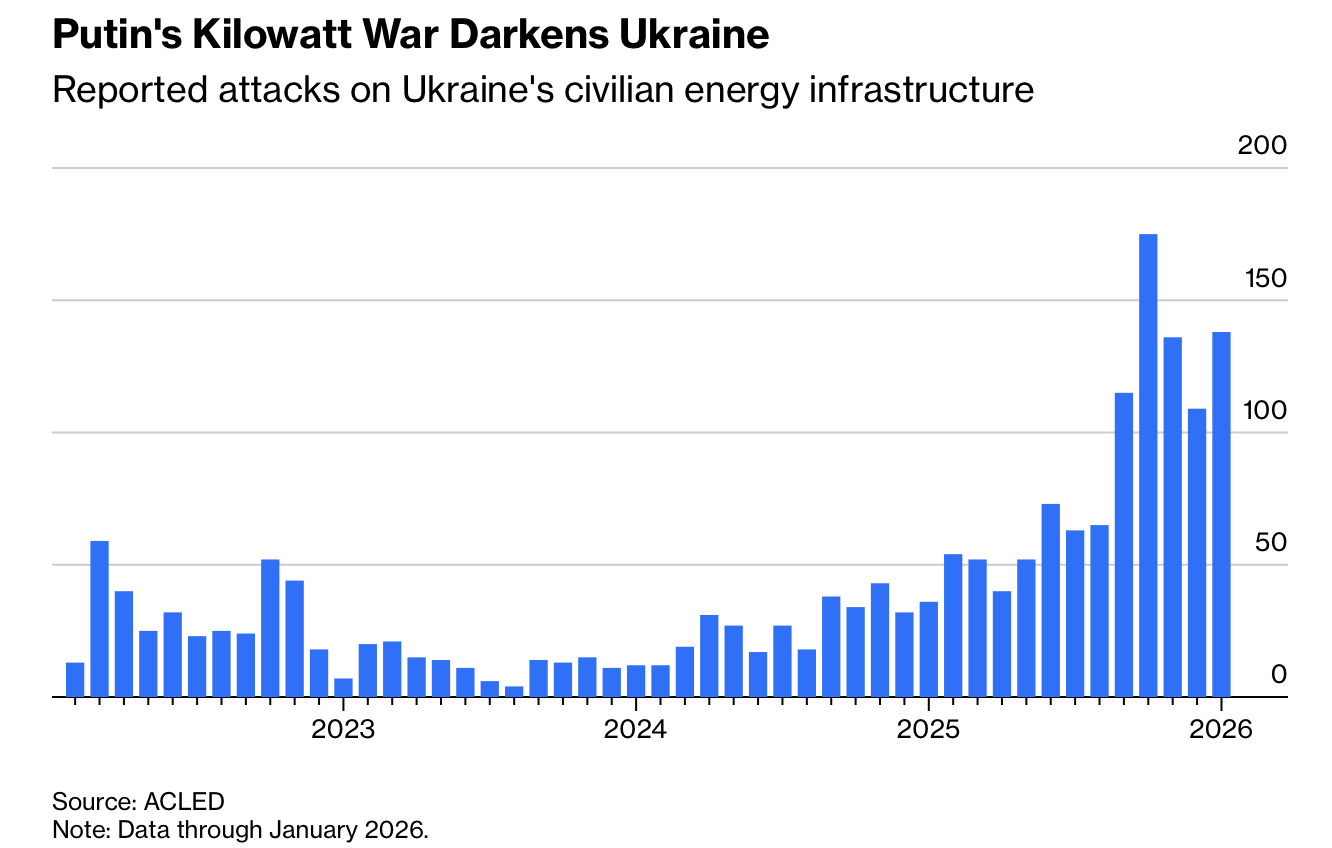
With little battlefield progress, Russia has escalated attacks on civilian energy infrastructure: on the eve of talks in Abu Dhabi it launched 450 drones and 71 missiles against the grid during -20 C (-4 F) conditions, then struck again days later at key high-voltage transmission lines. Ukraine’s largest private power producer, DTEK, reports about 80% of its thermal generating capacity destroyed or damaged; those fuel-fired plants were about 2/3 of prewar thermal capacity and supply both electricity and district heating. Kyiv residents reportedly get only a few hours of power per day, and the mayor says nearly 600,000 people have fled the capital.
The piece says the strategy is to freeze civilians into submission and convince outsiders that aid is futile, but notes that after nearly 4 years Russia controls only about 1/5 of Ukraine’s territory and has gained little since early in the war while suffering an estimated 1.2 million killed, wounded, or missing and diverting roughly 40% of federal spending to defense and security. It urges more air-defense systems plus transformers and grid-hardening equipment; Europe has sent emergency generators and even relocated a thermal power plant from Lithuania intended to help power about 1 million people. It also calls for tighter oil-export pressure via a bipartisan US Senate sanctions bill (S.1241) targeting buyers such as India and China and an EU package restricting EU-linked shipping services for tankers carrying Russian oil, while noting ICC arrest warrants and that attacks on objects indispensable to civilian survival are prohibited under the Geneva Conventions and customary international law even if Russia rejects ICC jurisdiction.