4年前,乌克兰战争在黑海粮食航线恢复后似乎暂时避免了一场全球性粮食危机,但贫困国家的饥荒并未消失。当前海湾战争把同样危险推向前线之外:联合国世界粮食计划署警告,若霍尔木兹海峡在年中前未开放,非洲和亚洲已有3亿个体面临生存性饥饿的人群将再增加4,500万。
霍尔木兹相关地区占全球30%贸易肥料、20%液化天然气和15%石油,且约200万吨肥料被困在被封锁的航道后方;一旦延误,作物会错过施肥关键期,产量下降、物价上涨并挤压城市穷人的生计。与全球变暖叠加,厄尔尼诺可能加剧干旱与洪涝的不均衡,历史也很严峻:2015-16年的“超级”厄尔尼诺使部分南部非洲国家粮食作物减产高达三分之二,2023-24年则带来该地区百年最严重旱情,造成数千头牲畜死亡,并有逾3,000万人需要粮食援助。
但局势仍有逆转窗口,因为大量肥料已存在且仍可在部分地区用于本季作物,谨慎施肥可削弱部分损失,转向供人食用而非汽油乙醇的玉米可缓解压力,且世界并不缺“卡路里”。真正的关键在于政治,而非物流:伊朗尚未表态放行肥料,美国也未显示将解除对伊朗尿素封锁的迹象;高油价反而提升生物燃料吸引力,富裕国家把保护本国消费者放在首位,使一场本可避免的灾难似乎被预设为“将然”。
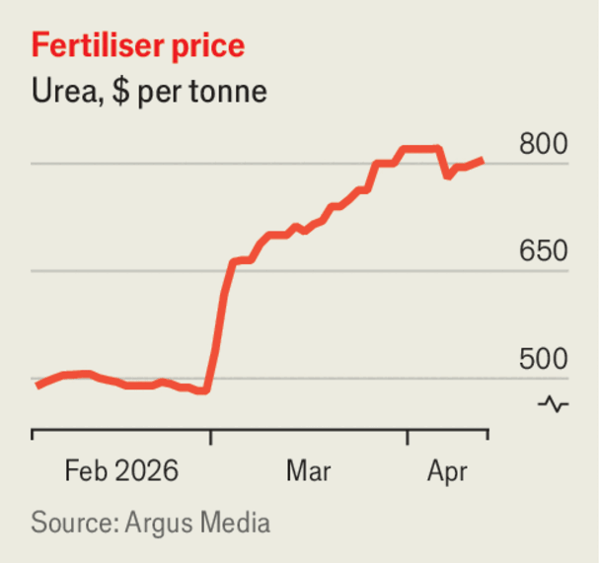
Four years ago, the Ukraine war briefly seemed to have averted a global food crisis after Black Sea grain shipments resumed, yet hunger in poor countries remained. The current Gulf conflict now threatens a similar catastrophe beyond the battlefield: the UN World Food Programme warns that if the Strait of Hormuz is not open by mid-year, the 300 million people already struggling to feed themselves in Africa and Asia could be joined by another 45 million.
The Hormuz-linked region controls 30% of globally traded fertilizer, 20% of liquefied natural gas, and 15% of oil, while nearly 2 million tonnes of fertilizer sit blocked there; delays would miss crop-growing windows, pull yields down, and push food prices up. At the same time, El Niño is expected to amplify climate extremes as warming makes dry zones drier and wet zones wetter, and recent history shows the scale: the 2015–16 super El Niño cut food-crop production by up to two-thirds in some southern African countries, and the 2023–24 event triggered the region’s worst drought in a century, with thousands of livestock deaths and over 30 million people needing food aid.
Yet there is still a narrow window for mitigation because much fertilizer already exists and could still be applied in time in some regions, careful use can limit losses, and maize diverted from ethanol could feed people since the world is not short of calories. But the problem is political, not technical—what is needed is Iran allowing fertilizer passage through Hormuz and the United States easing the urea blockade, and the article argues that rising petrol prices increasing biofuel demand while rich countries prioritize shielding their own consumers make this preventable disaster appear locked in.
Source: The impending global food shock is preventable
Subtitle: So why won’t it be prevented?
Dateline: 4月 16, 2026 05:30 上午