高市早苗政府虽对紧缩立场有所软化,但政策核心仍聚焦于维持经济成长并避免股市动荡,倾向借由名目GDP扩张与税收增长来控管债务占比。市场分析师指出,当前日股估值远比1989年泡沫时期健康,且近半数日本企业具备净现金体质,加上对AI及自动化技术的迫切投资需求,应能承受温和的利率上升冲击,不过庞大的偿债成本负担仍将随殖利率攀升而显著增加。
日本利率走高正牵动全球资金版图重组,过去仰赖廉价日圆的套利交易与海外投资趋势面临转变。随著国内殖利率上扬,日本寿险、退休基金等大型机构资金可能逐渐回流或减少海外配置,这不仅对美债与欧债市场带来深远影响,也象征日本正从过往的全球流动性供应者,转变为国际资本市场的强力竞争者。
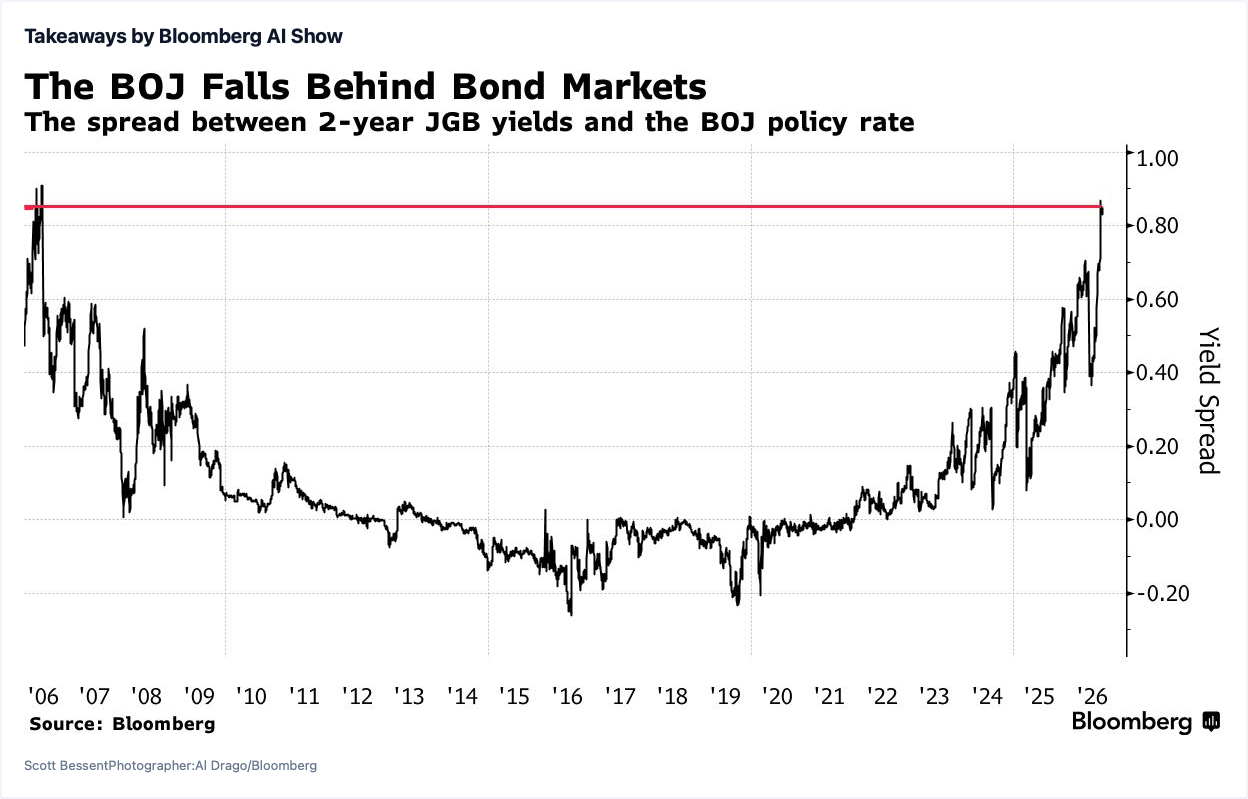
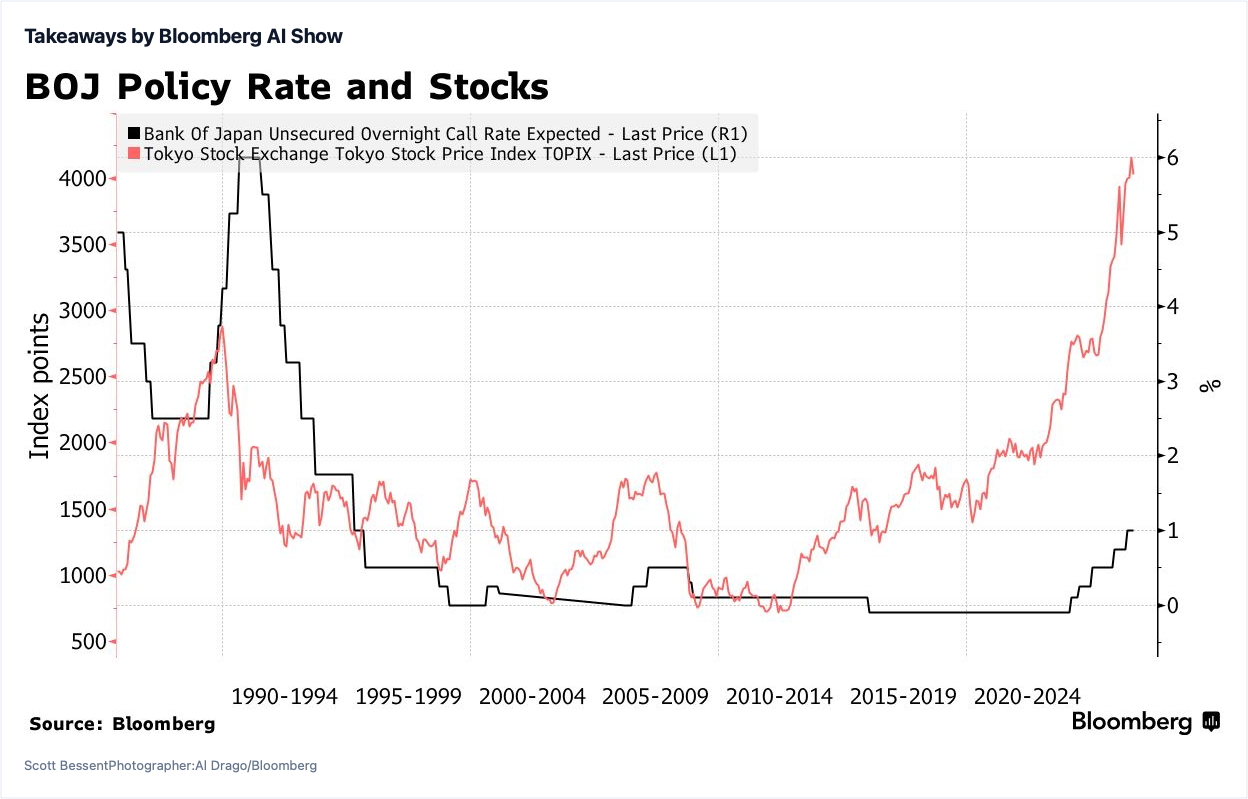
The Bank of Japan is widely anticipated to implement a sixth interest rate hike under Governor Kazuo Ueda, lifting the policy rate to 1.25%, with markets pricing in an over 80% chance of another hike by late December. Although core inflation has been moderated by government energy subsidies, protracted yen weakness and elevated oil prices are stoking underlying price pressures, prompting central bank officials and economists to advocate for further tightening away from decades of ultra-loose monetary policy.
While Prime Minister Sanae Takaichi’s administration has softened its resistance to interest rate hikes, its priority remains sustaining economic growth and preventing equity downturns through nominal GDP expansion to manage the debt ratio. Market strategists emphasize that Japanese equities trade at much more reasonable valuations than during the 1989 bubble, and with nearly half of domestic firms holding net cash alongside vital capital investments in automation and AI, the broader economy appears equipped to absorb moderate rate increases despite rising debt-servicing burdens.
Higher Japanese bond yields are altering global capital flows by challenging long-standing yen carry trades and massive foreign asset holdings. As domestic returns rise, Japanese institutional investors such as life insurers and pension funds may retain more capital at home, a structural shift that could impact US Treasuries and European bonds while signaling Japan’s transition from a major supplier of global liquidity to a formidable competitor for international capital.