尽管围绕美国在格陵兰(Greenland)的野心充斥喧嚣,白宫仍未给出为何美国需要控制这片巨大的北极领土的可靠理由。总统上周称“为了成功在心理上需要拥有它”,也曾以经济与国家安全风险为由推动对目前由北约(NATO)盟友丹麦(Denmark)监管的岛屿提出诉求。支持者强调矿产与地缘竞争,但即便格陵兰被认为拥有美国认定为“关键”的 50 种矿物中的 37 种,这一数字也不足以自动转化为可行的控制理由。
经济账被认为站不住脚:开采这些资源会异常困难且成本高昂,即便政府补贴,资金也更可能在美国等更易进入地区产生更高回报;而美国公司无需吞并即可在格陵兰签署采矿许可,且中国矿企的竞争性竞标此前已被阻止、未来也可能再度受挫。安全层面同样被指夸大:俄罗斯在北极海岸强化基地更像防御;其潜艇确需穿越格陵兰—冰岛—英国缺口(GIUK Gap)进入北大西洋,但该水道已由从冰岛起飞的北约飞机巡逻;除极端情形外,俄方也不太可能攻击美国的 Pituffik Space Base(其相控阵雷达是弹道导弹预警网络关键节点),因为那可能触发大规模核交换。具象信号是五角大楼并未向该地区投入大量新增资源,而是认为其他战区更重要。
若威胁评估变化,扩充驻格军事能力可以在现有丹麦—格陵兰条约框架下通过协商实现,包括增配空中与海上无人机、铺设更多海底传感器、升级港口与跑道以承载更频繁的军方与海岸警卫队交通;视“Golden Dome”导弹防御计划进展,也可能考虑部署拦截弹或远程反舰/防空导弹。相较之下,诸如贿赂格陵兰人走向独立、再与美国签署类似其与 3 个太平洋国家的“自由联系协定”(compact of free association)等方案既昂贵又冗长;军事接管更会摧毁北约,给美国安全造成的损害可能超过普京或习近平在非全面战争条件下所能施加的一切,因此该“格陵兰执念”被指收益甚微而代价极高。
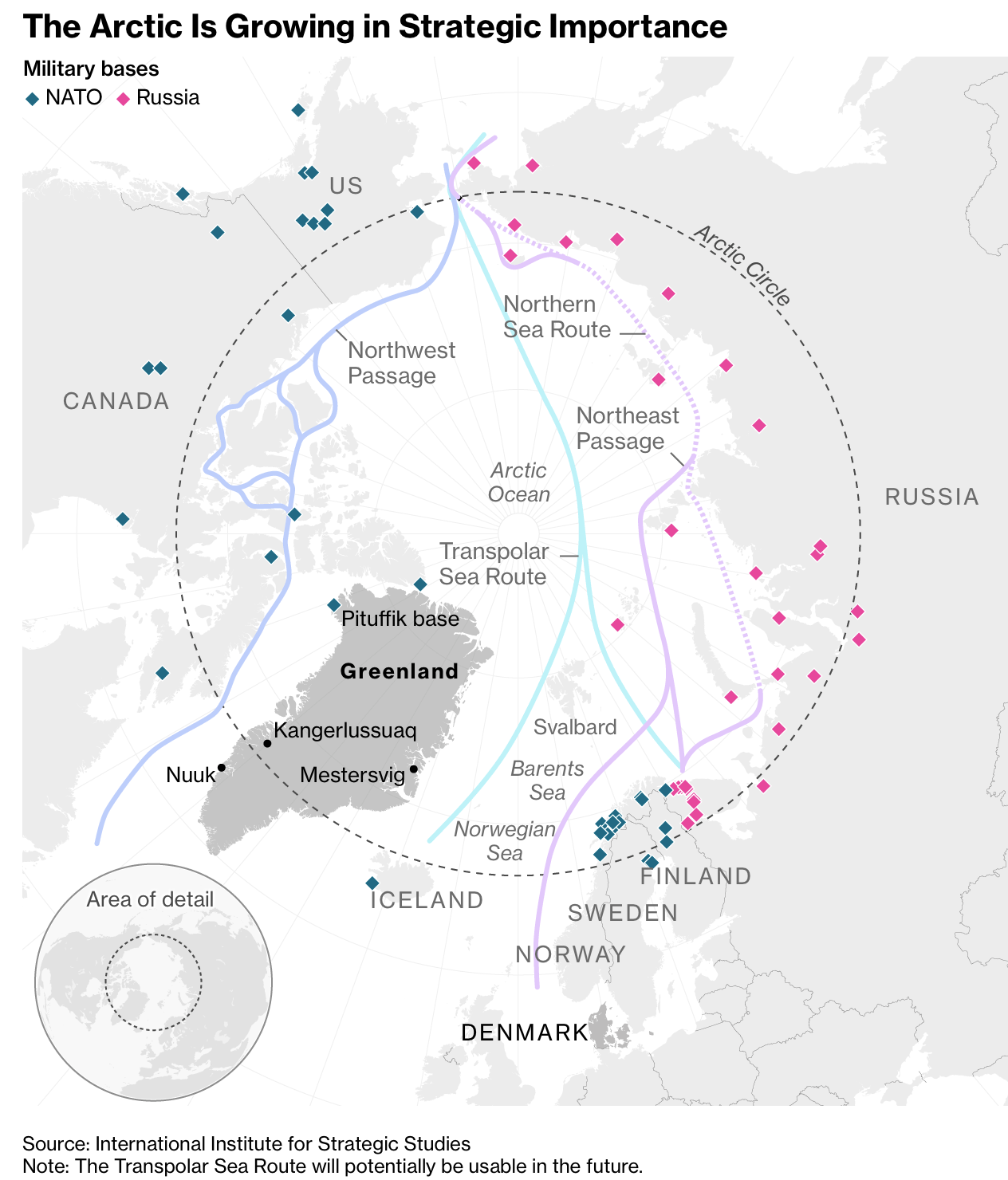
Despite the bluster around US ambitions in Greenland, the White House has not offered a sound explanation for why America needs to control the massive Arctic territory. The president said last week ownership is “psychologically needed for success,” and has also cited economic and national-security risks to justify a bid for an island overseen by NATO ally Denmark. Boosters point to minerals and rivalry, but even Greenland’s supposed possession of 37 of the 50 US-designated “critical” minerals does not by itself make annexation rational.
The economic case is weak: extraction would be unusually difficult and expensive, and subsidies would likely yield better returns in easier-to-access places, including inside the US; American firms can also obtain mining licenses in Greenland without annexation, and Chinese rival bids have been blocked before and likely would be again. Security fears are portrayed as overstated: Russia’s Arctic basing appears largely defensive; its submarines must transit the Greenland-Iceland-UK Gap, but NATO aircraft already patrol it from Iceland; and Russia is unlikely to strike the US Pituffik Space Base—whose phased-array radar is a key early-warning node—except in extreme circumstances that risk nuclear escalation. The Pentagon’s failure to rush substantial new resources to the region is cited as a revealing signal.
If threat assessments shift, useful steps can be taken under the existing Denmark-Greenland treaty via consultations: more air and sea drones, additional seabed sensors, upgraded harbors and runways, and—depending on the “Golden Dome” missile-defense program—possible interceptors or long-range antiship/antiair missiles. By contrast, schemes like bribing Greenlanders toward independence and then a US “compact of free association,” as with three Pacific nations, are costly and unnecessary; a military takeover would blow up NATO and damage US security more than Putin or Xi could outside a full-scale war. The bottom line is framed as asymmetry: little to gain, far too much to lose.