海湾阿拉伯国家合作委员会(GCC)在最近几个月遭遇了自1990年萨达姆占领科威特以来最大的震动。尽管霍尔木兹海峡被关闭了近四个月,且数千次伊朗导弹和无人机袭击造成了数百亿美元的损失,但所幸伤亡人数较少。如今,海合会国家的经济规模已达到2.3万亿美元,占全球产出的2%以上。然而,这场战争打破了其作为安全避风港的形象,使其面临重建信心、重新审视经济多元化计划以及在对美国和彼此缺乏信任的情况下应对地缘政治等三大挑战。
这场冲突对各成员国的影响并不均衡。阿拉伯联合酋长国遭受了超过2800次袭击,约占海合会总受袭次数的一半,尽管其推出了占国内生产总值0.5%的25亿迪拉姆(6.8亿美元)战时激励措施,但占其GDP 12%的旅游业仍面临复苏不平衡的挑战。相比之下,债务与GDP比率高达146%且外汇储备不足两个月进口额的巴林处境更为艰难。尽管阿联酋提供了50亿美元的货币互换支持,且巴林本月成功发行了10亿美元的债券,但其借贷成本已超过7%,高企的债务和霍尔木兹海峡的航运风险令其物流和旅游支柱部门摇摇欲坠。
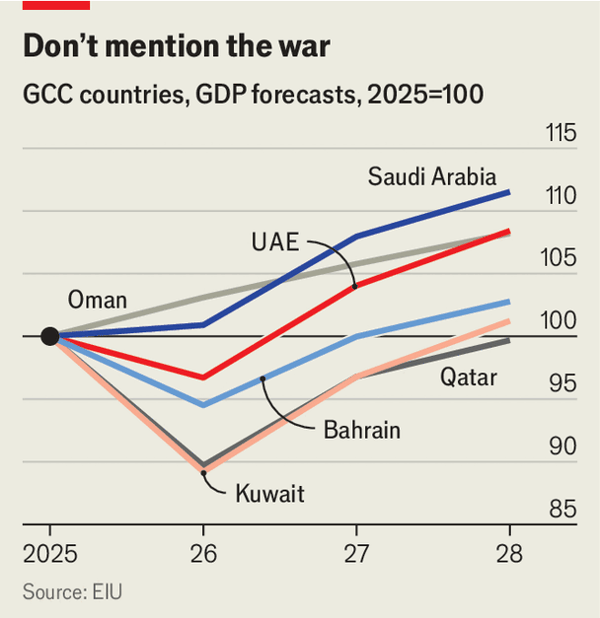
沙特阿拉伯凭借其广阔的国土和偏离伊朗前线的地理优势,较好地抵御了战争。虽然沙特缩减了包括新未来城在内的宏大项目,转而投资红海港口和远离伊朗1500公里的西部数据中心,但这些项目难以创造大量就业。科威特和卡塔尔的经济今年预计将出现两位数的萎缩,且在2028年前恐难恢复战前GDP。在外交上,海合会内部缺乏统一立场:卡塔尔在6月17日美伊协议的谈判中发挥了关键作用,阿联酋则专注于提升军事威慑,而阿曼因展现对伊同情并探讨运河收费而引发邻国和美国部分人士的不满。
The Gulf Co-operation Council (GCC) recently faced its most severe shock since the 1990 invasion of Kuwait. Although the Strait of Hormuz was closed for nearly four months and thousands of Iranian attacks caused tens of billions of dollars in damage, casualties remained low. Today, GCC economies are worth $2.3 trillion, representing over 2% of global output. However, the conflict has shattered their status as a safe haven, presenting three key challenges: rebuilding confidence, revising economic diversification plans to account for heightened risks, and navigating geopolitics amid declining trust in America and one another.
The impact of the war has been highly uneven across the region. The United Arab Emirates (UAE) endured over 2,800 attacks, nearly half of the GCC total, and despite introducing a 2.5 billion dirham ($680 million, or 0.5% of GDP) stimulus package, its tourism sector, which accounts for 12% of GDP, faces an unbalanced recovery. Smaller Bahrain, with a staggering 146% debt-to-GDP ratio and foreign reserves covering less than two months of imports, is in a much weaker position. Despite a $5 billion currency-swap from the UAE and a oversubscribed $1 billion bond issue, Bahrain's borrowing costs exceeded 7%.
Saudi Arabia weathered the conflict better due to its vast geography and domestic market. The kingdom is pivoting from ambitious projects like Neom to developing Red Sea ports and data centers 1,500km away from Iran. Conversely, Kuwait and Qatar face double-digit economic contractions this year, with GDP unlikely to recover to pre-war levels until 2028. Diplomatically, the GCC lacks a unified front; while Qatar helped broker the June 17th U.S.-Iran agreement, the UAE focuses on military deterrence, and Oman's sympathetic stance toward Iran has irritated its neighbors and risked U.S. backlash.
Source: The Gulf’s three post-war challenges
Subtitle: Geography, cash and confidence will decide who recovers, and who drifts
Dateline: 6月 25, 2026 04:18 上午 | DOHA, DUBAI AND RIYADH