清华大学在 2005–2024 年间累计获得 4,986 项人工智能与机器学习相关专利,2024 年 alone 超过 900 项,年度产出超过 MIT、Stanford、Princeton 与 Harvard 的总和。其研究成果亦高度可见,在全球被引用次数最高的前 100 篇 AI 论文中数量居首。中国在该领域的全球专利族占比已超过 50%。配合国家政策推动,中国 STEM 毕业生规模迅速扩大:2020 年达到 357 万人,而美国同期约 82 万人;官方估计年产 STEM 毕业生现已达 500 万。科研-产业转化体系同样扩大:清华 X-lab 自 2013 年以来孵化约 900 家创业公司,校友创办了至少四家全国领先的 AI 创企。
清华多项自主研发技术展示跨领域能力,包括自主设计的 AI 芯片 Accel、药物发现引擎 DrugCLIP、自主学习训练协议 Absolute Zero Reasoner,以及由本科生推动的层级推理模型 HRM,在推理与数独等基准上超过 OpenAI 与 Anthropic 的大模型。国家政策的税收与资金支持加强学研联动,吸引顶尖人才回流,如 2024 年清华新设统计与数据科学系并由前哈佛教授刘军主导。学校为全体学生提供补贴算力并将大模型应用嵌入各学科研究,形成跨专业普及化 AI 能力。
全球人才版图也在变化。2022 年中国在全球前 2% 顶尖 AI 研究者中的占比升至 26%,较 2019 年的 10% 显著跃升,而美国占比从 35% 降至 28%。尽管美国仍在高影响力专利与顶级模型数量(2024 年 40 比 15)上领先,但中国在特定基准上快速逼近。学生留在国内的倾向上升,显示以清华为核心的教育、科研与产业生态正进入高速扩张阶段。
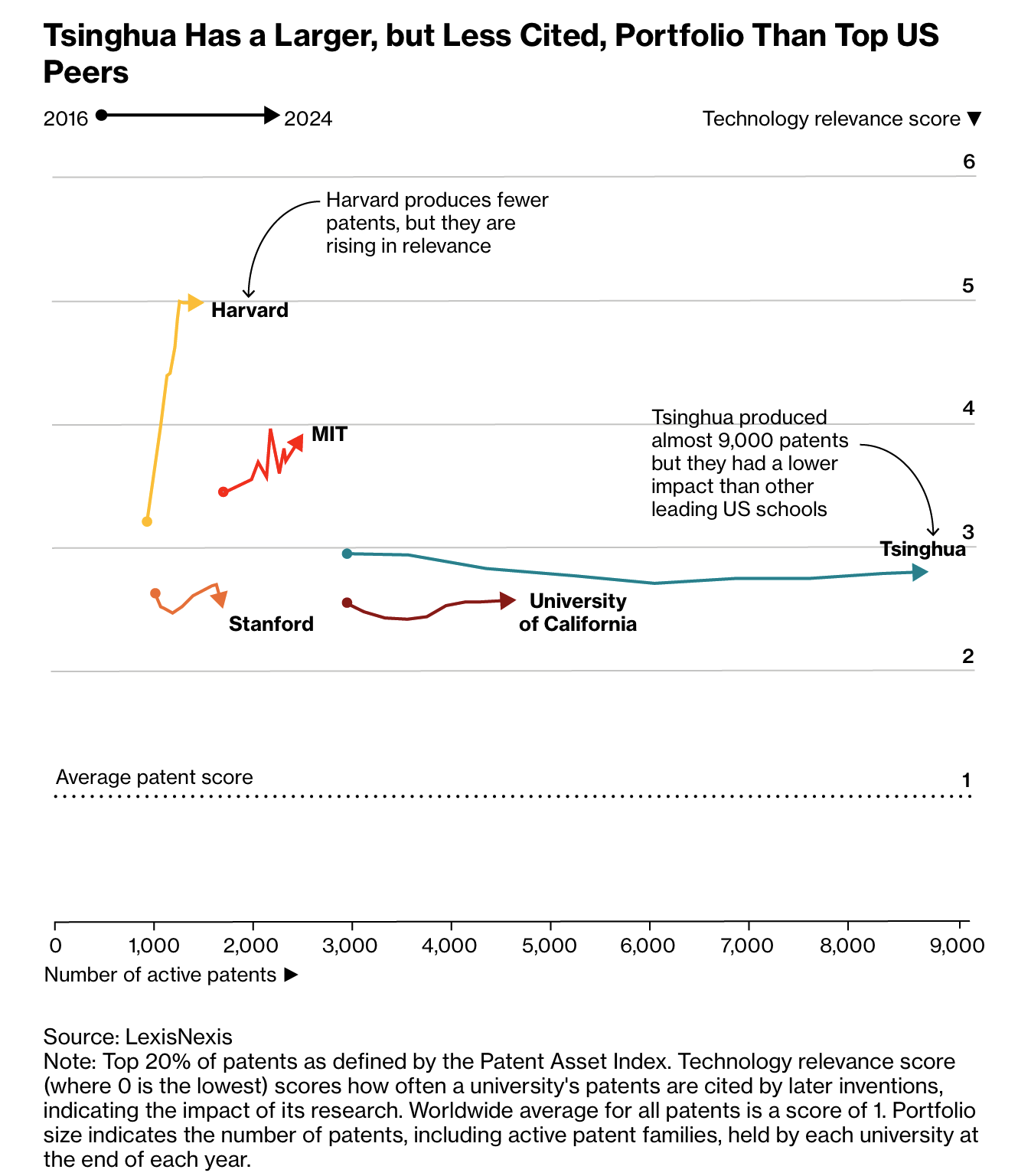
Tsinghua University received 4,986 AI and machine-learning patents between 2005 and 2024, including more than 900 last year alone, exceeding the combined annual output of MIT, Stanford, Princeton and Harvard. It leads globally in the number of AI papers among the top 100 most cited, while China accounts for over 50% of all active patent families in these fields. The national STEM pipeline has expanded sharply: China graduated 3.57 million STEM students in 2020 versus 820,000 in the US, and official figures indicate the annual total has since reached 5 million. Tsinghua’s X-lab has fostered about 900 startups since 2013, and alumni have founded at least four of China’s leading AI firms.
The university’s cross-disciplinary innovation includes proprietary technologies such as the Accel AI chip, the DrugCLIP discovery engine, and the Absolute Zero Reasoner self-learning protocol. The student-developed Hierarchical Reasoning Model (HRM) has outperformed larger OpenAI and Anthropic systems on reasoning tasks and Sudoku benchmarks. State support through subsidies and tax incentives is accelerating the research–industry pipeline, attracting top researchers back to China, exemplified by Harvard professor Jun Liu returning in 2024 to establish a new statistics and data science department. Tsinghua now embeds AI and large language models across disciplines and offers subsidized compute credits to all students.
The global talent landscape is shifting. China’s share of the world’s top 2% AI researchers rose from 10% in 2019 to 26% in 2022, while the US share fell from 35% to 28%. Although the US still leads in influential patents and top AI models (40 versus China’s 15 in 2024), China is rapidly closing benchmark gaps. Rising retention rates among Tsinghua graduates indicate that China’s integrated education, research and industrial ecosystem is entering an accelerated growth phase.