持续的袭击导致俄罗斯国内汽油供应出现问题,并迫使产量首当其冲承受压力。据石油输出国组织估计,上个月俄罗斯产量降至每天889万桶,创下六年新低,比OPEC+协议允许的生产水准低了近100万桶。此外,克里姆林宫对包括汽油和柴油在内的关键精炼产品实施的海外运输禁令,进一步减少了莫斯科的战争资金流入。
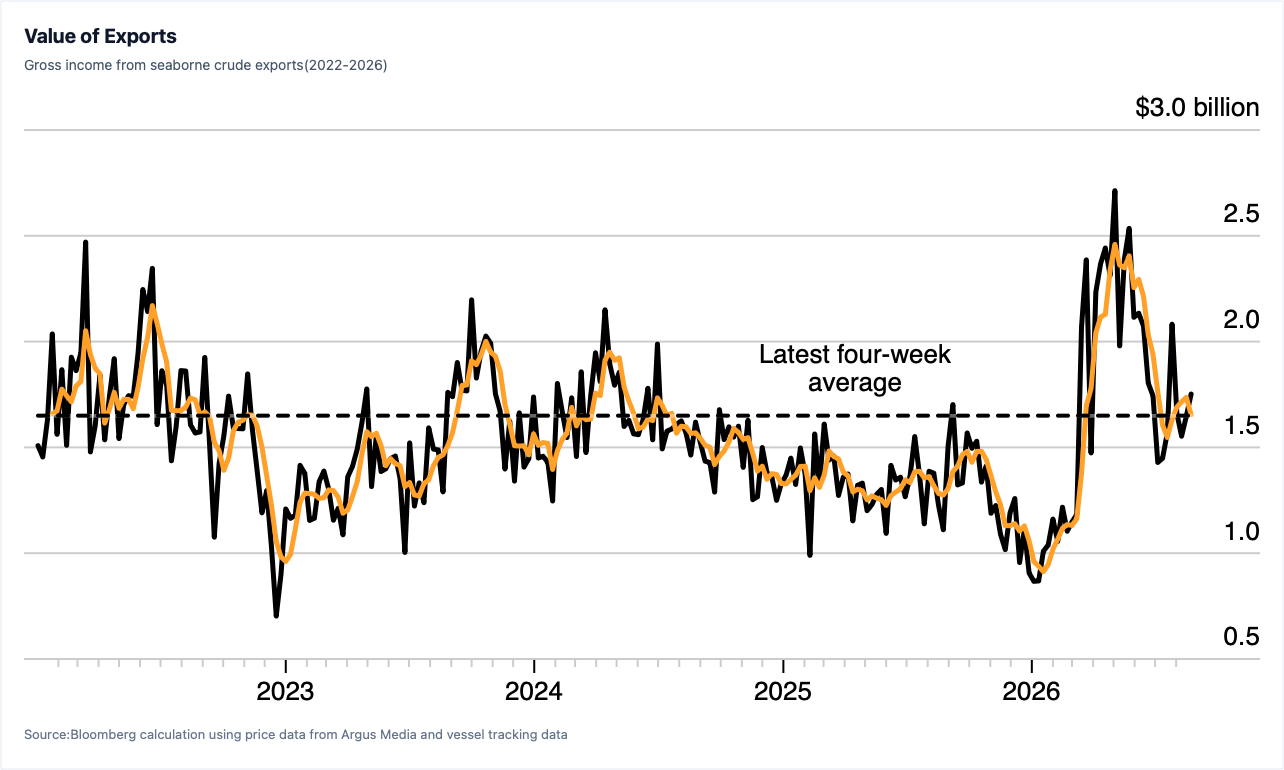
尽管近期出口量下滑,俄罗斯的海运原油出口依然相对强劲,2026年迄今的发货量比2022年入侵乌克兰以来的历年最高平均水准高出约9%。中国和印度仍是最大的买家,而在截至8月23日的四周内,莫斯科出口的平均总价值降至每周16.5亿美元,海上俄罗斯原油的数量也进一步降至约8300万桶的一年低点。
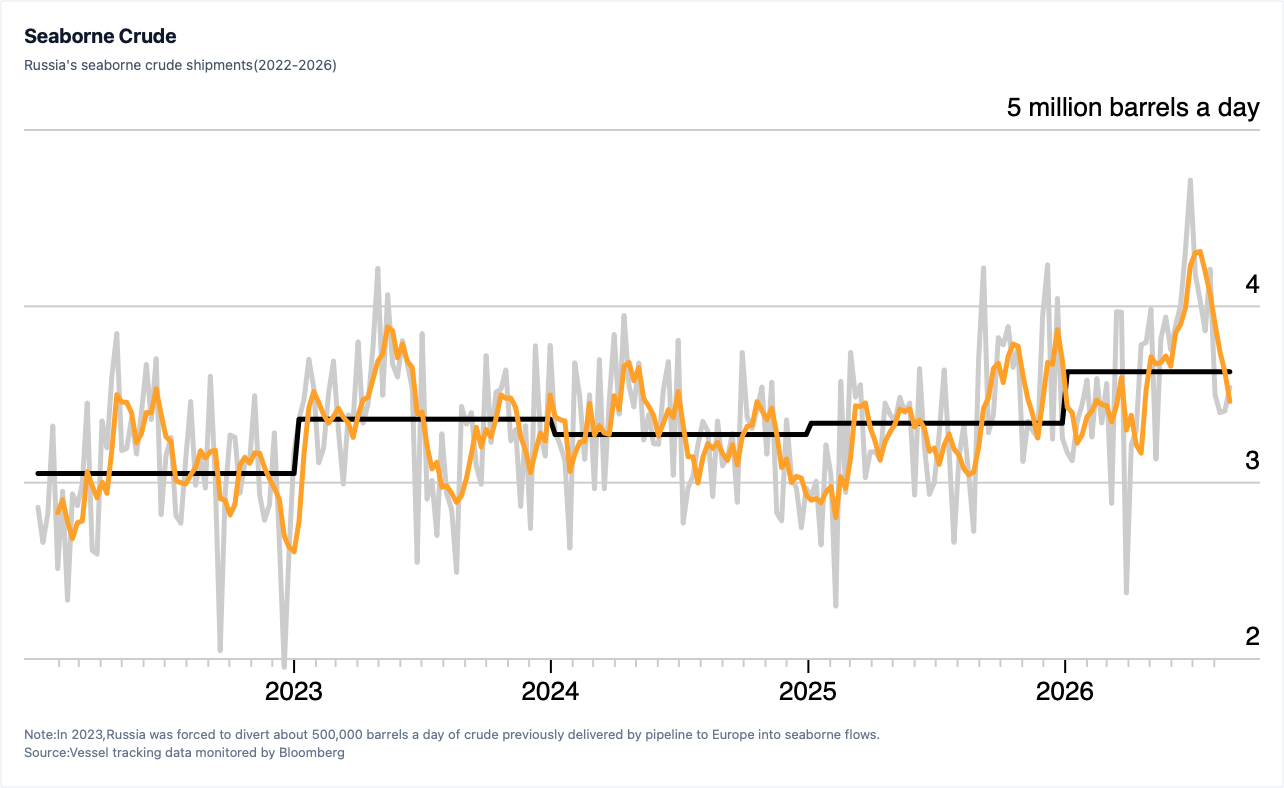
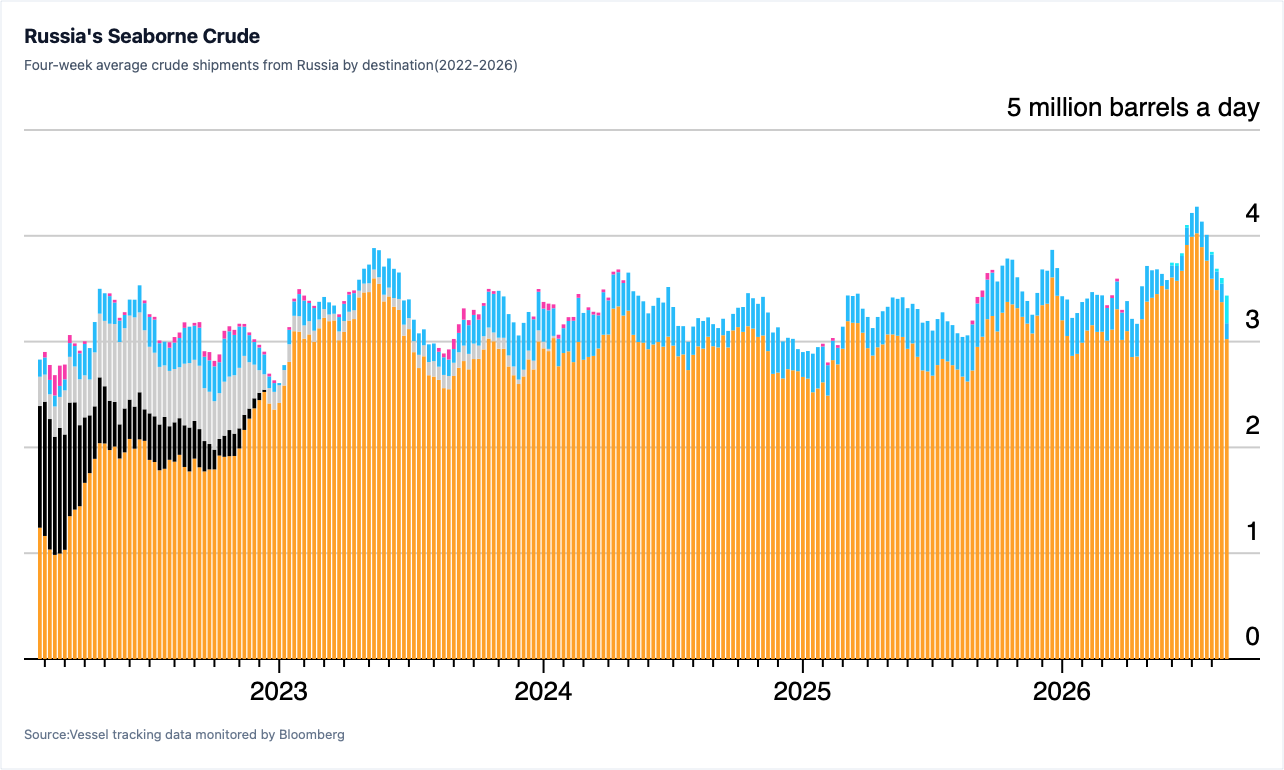
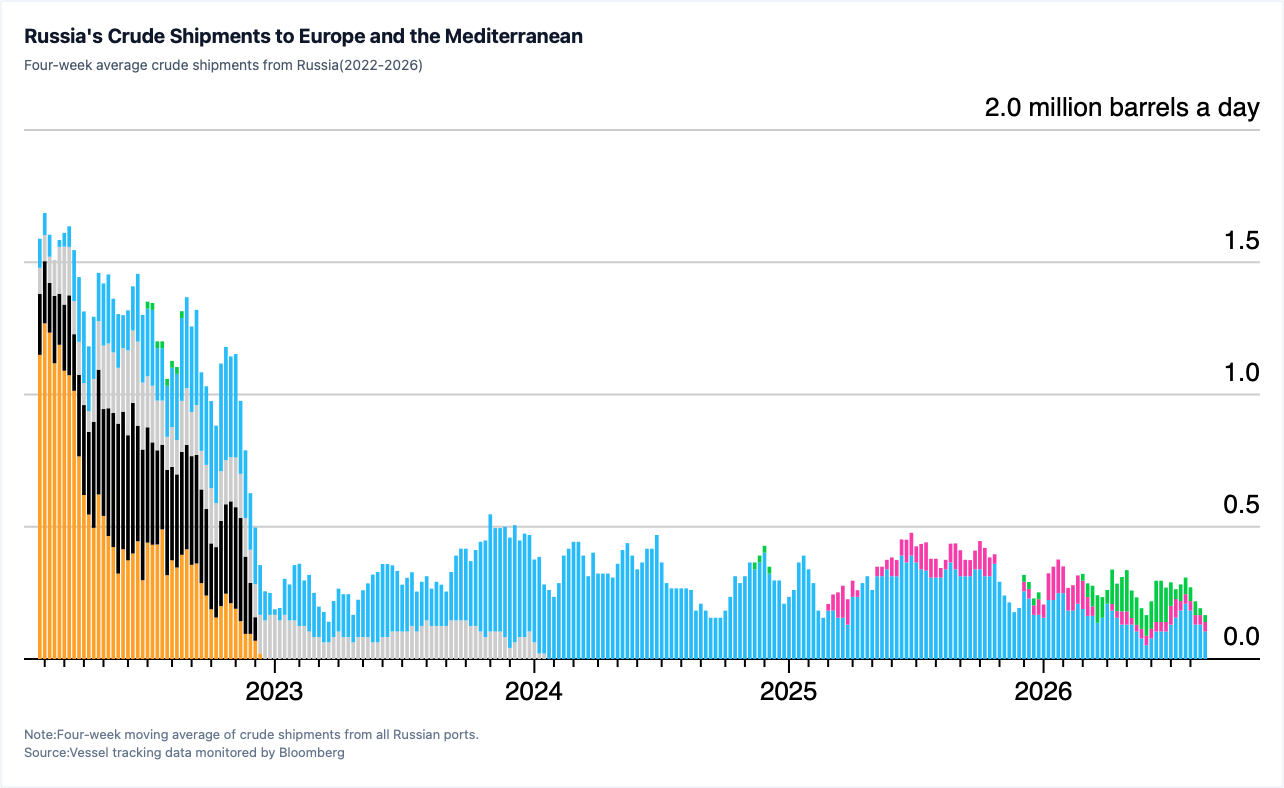
Ukraine's attacks on Russia's oil refineries and Black Sea ports are hitting the country's fuel supplies while preventing Moscow from diverting crude into exports. In the four weeks through August 23, overseas crude flows fell to a four-month low of 3.46 million barrels a day. Drone hits on oil tankers have cut shipments from the Black Sea, prompting Moscow to redirect Kazakh barrels to Novorossiysk to free up space for its own crude at the less vulnerable Baltic Ust-Luga terminal.
The continued strikes have led to domestic gasoline supply issues in Russia, forcing production to take the strain. According to OPEC estimates, Russia's output fell to 8.89 million barrels a day last month, a six-year low and almost 1 million barrels below its permitted production level under the OPEC+ agreement. Furthermore, Kremlin-imposed bans on overseas shipments of key refined products have further reduced inflows to Moscow's war chest.
Despite the recent decline, Russia's seaborne crude exports remain relatively strong, with shipments so far in 2026 running about 9% above the highest average for any year since the 2022 invasion of Ukraine. China and India remain the biggest buyers, while the four-week average gross value of Moscow's exports slipped to $1.65 billion a week in the period to August 23, and the amount of Russian crude at sea dropped to a one-year low of about 83 million barrels.