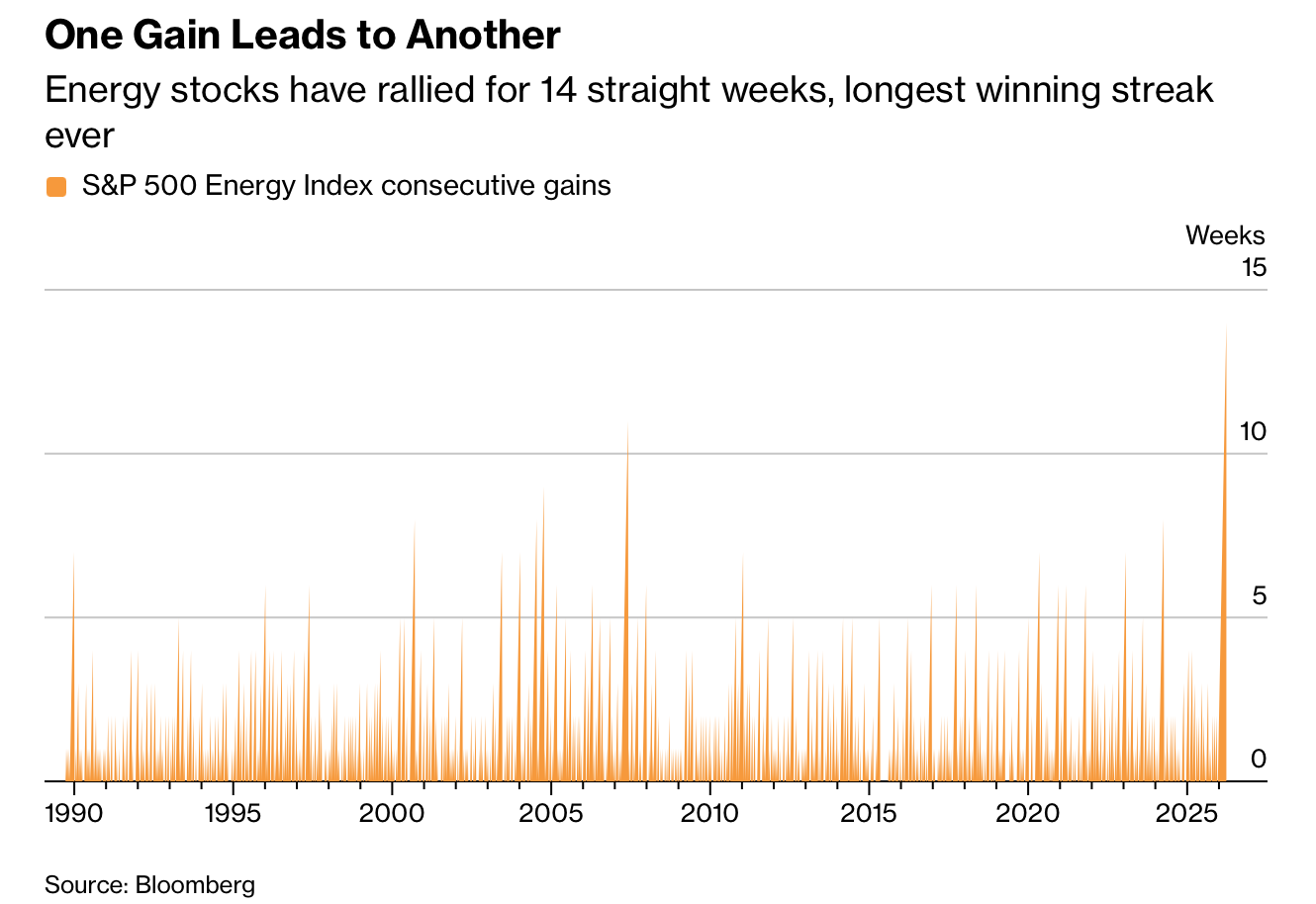
交易者对 Jerome Powell 的说法理解为「讯息混杂」:他再次重申联准会的通膨目标是 2%,但也指出对中东能源价格飙升这类供给冲击,联准会几乎无能为力。这一讯息推高了美国公债收益率向下,因市场对经济成长忧虑升温且对加息预期被削弱。美国原油首次在 2022 年后重回每桶 100 美元以上,能源股因此创下连续 14 周上涨的历史纪录,Morgan Stanley 的 Mike Wilson 也表示标普 500 过去 5 周下跌可能接近尾段。
Goldman Sachs 表示对冲基金已有见顶后抛售/溃散迹象,且系统化交易资金动能趋弱,预期未来一个月 CTAs 在各种情境下都将转为买方。标普 500 正走向自 2022 年以来最差月报酬;纳斯达克 100 跌破十月高点 12% 并突破技术性修正门槛。Big Tech 近况被视为历史上常见转折讯号:纳斯达克 100 目前约 21 倍预估未来 12 个月盈余,仅较标普 500 高 1.7 点;历史上这种估值差缩小阶段,曾先于一年内带来纳指对标普 500 的最强超额表现之一。JPMorgan 的 Mislav Matejka 指出,当前环境与 2022 年不同,因为政策利率明显较高、薪资趋势下修,且 AI 提高了去通膨而非停滞性通膨再起的机率;虽市场未明确定价衰退,但也未见大规模自满。
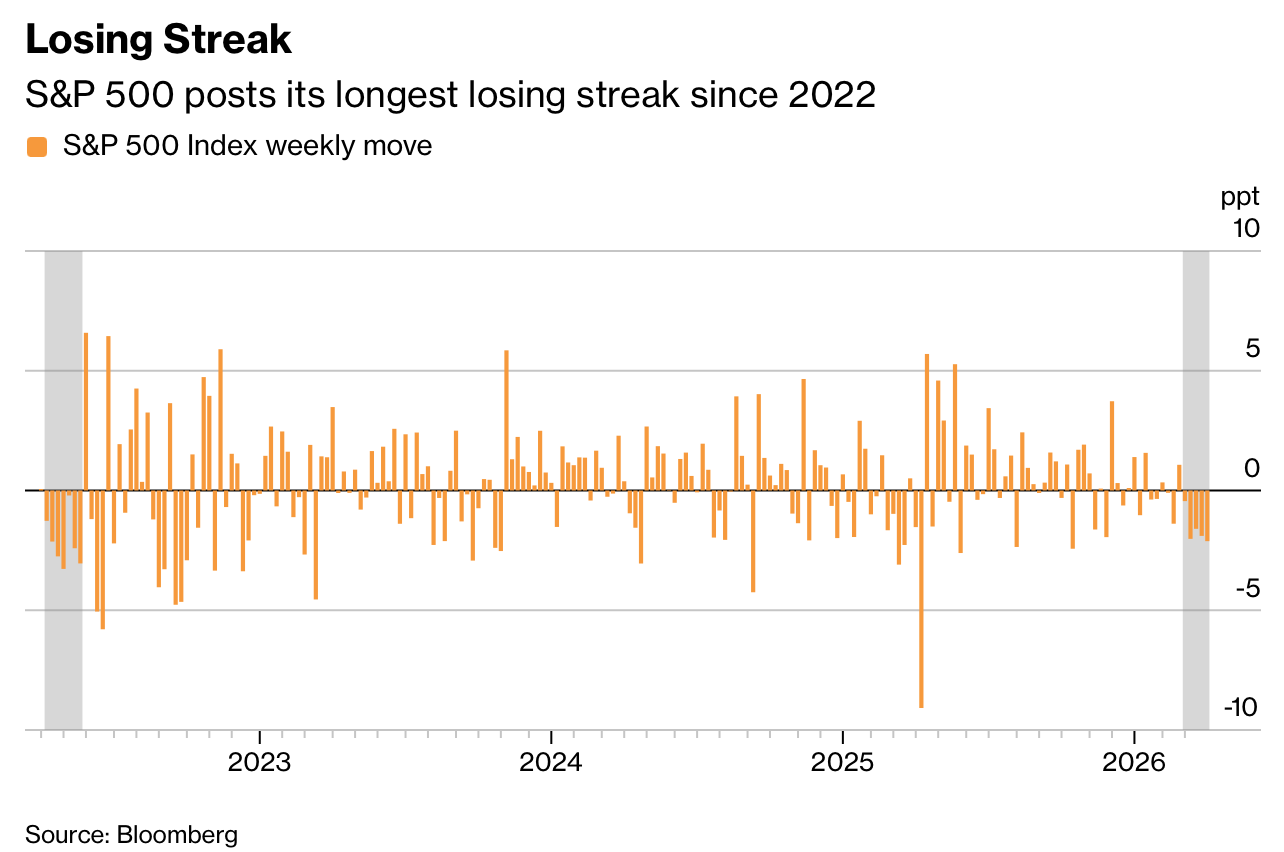
U.S. equities reversed sharply on Monday, deepening a weekly losing streak that last appeared in 2022 as risk from U.S. escalation in Iran increased with more troops deployed. The S&P 500 fell 0.4% after a 0.9% early-session gain, ending at its lowest close since August and within 1% of a correction. The Nasdaq 100 fell 0.8% after a Friday decline. Investors reacted to White House warnings of additional strikes on Iran, including U.S. critical civilian energy infrastructure, while Donald Trump’s social-media post said energy assets could be destroyed if the Strait of Hormuz was not reopened soon.
Traders interpreted Jerome Powell’s remarks as mixed: he again targeted 2% inflation but said the Federal Reserve has limited control over supply shocks such as recent Middle East energy-price surges. That message supported Treasuries as growth worries rose and fed-hike expectations were reduced. U.S. oil remained above 100 dollars a barrel for the first time since 2022. Energy shares then logged their longest winning run on record, 14 straight weeks; Morgan Stanley’s Mike Wilson said the five-week S&P 500 decline could be entering an ending phase.
Goldman Sachs said hedge-fund capitulation signs were appearing and systematic investors were losing momentum, expecting CTAs to be buyers in all scenarios over the next month. The S&P 500 is on track for its worst month since 2022, while the Nasdaq 100 is 12% below its October high and has crossed a technical correction threshold. The current Big Tech selloff is being treated as a typical turning point: the Nasdaq 100 now trades near 21 times forward 12-month earnings, only 1.7 points above the S&P 500, and similar valuation compression has previously preceded one of the S&P 500’s best year-long outperformance periods. JPMorgan strategist Mislav Matejka said this phase differs from 2022 because policy rates are much higher, wage trends are easing, and AI increases disinflation odds versus stagflation; markets are not pricing in recession, yet are far from complacent.