支撑美国人工智能繁荣的数据中心正演变为全美最具争议的政治风暴中心,其民意支持率甚至跌至核电站之下。2026年3月盖洛普民调显示反对率高达71%,8月底《经济学人》/YouGov民调亦显示63%的选民持负面看法。在此背景下,美国各县在今年前八个月审议了409项暂停建设或限制法令,达去年全年的近七倍,并在逾半数关键中期选举摇摆州中超过五分之一的县通过了禁令。地方抵制迫使两党政客迅速调整立场:伊利诺伊州州长普里茨克在6月单方面暂停了相关税收减免,得克萨斯州州长阿伯特下令全面审计设施对电网稳定性的威胁,而国会众议院委员会也在7月迅速推进了旨在限制电价冲击的《纳税人保护法案》。
公众的强烈反弹主要源于对本地基础设施负荷与公共事业支出的焦虑。福克斯新闻民调显示,75%的反对者主要担忧能源消耗、水费激增及交通压力,仅有11%针对AI本身。然而实证数据显示这些担忧部分被夸大:2025年谷歌全球数据中心与办公区耗水约109亿加仑(约410亿升),仅相当于美西南73个高尔夫球场的灌溉量;亚马逊在设施扩容下耗水量同比下降2%至25亿加仑,且全美农业灌溉用水量达数据中心总耗水量的74倍。不过电力消耗的激增确属现实挑战:劳伦斯伯克利国家实验室估计其用电占比将从2023年的4.4%飙升至2030年的9.5%至15.3%,尽管电力科学研究院指出2019至2024年间数据中心通过摊薄固定成本使平均电价降低了6%,已有30个州着手设立“大负荷”费率以迫使科技企业自筹扩网资金。
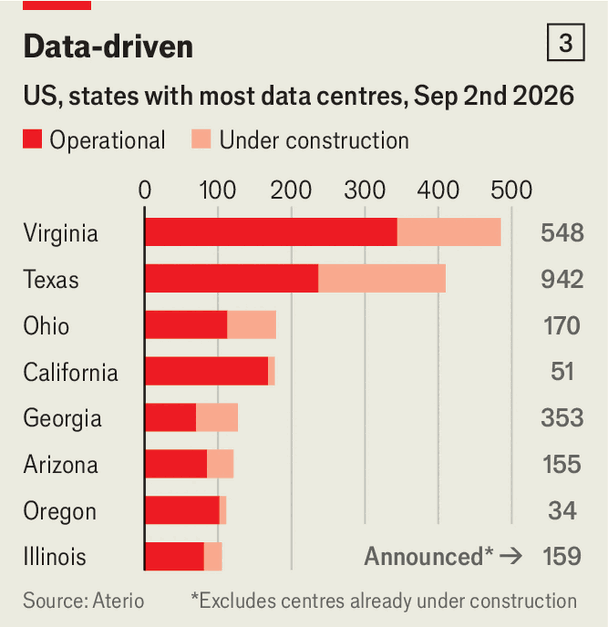
数据中心的政治博弈正在重塑传统政治联盟与产业投资版图。尽管唐纳德·特朗普警告反对者扼杀“金蛋”将导致贫穷落后,且工会组织极力反对伊利诺伊等州的限建令以挽留数十亿美元投资与就业,但地方反对浪潮在2028年大选周期前难见平息。民调表明公众立场仍具有交易弹性:埃chelon调查发现仅凭单一社区福利即可逆转反对意见,弗吉尼亚大学民调显示受访者接受补贴的中位数为每人10000美元(折合中等县城约2.4亿美元支出)。随着亚利桑那和俄亥俄暂停芯片销售税免征政策,增量投资正加速向得州等包容性更强的地区集中,目前得州在建数据中心规模已超过佐治亚、亚利桑那和宾夕法尼亚三州的总和。
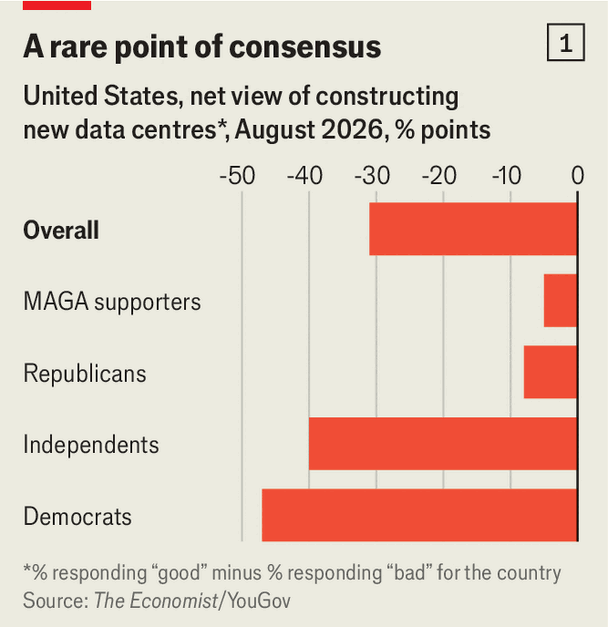
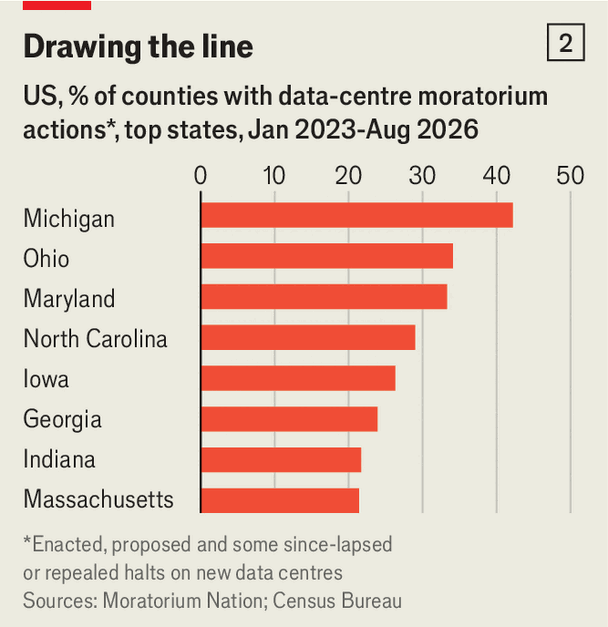
The massive data centres powering America’s artificial intelligence boom have ignited a fierce political backlash across the nation, plunging in public popularity below almost all other infrastructure, including nuclear power plants. A Gallup survey in March 2026 recorded 71% opposition, while late-August polling by The Economist/YouGov revealed that 63% of voters view them as detrimental. Consequently, US counties considered 409 moratoriums or restrictive measures in the first eight months of the year—nearly seven times the 2025 total—with more than one-fifth of counties enacting moratoriums across crucial midterm battleground states. This intense local resistance prompted prominent state governors to reverse course: Illinois suspended landmark tax incentives in June, Texas ordered sweeping power reliability audits, and the US House advanced the bipartisan Ratepayer Protection Act in July.
Voter outrage is predominantly driven by acute anxieties over utility bills and municipal resources rather than technological fears. In a Fox News survey, 75% of opponents cited power consumption, soaring water bills, and local congestion as primary grievances, whereas only 11% pointed to AI itself. Industry disclosures indicate that resource anxieties are frequently overstated: Google consumed 10.9bn gallons (41bn litres) of water across its facilities in 2025—comparable to irrigating 73 south-western golf courses—while Amazon reduced water usage by 2% to 2.5bn gallons, and agricultural irrigation consumed 74 times more water nationwide. However, grid capacity remains a tangible friction point: the Lawrence Berkeley National Laboratory projects data centres will expand their share of domestic electricity consumption from 4.4% in 2023 to between 9.5% and 15.3% by 2030, prompting 30 states to establish specialized "large-load" tariffs to shift grid-upgrade costs onto hyperscalers.
This grassroots pushback is scrambling traditional political coalitions and reshaping capital deployment ahead of future electoral cycles. While Donald Trump cautioned that blocking these facilities would leave communities economically backwards, and industrial unions warned Illinois that restrictions risk forfeiting billions of dollars and thousands of union jobs to neighboring states, regulatory friction continues to mount. Polling reveals that local sentiment remains transactional: Echelon Insights found single municipal concessions could flip opposition, while a University of Virginia study found median residents would endorse projects for $10,000 in direct compensation ($240m for a median-sized county). As states like Arizona and Ohio suspend semiconductor sales-tax waivers, corporate investment is consolidating within more accommodating jurisdictions, with Texas currently constructing more data centre capacity than Georgia, Arizona, and Pennsylvania combined.
Source: How data centres became one of America’s hottest political issues
Subtitle: Growing hatred of the facilities is reshaping the midterm elections
Dateline: Sep 3rd 2026