十周过去,伊朗战争仍在持续,霍尔木兹海峡关闭导致每天约1400万桶原油、即全球产量的14%消失;即使今天重开,今年总量也可能至少减少20亿桶。尽管如此,布伦特原油仍只有每桶106美元,远低于2022年俄乌战争后触及的129美元,也远未达到分析师预言的150—200美元。
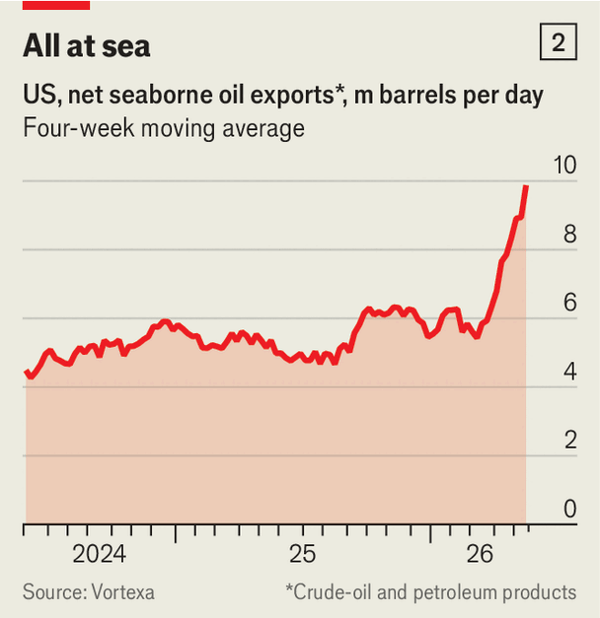
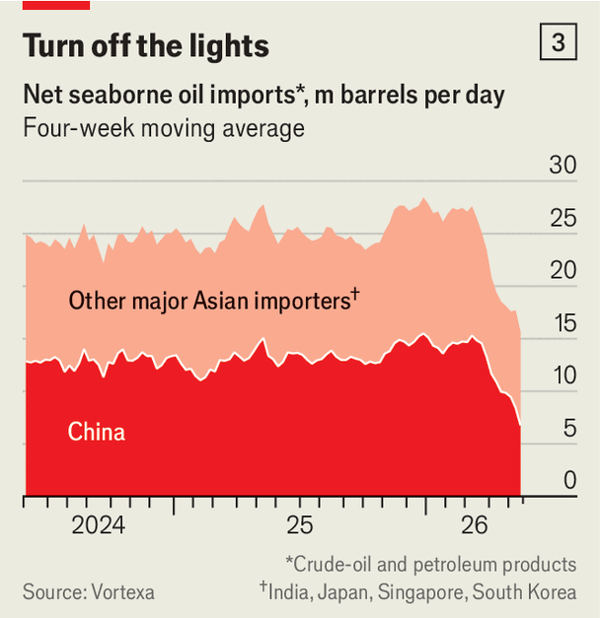
恐慌消退的核心原因,是非海湾产油国大幅增供并且主要消费地区进口骤降。到5月10日的四周内,加拿大净增40万桶/日,委内瑞拉和挪威各增20万桶/日,巴西增10万桶/日,而美国净增380万桶/日,使其净石油出口升至近900万桶/日、创历史新高。与此同时,大型买油地区的石油进口比一年前少了1100万桶/日,其中中国单独下降660万桶/日。
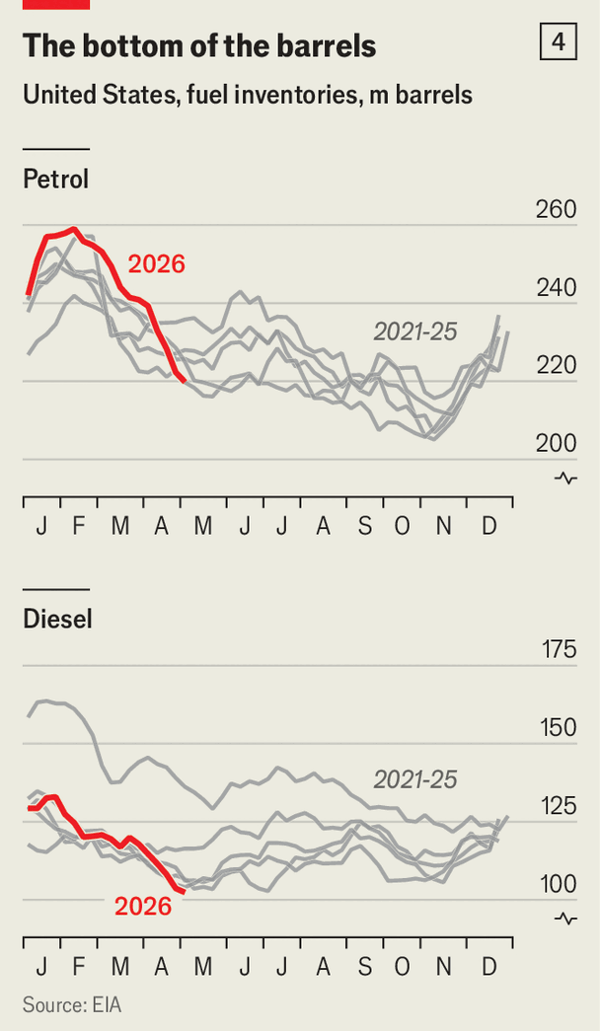
需求下滑部分反映了破坏性减量:亚洲和欧洲炼油厂因原油短缺把加工量削减近400万桶/日,海湾减少的440万桶/日成品油又把柴油、汽油和航空燃油价格推高60%至120%。但多数估计认为真实需求破坏低于500万桶/日,说明更大部分是观望而非匮乏;中国可能有约12亿桶原油库存,美国成品油出口若再受限制,汽油价格可能重返每加仑5美元,霍尔木兹若持续关闭,全球油市仍将面对清算。
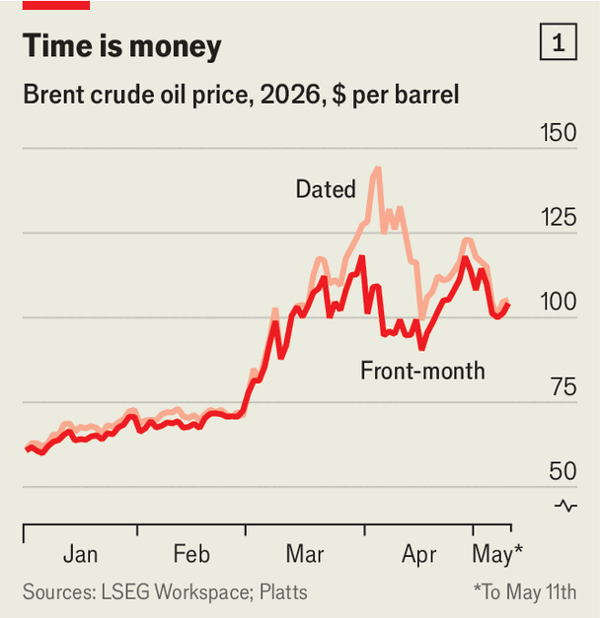
Ten weeks into the Iran war, the Strait of Hormuz remains closed, removing nearly 14m barrels of oil a day, or 14% of global output; even if it reopened today, at least 2bn barrels would probably vanish from this year’s total. Yet Brent crude is only $106 a barrel, far below the $129 reached in 2022 after Russia invaded Ukraine and nowhere near the $150-200 that analysts predicted.
The panic has faded mainly because non-Gulf producers have sharply raised exports and major buying regions have sharply cut imports. In the four weeks to May 10th, Canada shipped 400,000 more barrels per day, Venezuela and Norway each added 200,000 b/d, Brazil added 100,000 b/d, and America added 3.8m b/d, lifting its net petroleum exports to nearly 9m b/d, an all-time high.
Demand destruction has also helped, though most estimates put it below 5m b/d. Asia and Europe cut refinery throughput by nearly 4m b/d, Gulf losses in refined products pushed diesel, gasoline and jet fuel up 60-120%, and China’s crude imports fell 6.6m b/d; with China possibly holding 1.2bn barrels in storage and the U.S. risking a refined-fuel export ban, oil stocks will keep falling and prices may face renewed pressure.
Source: How the world has avoided an oil catastrophe so far
Subtitle: The great commodity-market mystery is deepening
Dateline: 5月 14, 2026 11:25 上午