伊朗战争扰乱的远不止原油。3 月 19 日,Brent 一度突破每桶 115 美元,而全球 10% 至 15% 的石油供应仍被困在 Hormuz 之后。但海湾地区还提供全球贸易尿素的 22%、铝的 24%、氦的三分之一和硫的 45%。随着无人机袭击工厂、封锁阻断出口,运输、制造和粮食生产同时承压,表明这场冲击正从能源扩散为更广泛的工业与农业供应链危机。
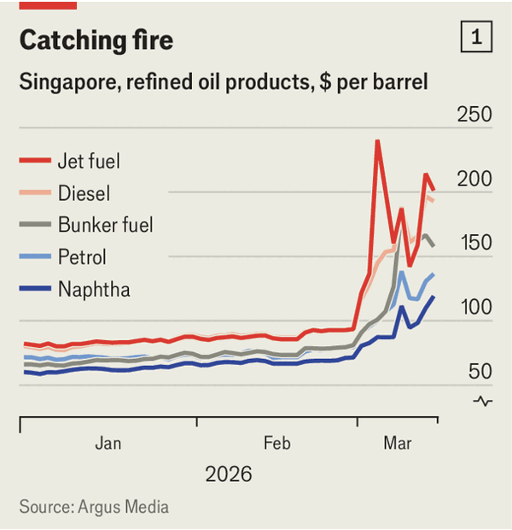
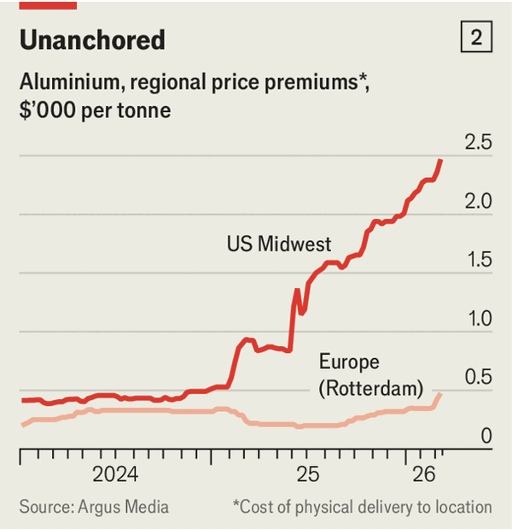
运输与制造的瓶颈已经量化显现。替代原油更轻、含硫更低,不适合许多亚洲炼厂,导致中国、印度、日本和泰国的加工削减 5% 至 15%;Vortexa 估计,125 艘成品油船、即全球船队的 5%,被困在海湾。若封锁持续,Kpler 估计大洋洲将在 36 天内耗尽 80% 的航空燃油库存,非中日韩的亚洲国家将在 12 天内严重缺汽油。工业方面,海湾占全球海运石脑油流量近 45%,还供应 26% 的工业钻石、26% 的乙二醇和 30% 的甲醇。铝价上涨 300 美元至每吨 3440 美元,接近 4 年高点。
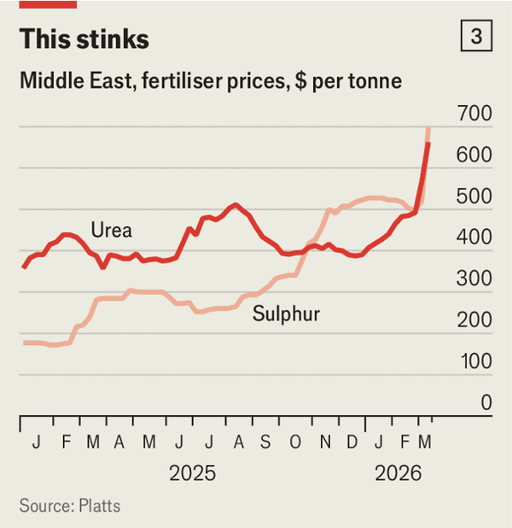
粮食链的风险或许最大。联合国估计,全球三分之一的海运化肥贸易经过 Hormuz,其中约三分之二是尿素。自战争开始以来,尿素价格上涨 35%,而美国交货价在过去 3 个月已上涨逾 70%;硫价自 2 月下旬以来也上涨 40%,突破 2022 年峰值。肯尼亚、巴基斯坦、索马里、斯里兰卡和坦桑尼亚各自有超过四分之一的化肥来自海湾,苏丹则超过一半。由于春播临近,延迟数周的化肥将无法用于 2026 年收成,而重启炼厂、冶炼厂和石化装置可能需要数月,影响或延续至 2027 年。
The Iran war is disrupting far more than crude oil. On March 19th, Brent briefly rose above $115 a barrel, while 10% to 15% of global oil supply remained trapped behind Hormuz. But the Gulf also provides 22% of the world’s traded urea, 24% of its aluminium, one-third of its helium and 45% of its sulphur. As drones strike plants and the blockade stops exports, transport, manufacturing and food production are all under pressure, showing the shock spreading from energy into broader industrial and agricultural supply chains.
The transport and manufacturing bottlenecks are already measurable. Alternative crude is lighter and lower in sulphur, unsuitable for many Asian refineries, causing processing cuts of 5% to 15% in China, India, Japan and Thailand; Vortexa estimates that 125 product tankers, or 5% of the global fleet, are trapped in the Gulf. If the blockade persists, Kpler estimates Oceania will burn through 80% of its jet-fuel stocks within 36 days, and Asian countries outside China, Japan and South Korea will be critically short of petrol within 12 days. In industry, the Gulf accounts for nearly 45% of global seaborne naphtha flows, and also supplies 26% of industrial diamonds, 26% of glycol and 30% of methanol. Aluminium prices are up $300 to $3,440 a tonne, near a four-year high.
The food chain may face the biggest risk. The United Nations estimates that one-third of global seaborne fertiliser trade passes through Hormuz, about two-thirds of it urea. Since the war began, urea prices have risen 35%, while prices for deliveries to America had already surged by more than 70% over the past three months; sulphur prices have also risen 40% since late February, above their 2022 peak. Kenya, Pakistan, Somalia, Sri Lanka and Tanzania each get more than one-quarter of their fertiliser from the Gulf, while Sudan gets more than one-half. With spring planting imminent, fertiliser arriving weeks late cannot be used for the 2026 harvest, and restarting refineries, smelters and petrochemical plants may take months, extending disruption into 2027.