1980年至2022年,美国税前收入中前1%的占比从9%升至16%,欧洲从8%升至12%;但自1990年以来,约70%的国家提高了税收与福利制度的累进性。尽管1990年至2023年G7平均税前基尼系数上升约4个百分点,凭借更强再分配,G7税后基尼系数平均值反而略有下降。
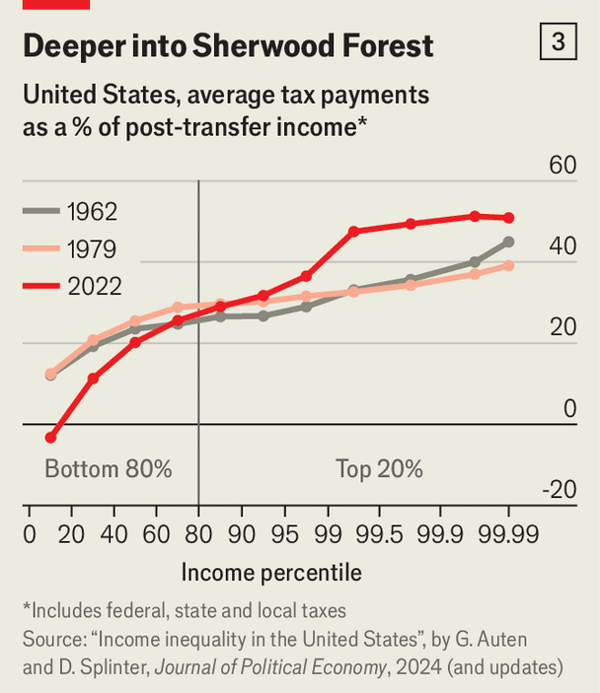
有效税负数据显示“名义高税率、实际低缴税”的旧格局已被部分逆转:美国前1%的联邦所得税平均有效税率目前为27.6%,接近2000年的历史高点28.9%;英国前1%约40%(高于2000年代的34%),加拿大前1%约39%,西班牙前1%在20年间由30%升至34%。关于超级富豪(如前0.01%)是否显著逃税,研究结论存在分歧:有研究估算其综合有效税率约50%,也有研究在不同口径下得到更低值。
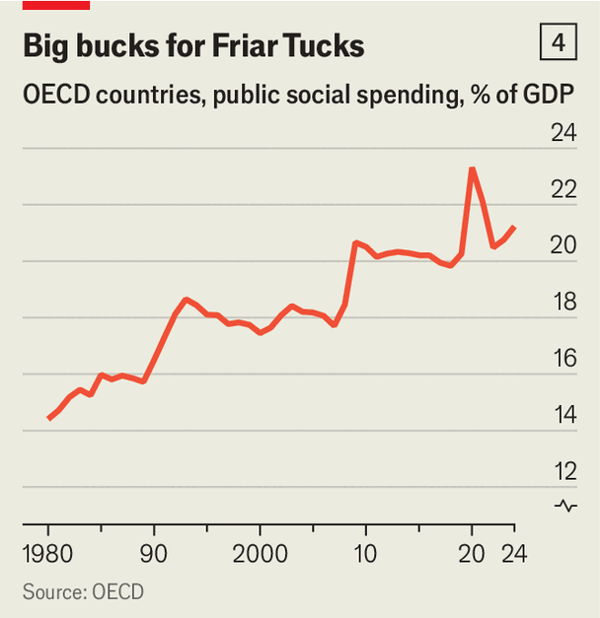
财政收入对高收入者的依赖显著增强:英国前1%贡献近27%的所得税(2000年为22%),美国前1%在2022年贡献40%(2001年为33%),韩国前1%也约40%。与此同时,社会转移支出在富裕国家从90年代中期约占GDP 18%升至约22%,美国最低收入五分位人群获得的经状况审查福利已从20世纪70年代末相当于其劳动收入的50%升至约100%,显示“高税前不平等+高再分配”已成为核心趋势与政策张力来源。
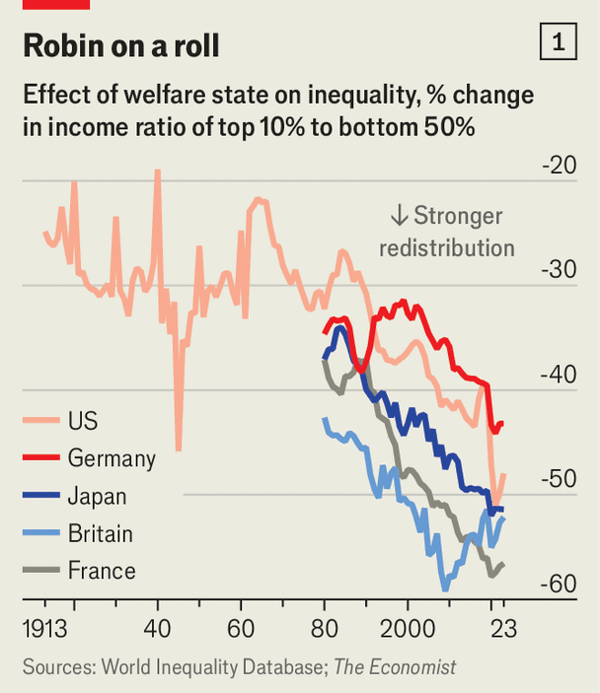
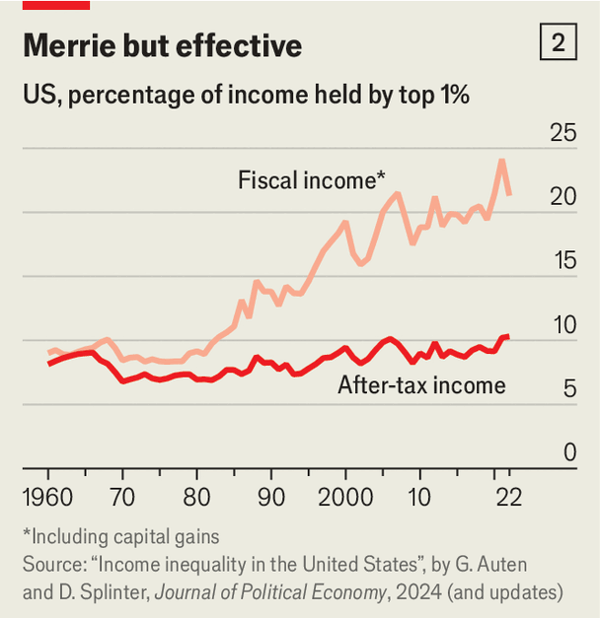
From 1980 to 2022, the top 1% share of pre-tax income rose from 9% to 16% in the United States and from 8% to 12% in Europe; yet since 1990, about 70% of countries have made tax-and-benefit systems more progressive. While the G7’s average pre-tax Gini increased by about 4 percentage points from 1990 to 2023, stronger redistribution slightly reduced the average post-tax Gini.
Effective-tax evidence suggests a partial reversal of the old pattern of high statutory rates but low actual payments: the U.S. top 1% now pays an average federal income-tax rate of 27.6%, near the 2000 peak of 28.9%; the U.K. top 1% is near 40% (up from 34% in the 2000s), Canada’s top 1% is about 39%, and Spain’s top 1% rose from 30% to 34% over 20 years. Findings on whether the ultra-rich (for example, the top 0.01%) escape heavily remain contested, with some estimates near a 50% overall effective rate and others lower under different measurement choices.
Fiscal dependence on top earners has deepened: the top 1% provide nearly 27% of U.K. income tax (up from 22% in 2000), 40% of U.S. income tax in 2022 (up from 33% in 2001), and about 40% in South Korea. At the same time, social transfers in rich countries increased from about 18% of GDP in the mid-1990s to about 22%, and in the U.S. means-tested benefits for the bottom income quintile rose from roughly 50% of earned income in the late 1970s to about 100%, reinforcing a system of higher market inequality offset by larger redistribution.
Source: The Robin Hood state is coming for the rich
Subtitle: Tax systems are more progressive than you think
Dateline: 2月 19, 2026 04:17 上午 | San Francisco