从历史上看,英国公民对天气预报员怀有深深的怀疑,这种不信任因臭名昭著的1987年“大风暴”而固化——当时一位BBC预报员在致命气旋袭击前数小时否认了飓风预警。2017年YouGov的一项民意调查显示,仅有勉强一半的人口信任天气预报。然而,公众的不信任感已显著回升,最近的一项调查显示,现在有62%的英国人信任预报员,而只有25%的人保持怀疑。这一信任度远高于经济学家的37%和政客的仅4%。这一积极转变的部分原因在于记住1987年灾难的人越来越少,以及气象精准度方面的重大技术进步。
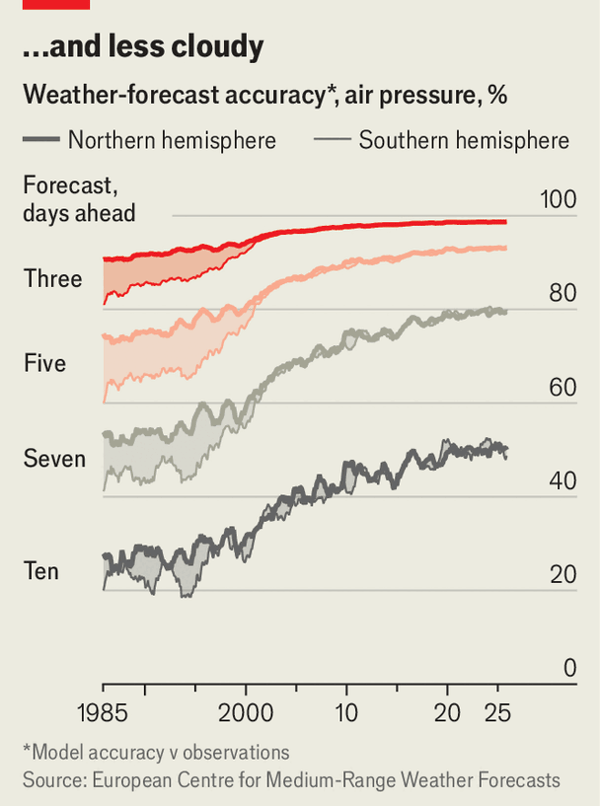
1987年的风暴促使了对天气预报技术的大量投资,导致分辨率和建模方面的戏剧性提高。如今的天气模型将英国划分为精确的2公里网格,这比十年前12公里的分辨率限制有了巨大升级。因此,现代四天天气预报的准确性现在与20世纪90年代的一天预报相当。这种可靠性意味着25岁以下、在高度可靠的天气数据伴随下长大的年轻一代,在统计学上是最信任预报员的群体。
气候变化通过增加暴雨和持续热浪等极端事件的频率,提高了准确预报的重要性。为了提高公众的参与度和安全性,英国气象局于2015年开始为重大风暴命名(例如4月份的“戴夫”风暴),并引入了彩色编码的高温警告(包括6月份英国历史上第二次发布的红色警报)。尽管技术使英国的天气更容易预测,但应对极端高温仍然是一个挑战,因为老旧房屋旨在保温且缺乏空调。虽然政府最近扩大了补贴范围以涵盖具有制冷功能的聚热泵,但超过30°C的高温依然带来重大挑战。
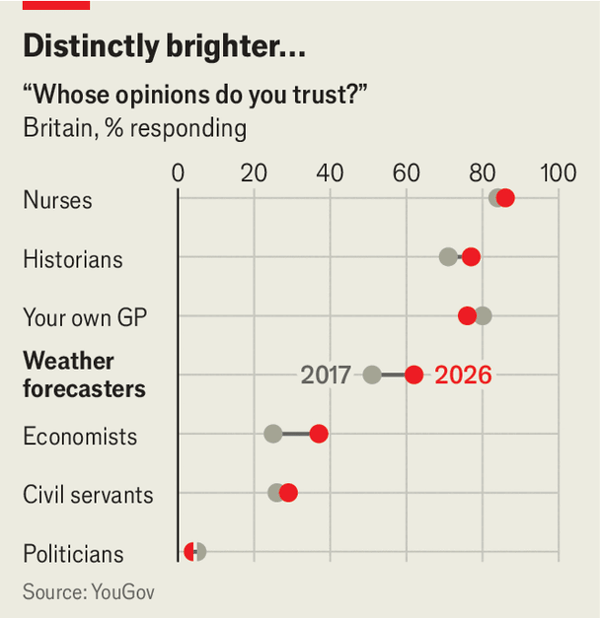
Historically, British citizens harbored deep skepticism toward weather forecasters, a distrust solidified by the infamous 1987 "great storm" when a BBC forecaster dismissed hurricane warnings hours before a deadly cyclone struck. A 2017 YouGov poll showed that barely half of the population trusted weather forecasts. However, public trust has significantly rebounded, with a recent survey revealing that 62% of Britons now trust forecasters, while only 25% remain skeptical. This placing of trust ranks well ahead of economists at 37% and politicians at a mere 4%. This positive shift is driven by the fact that fewer people remember the 1987 disaster, alongside major technological improvements in meteorological accuracy.
The 1987 storm spurred extensive investment in forecasting technology, leading to dramatic improvements in resolution and modeling. Present-day weather models divide Britain into precise 2km grids, a massive upgrade from the 12km resolution limits of a decade ago. As a result, the accuracy of a modern four-day weather forecast is now comparable to that of a one-day forecast in the 1990s. This reliability means that younger demographics under the age of 25, who have grown up with access to highly dependable weather data, are statistically the most likely to trust forecasters.
Climate change has heightened the importance of accurate forecasting by increasing the frequency of extreme events like intense downpours and prolonged heatwaves. To improve public engagement and safety, the Met Office began naming major storms in 2015, such as Storm Dave in April, and introduced color-coded heat warnings, including only the nation's second-ever red alert in June. While technology has made British weather easier to predict, adapting to extreme heat remains difficult because older homes are designed to retain heat and lack air conditioning. Although the government has recently expanded grants to cover cooling-capable heat pumps, high temperatures exceeding 30°C continue to pose major challenges.
Source: Why Britons now trust weather forecasters
Subtitle: Credit greater accuracy and better communicatio
Dateline: Jul 09, 2026 05:57 AM