最近的精算和临床研究表明,富裕国家老年人痴呆症的发病率显著下降,这与无法控制的流行病预测相矛盾。在美国,埃里克·斯塔拉德(Eric Stallard)的研究显示,虽然40年前85至89岁的美国人中有十分之三患有痴呆症,但到2024年,这一比例仅为十分之一,这意味着每个连续的年度出生队列发病率下降了2.5%至3%。这一趋势在国际上也得到了印证:在北美和欧洲的六个国家,经年龄调整后的痴呆症诊断率每十年下降13%;而在弗雷明汉心脏研究中,近40年来新病例平均每十年下降20%。计算机模拟表明,如果这些下降趋势持续下去,到2050年荷兰痴呆症病例数将仅增长43%,而不是翻倍以上。
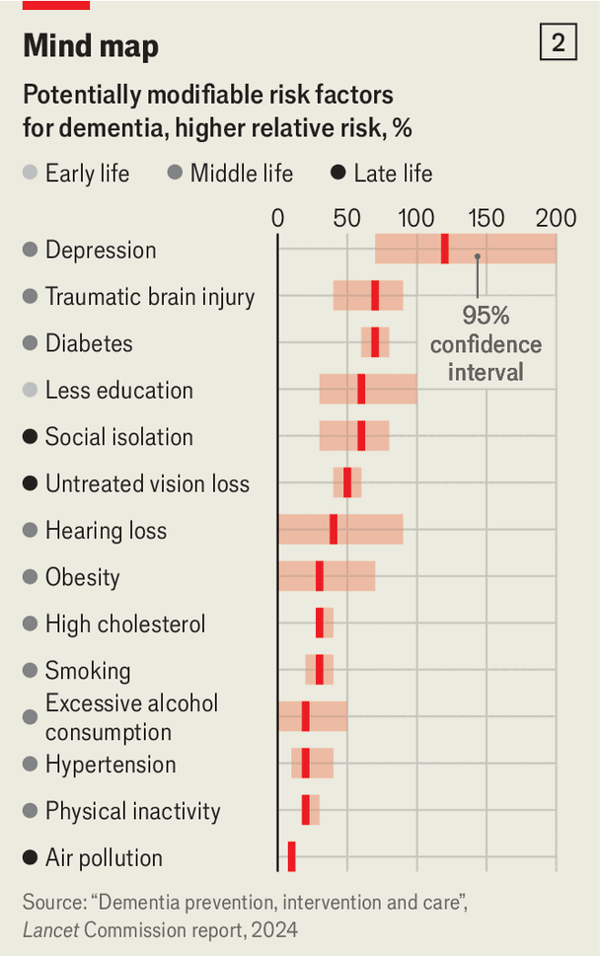
尽管全球寿命的延长意味着患者的绝对数量仍将继续增长,但假设痴呆症发病率不变的模型高估了未来的全球经济负担,预计到2050年该负担将高达16.9万亿美元。《柳叶刀》痴呆症委员会估计,通过针对生命不同阶段的14个可改变的风险因素,全球高达45%的病例可以被延迟或预防。开创性的临床试验(如芬兰老年干预预防认知障碍和残疾研究,简称FINGER)已经证实,多领域干预措施(包括健康饮食、体育锻炼、认知训练和心血管管理)可以显著降低认知退化的风险,特别是对于携带高风险ApoE4基因的人群。解决中年听力损失和高胆固醇等常见风险因素可预防14%的病例。
预防性护理的创新带来了额外的希望,特别是威尔士的一项自然实验表明,带状疱疹疫苗在接种后至少七年内将痴呆症风险降低了20%。相反,针对淀粉样蛋白斑块的药物治疗(如抗体药物Lecanemab和Donanemab)在现实世界中的益处有限,同时伴随着脑出血和脑水肿的严重风险,特别是对于ApoE4携带者。目前活跃的研究正在探索重新利用药物,例如在MET-FINGER试验中将糖尿病药物二甲双胍与生活方式改变相结合。由于70岁后痴呆症的风险大约每五年翻一倍,将平均发病年龄仅延迟五年就可以使全球病例减少约50%,这突显了公共卫生干预措施的巨大潜力。
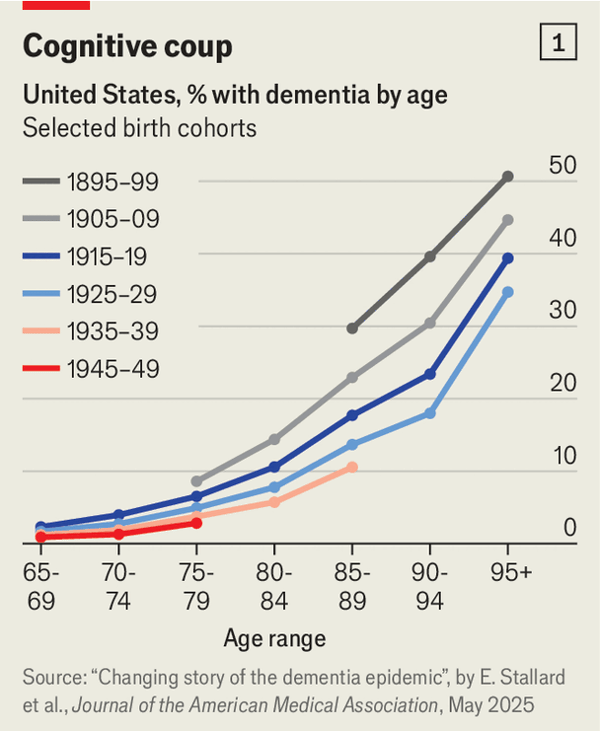
Recent actuarial and clinical research has revealed a striking decline in the incidence of dementia among the elderly in rich nations, contradicting predictions of an uncontrollable epidemic. In the United States, research by Eric Stallard showed that while three in ten Americans aged 85 to 89 had dementia 40 years ago, by 2024 only one in ten did, representing a 2.5% to 3% decline for each successive annual birth cohort. This trend is mirrored internationally, with age-adjusted dementia diagnoses falling by 13% per decade across six North American and European countries, and new cases dropping by an average of 20% per decade over 40 years in the Framingham Heart Study. Computer simulations demonstrate that if these declines persist, the number of Dutch dementia cases will rise by just 43% by 2050 rather than more than doubling.
Although rising global longevity means the absolute number of sufferers will continue to grow, modeling that assumes static dementia rates overestimates the future global economic burden, which has been projected to reach up to $16.9 trillion by 2050. The Lancet Commission on Dementia estimates that up to 45% of cases worldwide could be delayed or prevented by targeting 14 modifiable risk factors throughout life. Groundbreaking clinical trials, such as the Finnish Geriatric Intervention Study to Prevent Cognitive Impairment and Disability (FINGER), have confirmed that multi-domain interventions—including healthy diet, physical exercise, cognitive training, and cardiovascular management—significantly reduce the risk of cognitive decline, particularly for individuals carrying the high-risk ApoE4 gene. Addressing common risk factors like mid-life hearing loss and high cholesterol could prevent 14% of cases.
Innovation in preventative care offers additional hope, notably through a natural experiment in Wales showing that the shingles vaccine reduced dementia risk by 20% for at least seven years. Conversely, pharmaceutical treatments targeting amyloid-beta plaques, such as the antibodies Lecanemab and Donanemab, offer only modest real-world benefits while carrying serious risks of brain bleeding and swelling, particularly for ApoE4 carriers. Active research is now exploring repurposed drugs, such as using the diabetes medication metformin alongside lifestyle changes in the MET-FINGER trial. Since dementia risk doubles approximately every five years after the age of 70, delaying the average onset by just five years would cut the global caseload by roughly 50%, highlighting the vast potential of public health interventions.
Source: The world is making heady progress in the fight against dementia
Subtitle: Incidence among the elderly is falling fast
Dateline: Jul 09, 2026 05:23 AM | Helsinki