美国总统在战争初期通常会获得支持上升的“团结效应”。1991年海湾战争前乔治·H·W·布什支持率为64%,发动战争后迅速升至82%;2001年乔治·W·布什在反恐战争开始后支持率从51%跃升至90%。相比之下,唐纳德·特朗普在2026年伊朗战争开始时支持率约40%,与公众对战争的支持比例几乎一致。共和党内部支持度较高,83%的共和党人认可其对伊朗政策,但分裂明显:93%的MAGA共和党人支持,而非MAGA共和党人支持率为64%。
MAGA阵营支持战争部分源于对特朗普个人的忠诚,而非明确的反干预原则。调查显示MAGA支持者与传统孤立主义者重叠有限。特朗普倾向于短期、戏剧化的军事行动,例如特种部队行动或斩首式打击,这种策略在其支持者中具有吸引力。例如此前针对委内瑞拉领导人的突袭行动后,MAGA支持率从略高于50%上升至约80%。目前政府官员中,战争部长Pete Hegseth在MAGA选民中拥有最高好感度。
然而支持可能取决于战争持续时间和经济影响。MAGA支持者认为冲突将短暂结束的概率约为普通公众的两倍,但若油价持续上涨可能削弱支持。由于霍尔木兹海峡局势推高全球能源价格,美国汽油价格上涨对依赖大型汽车的共和党选民影响更大。与此同时,部分保守派评论员批评战争违背特朗普结束“永远战争”的承诺。如果冲突升级为长期战争或需要地面部队,当前约90%的MAGA支持率可能面临严峻考验。
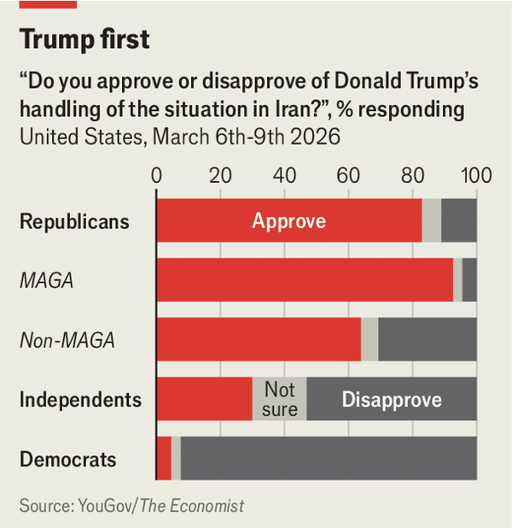
American presidents often experience a “rally around the flag” effect during war. Before the 1991 Gulf war George H.W. Bush’s approval rating stood at 64% and surged to 82% after the conflict began. In 2001 George W. Bush’s approval rose from 51% to 90% after launching the war on terror. By contrast Donald Trump’s approval rating during the 2026 Iran conflict is about 40%, roughly matching overall public support for the war. Among Republicans support is higher, with 83% approving of his handling of Iran, but divisions remain: 93% of self-identified MAGA Republicans support the war compared with 64% of non-MAGA Republicans.
MAGA backing reflects loyalty to Trump personally rather than a consistent anti-interventionist ideology. Surveys show only partial overlap between MAGA supporters and traditional isolationists. Trump’s preference for dramatic, short military operations—such as special-forces raids or leadership strikes—appeals strongly to his base. After a raid targeting Venezuela’s leader, support among MAGA Republicans for removing him rose from just over 50% to about 80%. Within the administration, war secretary Pete Hegseth currently holds the highest favourability rating among MAGA supporters.
Support may depend heavily on the conflict’s duration and economic consequences. MAGA voters are roughly twice as likely as the general public to believe the war will last less than a month. However rising oil prices linked to disruptions around the Strait of Hormuz could erode backing, particularly among Republican voters who rely heavily on large vehicles and notice fuel-price changes quickly. Some conservative commentators also argue that the war contradicts Trump’s promise to end “forever wars”. If the conflict becomes prolonged or requires ground troops, the president’s roughly 90% approval among MAGA supporters could face a major test.