8月10日,哥伦比亚发生7.4级强烈地震,震中位于西部乔科省基布多附近,已造成全国至少265人遇难。尽管此次地震震源深度约为6月委内瑞拉致命地震的10倍,从而在一定程度上削弱了地表破坏力,但地震仍对局部地区造成严重摧残。刚就任三天的哥伦比亚新总统阿韦拉多·德拉埃斯普列拉迅速接管救灾指挥,并宣布国家进入经济紧急状态,以便绕过国会直接通过行政法令调拨国家预算用于救灾,应对这场令人联想到1999年造成约1230人遇难的历史性地震灾难。
然而,灾后救援凸显了哥伦比亚严重的区域不平等与治理撕裂。乔科省是该国最贫困的省份,当地人口中75%为非裔哥伦比亚人,13%为原住民,基布多医院是该省唯一具备基础外科手术能力的医疗机构。当地缺乏重型救援设备,救援队在震后第2天才全面展开作业并错过了黄金72小时救援窗口,在废墟中搜救出的3人中有2人最终死亡,灾民面临断水断电且无人问津的绝境;相比之下,在富裕的考卡山谷省及其首府卡利,政府迅速调派了首都专家团队,成功营救出88人,救援物资也能快速通过陆路运抵重灾区马尼萨莱斯和佩雷拉(两地遇难人数占全国一半以上)。
新政府的救灾执行力还受到体制腐败与政治交接失序的严重拖累。负责自然灾害响应的核心机构——国家灾害风险管理部门在过去几年中因贪腐官员侵吞公款而陷入资金匮乏。此外,德拉埃斯普列拉此前拒绝与左翼前总统古斯塔沃·佩特罗的政府进行有序权力交接,导致新内阁面临严重的灾情信息缺失和应对能力断层。尽管总统曾誓言远离波哥大精英阶层、试图在远隔震区的家乡巴兰基亚执政,但严峻的灾后重建现实正迫使他回归首都依托中央部委与国际伙伴协调全局。
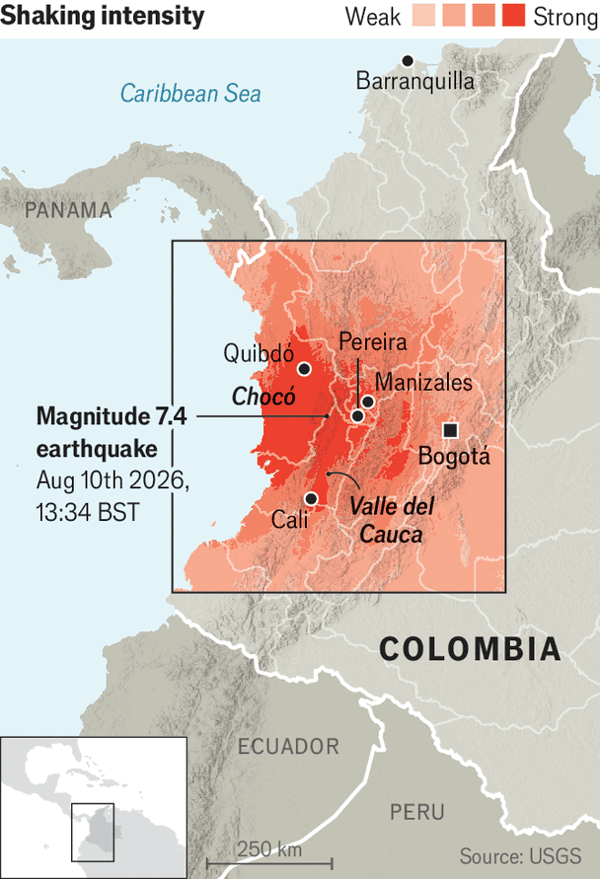
On August 10th, a powerful 7.4-magnitude earthquake struck western Colombia near Quibdó in the state of Chocó, claiming at least 265 lives nationwide. Although the tremor originated roughly ten times deeper in the Earth’s crust than the devastating Venezuelan quakes in June, reducing its surface destruction, the disaster posed an immediate test for newly inaugurated President Abelardo de la Espriella, who assumed office just three days prior. To bypass congressional gridlock and finance emergency relief, the president declared a state of economic emergency, invoking comparisons to the tragic 1999 earthquake that killed approximately 1,230 Colombians.
The disaster response starkly exposed Colombia's acute regional inequality and infrastructure disparities. In Chocó—the country’s poorest department, where 75% of residents are Afro-Colombian and 13% are indigenous—Quibdó's municipal hospital is the sole facility offering basic surgery. Hindered by severe machinery shortages, rescue teams deployed late, missing the critical 72-hour survival window, with two of the three individuals pulled from the rubble succumbing to injuries. Conversely, in the affluent neighbouring department of Valle del Cauca and its capital Cali, expert teams deployed from Bogotá rescued 88 survivors, while direct overland logistics enabled prompt aid delivery to hard-hit cities like Manizales and Pereira, which accounted for over half of total casualties.
Emergency relief operations are further paralyzed by entrenched administrative dysfunction and abrupt political transitions. The primary response agency, the National Unit for Disaster Risk Management, faces severe insolvency after years of systemic corruption and embezzlement by public officials. Furthermore, de la Espriella’s prior refusal to participate in formal transition briefings with outgoing leftist President Gustavo Petro has deprived the executive branch of institutional intelligence. This administrative void forces heavy reliance on regional authorities—a model functioning moderately well in wealthier coffee-growing zones and Valle del Cauca, but leaving marginalized areas like Quibdó entirely destitute.
Source: A big earthquake reveals two very different Colombias
Subtitle: The new president, Abelardo de la Espriella, took office three days before it struck
Dateline: 8月 13, 2026 03:43 上午 | Quibdó