脱欧公投十年后,受全球商品出口份额下降17%的推动,英国的人均GDP预计比原本水平低2.5%至8%。尽管与欧盟的贸易仍然免关税,但英国最小的五分之一出口商对欧盟的销售额下降了30%,迫使超过1.6万家小企业完全退出了大陆市场。
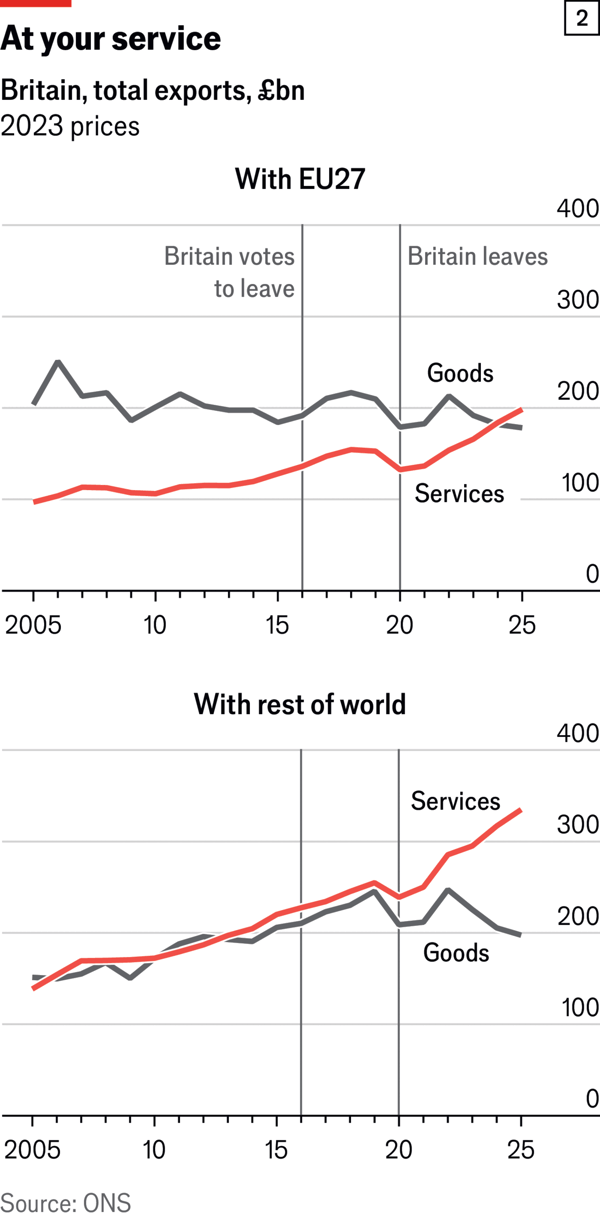
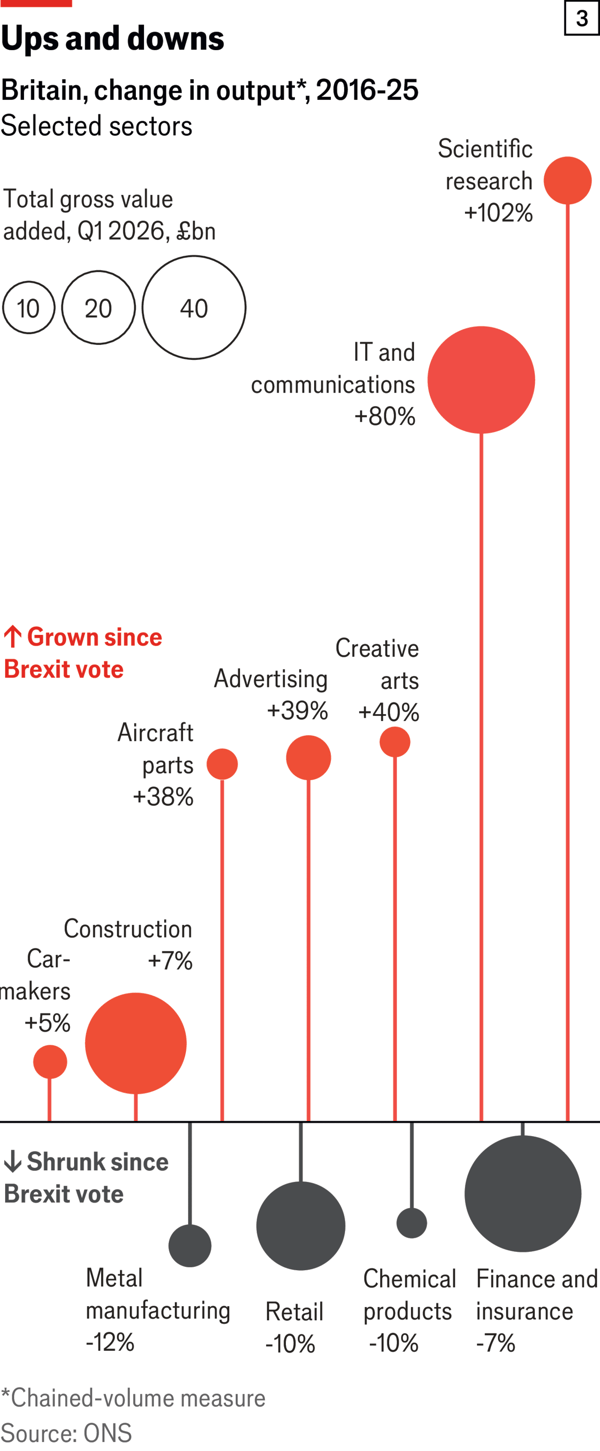
相反,英国的服务出口在2016年至2025年间实际增长了47%,但新的贸易壁垒仍导致受影响的服务行业下降了16%,并将金融服务占出口的比例从32%降至24%。此外,长达六年的投资停滞严重限制了资本支出,抑制了整个宏观经济的生产率增长。
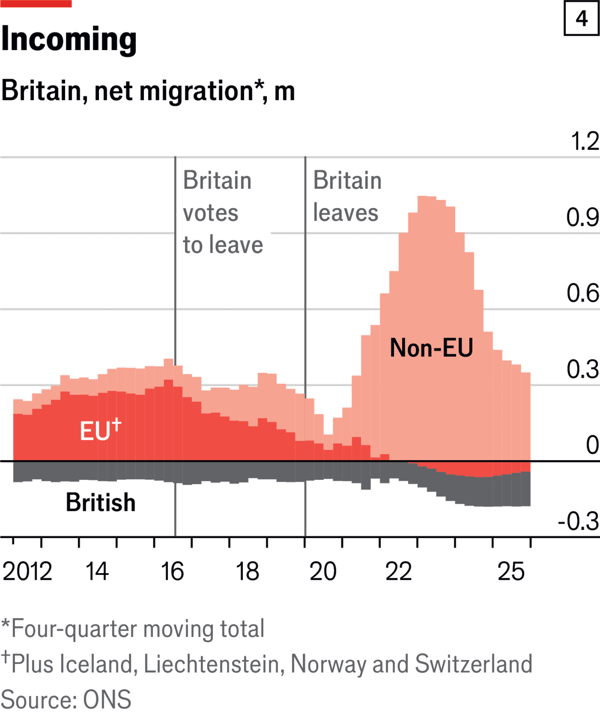
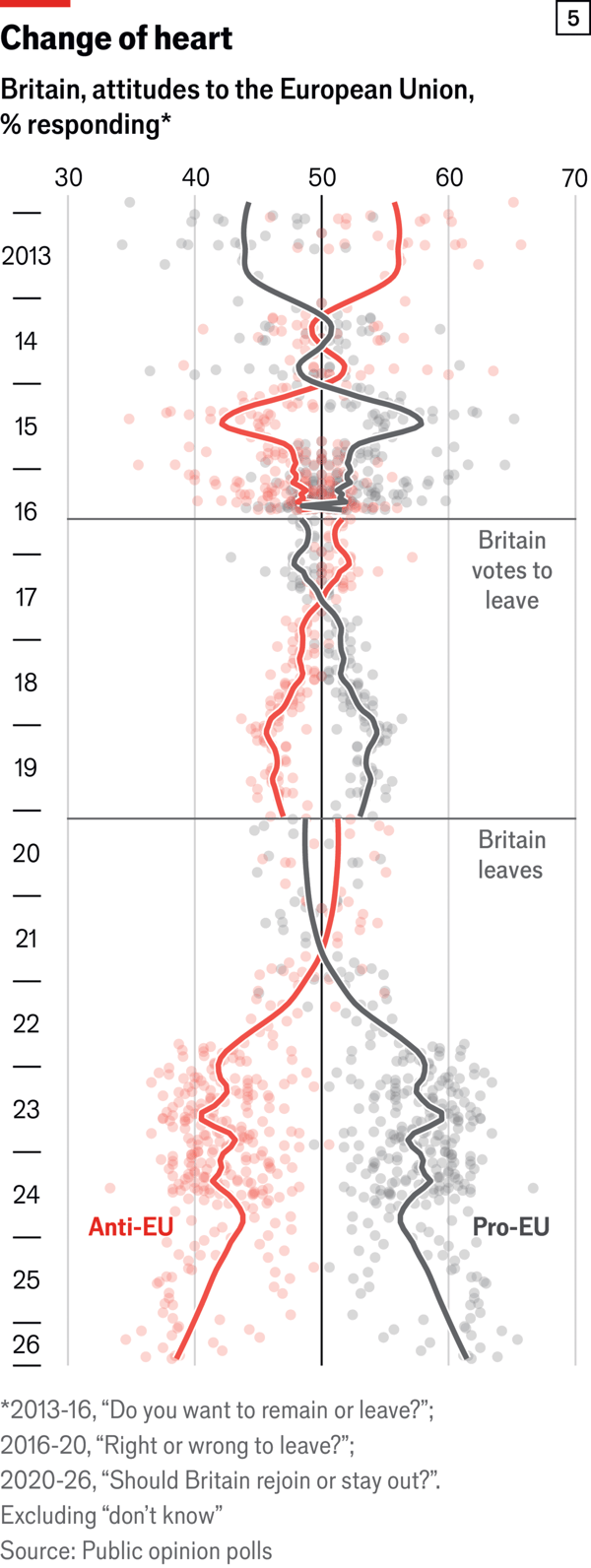
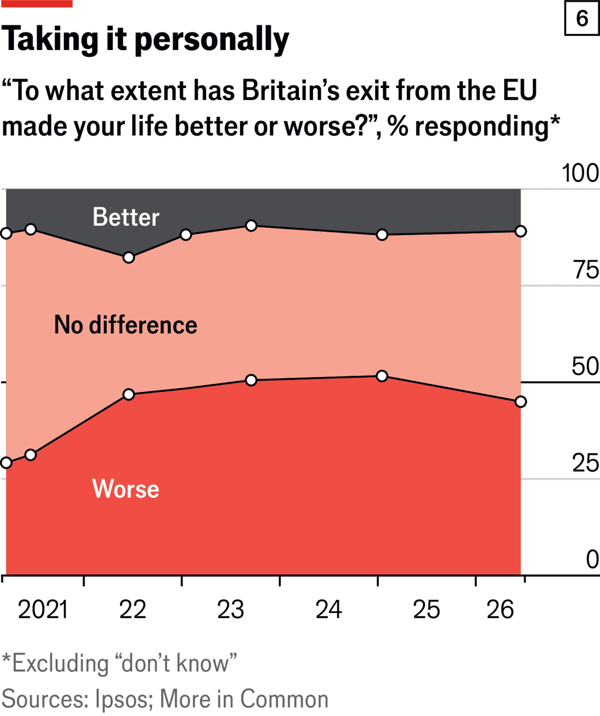
出乎意料的是,来自欧盟以外的净移民在2023年飙升至100万人的峰值,使桑德兰等地的非欧盟就业份额在2019年至2024年间从3%上升到10%。如今,公众情绪发生了变化,57%的英国人认为脱欧是一个错误,43%的人报告称这让他们的日常生活变得更糟。
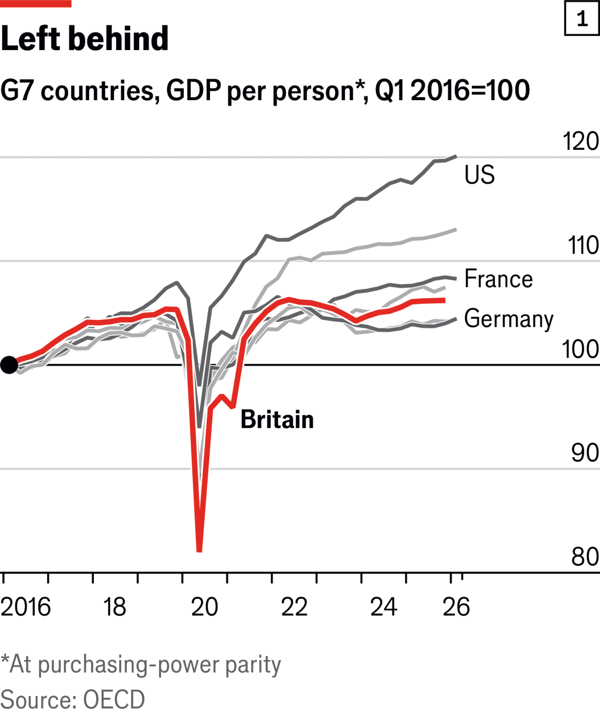
Ten years after the Brexit referendum, Britain's GDP per capita is estimated to be 2.5% to 8% lower than it would have been, driven by a 17% decline in its share of global goods exports. While trade with the European Union remains tariff-free, the smallest fifth of British exporters saw EU sales drop by 30%, forcing over 16,000 small businesses to exit the continental market entirely.
Conversely, Britain's services exports grew by 47% in real terms between 2016 and 2025, although new trade barriers still caused a 16% decline in affected service sectors and reduced financial services from 32% to 24% of exports. Furthermore, a prolonged six-year investment strike has severely constrained capital expenditure, suppressing productivity growth across the broader economy.
Unexpectedly, net immigration from outside the EU surged to a peak of 1 million in 2023, increasing the non-EU employment share in places like Sunderland from 3% to 10% between 2019 and 2024. Today, public sentiment has shifted, with 57% of Britons believing Brexit was a mistake and 43% reporting that it has made their daily lives worse.
Source: Ten years on, how the Brexit vote changed Britai
Subtitle: In many small ways, and mostly for the worse
Dateline: 6月 18, 2026 06:43 上午 | Sunderland