西南极冰盖包含可致全球海平面上升 5 米的储水量,其中外围冰川单独崩解即可在初期触发逾 1 米的上升,威胁约 2.3 亿生活在低于 1 米区域的人口。2014 年观测确认关键冰川已进入不可逆退缩;2016 年的研究提出“海洋冰崖不稳定”(MICI)机制,推算 2100 年前南极可贡献逾 1 米海平面上升;若排放持续,至 2300 年累计可能达 15 米。IPCC 的后续评估给出更保守情形:2100 年全球总上升 0.5–1 米。然而模型差异巨大,尤其集中在冰架崩塌速度与冰崖链式坍塌是否能在数十年内发生。
后续研究提出多项减速机制。冰崖倒塌会导致上游冰体迅速拉伸与变薄,使崖高下降并削弱连锁反应;冰山与海冰混合形成的“冰碎浆”可在短期内提供支撑;地壳回弹在数十年即可发生,在中速退缩条件下可抬升冰体、减缓海水侵蚀。相反,在快速退缩情形下,回弹可能将盆地内融水推向全球海洋,反而增加海平面。此外,对第三纪至上新世古海岸线的新校正显示古海平面可能被高估,从而弱化对极端快速退缩模型的支持。
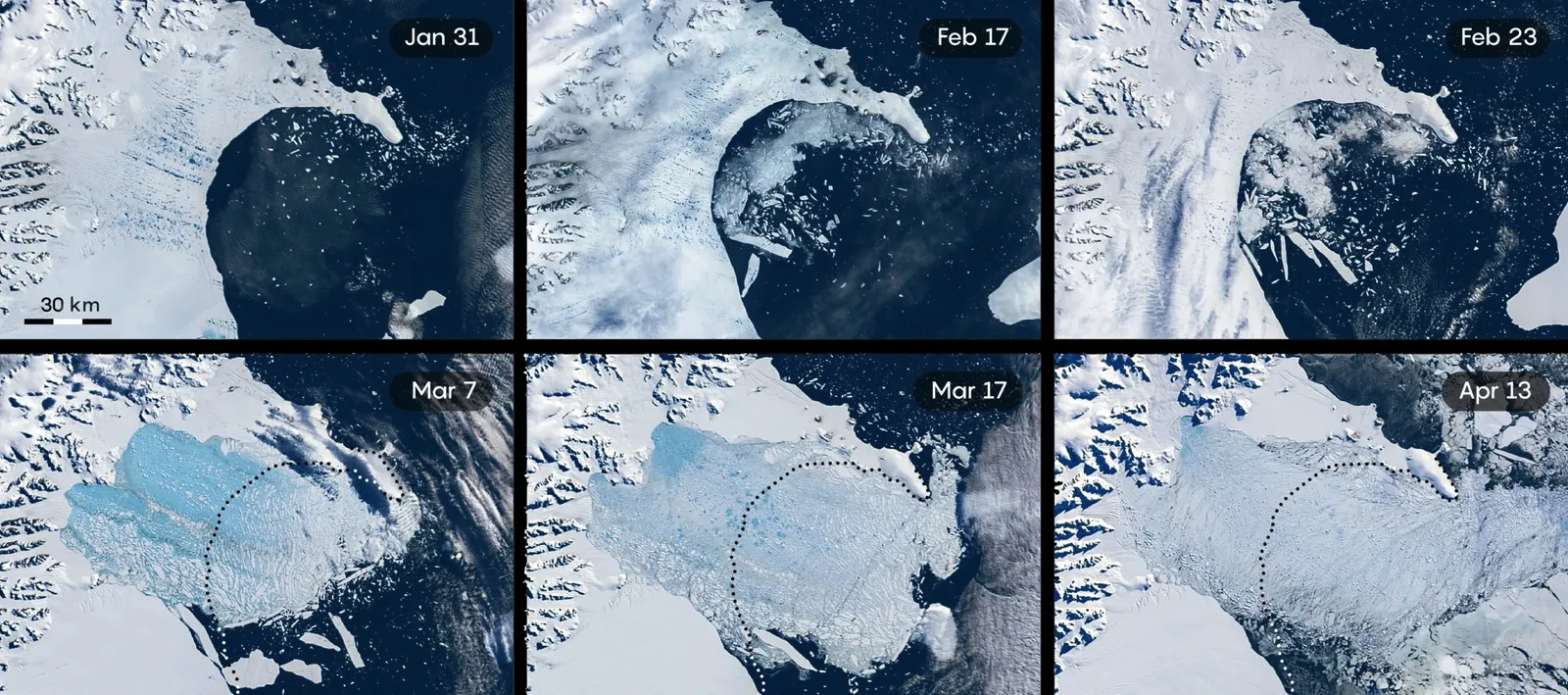
观测记录显示自 1990 年代起阿蒙森海沿岸冰川持续加速,Larsen B 崩解后其后方冰川流速最高增加 8 倍,证明断裂可超越冰川补给。表面融化与水力润滑过程在模型中常被低估,但研究表明其可通过裂隙注水促进断裂。IPCC 目前估计 2100 年总上升 0.5–1 米,若 MICI 成立,上升可能翻倍。科研共识指向高不确定性:碳排放越高,急速退缩触发的风险越大,2100 年海岸线将与今日截然不同。
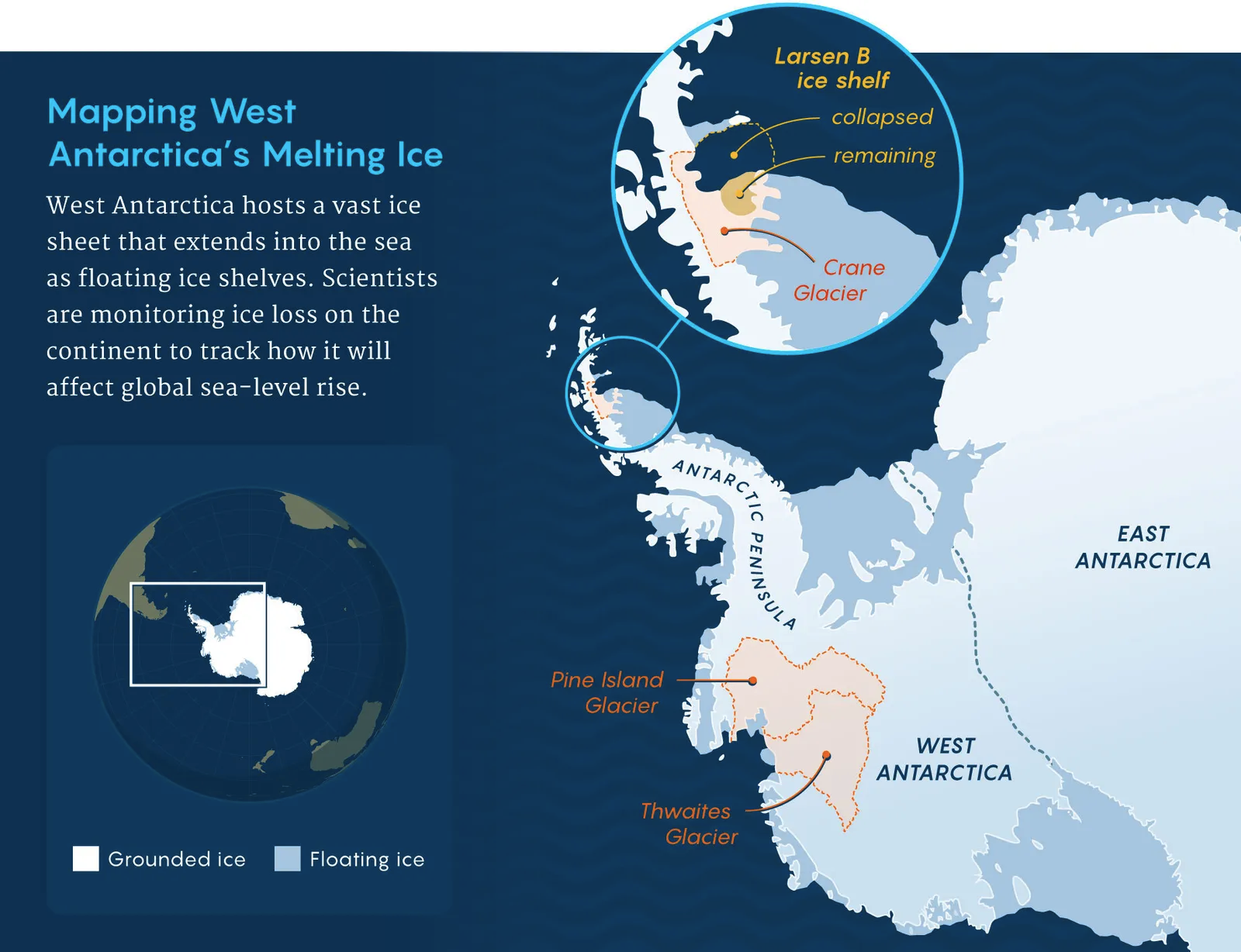
The West Antarctic Ice Sheet holds enough water to raise global sea levels by 5 meters, with peripheral glacier loss alone capable of producing more than 1 meter of rise, threatening roughly 230 million people living below 1 meter elevation. Observations in 2014 confirmed irreversible retreat, and a 2016 study proposed marine ice cliff instability (MICI), projecting over 1 meter of Antarctic-driven rise by 2100; under continued emissions, totals could reach 15 meters by 2300. The IPCC later offered more conservative estimates of 0.5–1 meter total rise by 2100. Model disagreement centers on whether ice-shelf collapse and cliff failure can propagate over decades rather than centuries.
Subsequent work identified several stabilizing mechanisms. Cliff collapse stretches and thins upstream ice, reducing cliff height and weakening cascading failure; iceberg–sea-ice mélange can temporarily brace cliffs; and bedrock rebound occurring over decades can lift ice and slow intrusion under moderate retreat rates. Under rapid retreat, however, rebound could expel basin meltwater into the ocean, increasing sea level. Revised interpretations of Pliocene shorelines indicate ancient sea levels may have been overestimated, weakening support for extreme retreat scenarios.
Observations show accelerating glacier flow along the Amundsen Sea since the 1990s, and after Larsen B’s collapse, downstream glaciers sped up by as much as eightfold, demonstrating fracture can outpace ice supply. Surface melt and hydrological lubrication are underrepresented in models but can enhance fracturing. The IPCC currently projects 0.5–1 meter rise by 2100, with MICI potentially doubling that. Consensus emphasizes deep uncertainty: higher emissions raise the probability of rapid destabilization, leaving coastlines in 2100 radically different from today.