日本与中国围绕高市早苗“台湾有事=日本存亡危机事态”言论的争端,重新凸显 2015 年安倍政府通过的安全法体系。该法律首次允许在“明确危及日本国民生命与自由”的情况下行使集体自卫权,协助“与日本关系密切的外国”遭受攻击时的美军。但专家一致强调:此框架并不意味着日本会为保卫台湾本岛而作战。RAND 的 Hornung 指出,自卫队不会在台湾地面参战,其角色将集中在东海空域与海域为美军提供护航、空中掩护、反潜与侦察支持。日本虽不担任“矛尖”,但其资源规模可使美国在“客场作战”时更集中力量。
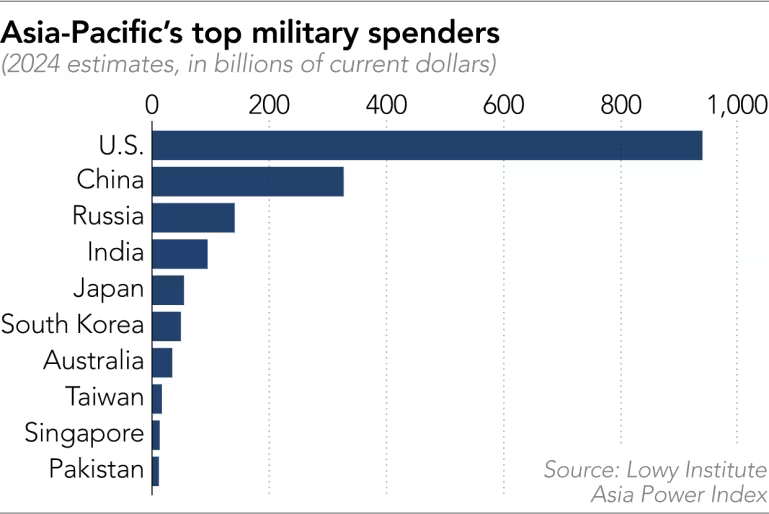
区域军事平衡数据显示,日本防卫开支在亚洲排名第 5、超过 540 亿美元,尽管远低于美中。国内外批评者称高市发言“越线”,但此前安倍与麻生亦发表过类似看法,只是非正式身份。RUSI 分析指出,高市只是“调高音量”,这或有助于对北京传达明确威慑信号。日本前陆自参谋长岩田清文认为,高市的言论强化了对中国的“战意+战力”讯号,且中国的强烈反应本身证明威慑有效。美国方面因特朗普对台政策不确定,使日本对自身威慑表达更为积极。
中国策略则呈强硬民粹言论与务实经济施压并行。部分中国民族主义意见领袖鼓吹极端报复(如稀土禁运、海军部署),但专家认为实际手段更可能是进口限制、旅游管制、行政性拖延等逐步升级的贸易惩罚。反效果正在显现:共同社 11 月民调显示 48.8% 支持高市观点(认为台海=存亡危机事态)、44.2% 反对;60.4% 支持增加防卫费(34.7% 反对)。若此趋势延续,日本将进一步增强防卫能力——从长期看,这对中国不利。
Japan’s dispute with China over Prime Minister Sanae Takaichi’s remarks on Taiwan has refocused attention on the 2015 Abe-era security laws enabling limited collective self-defense. Under this framework, Japan may aid the U.S. if attacks on a “closely related foreign country” pose a “survival-threatening situation” for Japan, but analysts stress this does not mean Japan would fight to defend Taiwan itself. RAND’s Jeffrey Hornung notes the SDF would not engage in ground combat on Taiwan; instead, Japan would operate in the East China Sea providing escorts, air cover, anti-submarine support, and reconnaissance to bolster U.S. forces. Japan would not be “the tip of the spear,” but its support would materially strengthen U.S. operations, especially given America’s “away game.”
Japan ranks 5th regionally in defense spending at over $54 billion, far below the U.S. and China. Critics at home and in Beijing argue Takaichi “crossed a line,” but earlier leaders—including Abe and Aso—made similar statements informally. RUSI analysis argues Takaichi merely “raised the volume,” enhancing deterrence by signaling resolve to Beijing amid uncertainty over U.S. commitment under President Trump. Former GSDF chief Kiyofumi Iwata says deterrence requires clear communication of will and capability—something Takaichi achieved.
China’s reaction features inflammatory nationalist rhetoric (including rare-earth embargo fantasies) but is likely to manifest through calibrated economic pressure such as import curbs, slowed administrative processes, and tourism restrictions. This may be backfiring: a Kyodo poll shows 48.8% agree that a Taiwan contingency qualifies as a survival-threatening situation, versus 44.2% who disagree; 60.4% support increased defense spending (34.7% oppose). Analysts warn that continued Chinese pressure will accelerate Japan’s defense buildup—an outcome strategically unfavorable for Beijing.