日本政府通过总额 21.3 万亿日元(约 1,350 亿美元)的经济方案,其中 11.7 万亿日元用于缓解物价上涨、7.2 万亿日元投向半导体、AI、造船等增长投资。本年度补充预算规模达 17.7 万亿日元,比上年增 4 万亿日元,使财政支出常态化维持在超大规模区间。项目总规模(含地方及民间资金)达 42.8 万亿日元,预计可提升实际 GDP 约 24 万亿日元,并使年化增长率提高 1.4%。
方案列出三大支柱:抗通胀与保民生、战略性“危机管理投资”、强化防卫与外交能力。家庭将于 1–3 月获得电气与燃气补贴约 7,000 日元,可使 2–4 月 CPI 上升率降低 0.4 个百分点;每名 18 岁以下儿童可获 2 万日元,无收入限制;地方补助扩大,并推动发放大米券、数字优惠券、水费补助。税收方面因废除燃油附加税及提高课税起征点将减少收入约 2.7 万亿日元。
财政面上,Takaichi 声称今年国债发行总额(含初始预算与补预算)将低于上年的 42.1 万亿日元,但日本国债收益率正处于数十年来高位。1.7 万亿日元投入防卫与外交,并追加 1.1 万亿日元用于防卫,使国防开支占 GDP 比重在本年度即达 2%,较原定 2027 年提前两年完成。灾害应对预备费增至约 7,000 亿日元。由于自民党与日本维新会合计在两院均未过半,补充预算需公明党等协力通过。
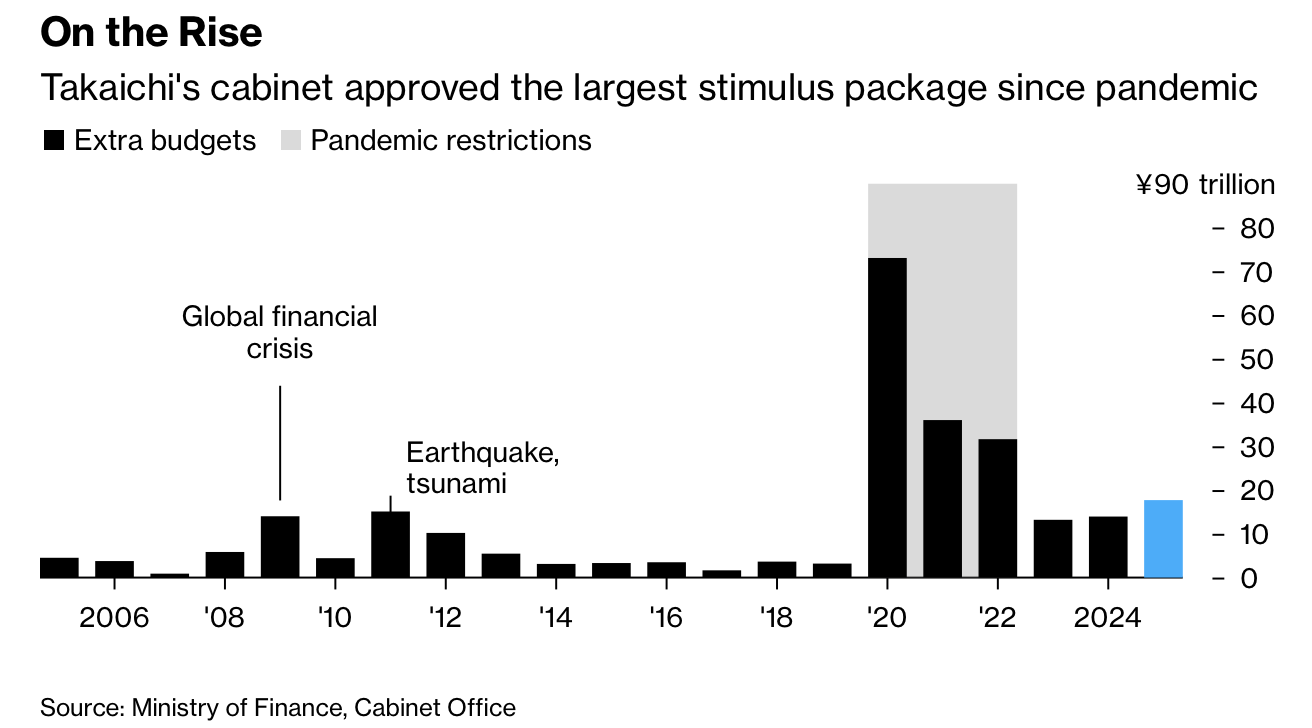
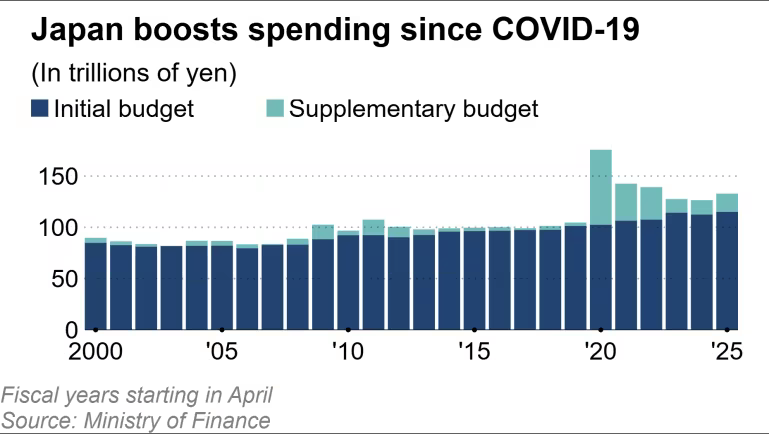
Japan approved a ¥21.3 trillion ($135 billion) economic package, allocating ¥11.7 trillion for price-relief measures and ¥7.2 trillion for growth investments in semiconductors, AI, and shipbuilding. The supplementary budget totals ¥17.7 trillion—¥4 trillion larger than last year—continuing the trend of oversized fiscal additions. Total project scale, including local and private funds, reaches ¥42.8 trillion. The government estimates a ¥24 trillion boost to real GDP and a 1.4% rise in annualized growth.
The package rests on three pillars: inflation and livelihood support, strategic “crisis management” investment, and reinforcement of defense and diplomacy. Households will receive roughly ¥7,000 in electricity and gas subsidies from January to March, shaving 0.4 percentage points off CPI for February–April. Families will receive ¥20,000 per child aged 18 or younger with no income cap. Expanded municipal grants will support rice vouchers, digital coupons, and water-fee relief. Tax revenue will drop by ¥1.5 trillion from scrapping a fuel surcharge and by ¥1.2 trillion from raising the income threshold for taxation.
On fiscal sustainability, Takaichi said total JGB issuance will fall below last year’s ¥42.1 trillion, though yields are at multi-decade highs. Defense and diplomatic spending rises by ¥1.7 trillion, including ¥1.1 trillion for defense, achieving the 2%-of-GDP goal two years ahead of schedule. Disaster-response reserves increase by about ¥700 billion. With the LDP and Japan Innovation Party lacking upper- and lower-house majorities, cooperation from partners such as Komeito will be necessary to pass the supplementary budget.