人工智能正越来越多地被用作个人购物助手:据 Shopify 调查,这个假日季富裕国家约三分之二的消费者、以及 18–24 岁人群的约六分之五计划用 AI 辅助购物;麦肯锡估计到 2030 年,全球将有 3–5 万亿美元的购物可能通过聊天机器人“代理”完成。
平台与零售商正在围绕流量与广告收入角力:亚马逊约十分之一的收入来自广告,已屏蔽 OpenAI 的爬虫,并称其自有助手 Rufus 今年已被 2.5 亿客户使用;与此同时,沃尔玛(10 月宣布)将允许通过 ChatGPT 直接购买其商品,其网站约 4% 的访问来自引荐流量,而其中三分之一由 ChatGPT 提供。
影响力正在从 SEO 转向“生成式引擎优化”:Muck Rack 在 7 月对超过 100 万条聊天机器人引用链接的审查发现,公司网站或新闻稿仅占 18%,而新闻网站占 25%;Shopify 的调查也显示人类互动价值回升——如今四分之三的受访者重视人类互动,高于 2024 年的略高于一半——这暗示在机器人引入广告之际,实体店可能重新获得优势。
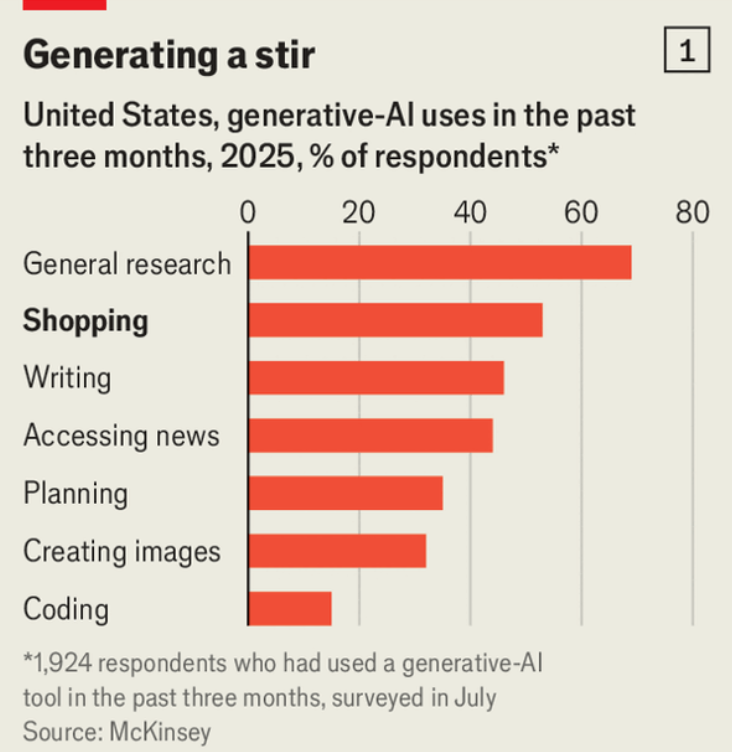
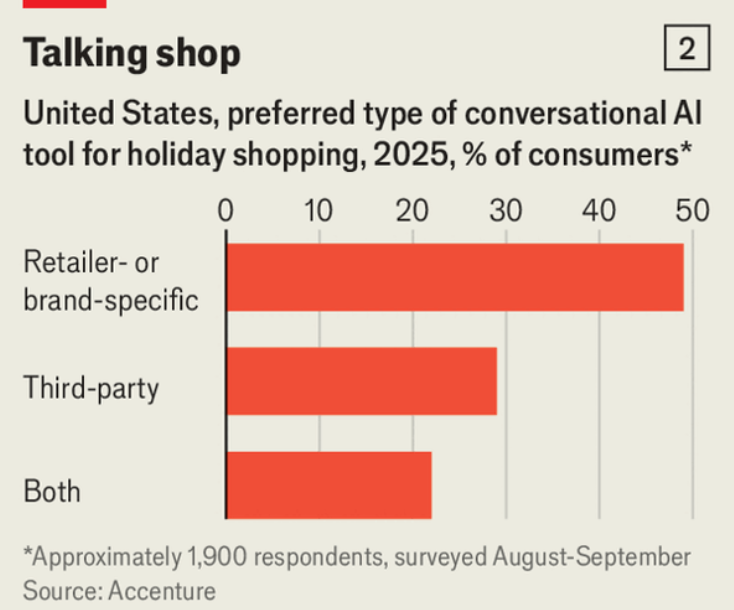
AI is increasingly being used as a personal shopper: about two-thirds of consumers in rich countries and five-sixths of 18–24s plan to use it this holiday season, and McKinsey estimates $3–5trn of global shopping could flow through chatbot “agents” by 2030.
Platforms and retailers are fighting over traffic and ad dollars: Amazon earns roughly a tenth of revenue from ads, blocks OpenAI crawlers, and says its own assistant Rufus has been used by 250m customers this year, while Walmart (announced in October) will let ChatGPT buy its products and gets ~4% of site visits from referrals, with ChatGPT providing a third of those.
Influence is shifting from SEO to “generative-engine optimisation”: in July Muck Rack’s review of over 1m chatbot-cited links found company sites/press releases at 18% versus 25% for news, and Shopify’s survey shows renewed value in humans—three-quarters now prize human interactions, up from just over half in 2024—suggesting physical stores may regain leverage as bots adopt ads.
Source: How AI is disrupting shopping
Subtitle: Looking for Christmas gifts? Just ask a chatbot
Dateline: 12月 11, 2025 06:01 上午 | San Francisco