印度最近一轮州选举(结果于5月4日公布)使莫迪的印度人民党在其核心印地语区域之外进一步扩张:印度人民党在西孟加拉邦赢得压倒性胜利,获得超过45%的选票并赢得该邦在国会中价值最大的42个席位中超过三分之二的席位,人口约1亿;同时在阿萨姆以37.8%选票保住了第三个任期。加上其先后在2018年赢得特里普拉和2024年赢得奥迪沙,且联盟现已控制31个有民选立法机构州和联邦属地中的22个,尽管其在2024年全国大选后更依赖盟友,执政党现在看来更具制度性巩固。 尽管在全国层面整体不算一边倒,阿萨姆的37.8%得票、以及西孟加拉接近三分之二以上席位胜利,使执政联盟在州层面持续加码,而喀拉拉与泰米尔纳德的更替说明反对党即使在传统堡垒也并未形成有效遏制。 这一结果组合成了“地区实力扩张+全国覆盖率扩张”的趋势,但并非只靠程序争议即可解释,因为多数关键指标指向选民对现有统治的持续反噬。
在东部,莫迪以强硬民族主义口吻竞选,将孟加拉人民大会党指责为“收黑钱”和来自孟加拉国的“非法渗透”,而西孟加拉、喀拉拉和泰米尔纳德的选民都否决了被视为腐败或专断的在任者:孟加拉女强人巴塔查里连续15年的统治被认为失利,施塔林和喀拉拉共产党政府也被罢下;喀拉拉由几乎五十年来没有共产主义州政府的局面,转而由国大党联盟执政。泰米尔纳德则由一位仅成立两年的政党新人、由年轻城市选民推动的电影巨星维贾伊取代施塔林,这终结了该邦长期的反对派格局。 即使不计争议,选举环境中的结构变化也清楚:西孟加拉成为该党长期东进路线的关键补给点,目标在于在“100万?”级以上人口和42个国会席位的州内换取更强的全国议会分量。 西孟加拉在全国选票版图中的作用还体现在防损保险价值上,即使未来核心地区可能出现流失,拥有此州也能部分对冲风险。
即使允许存在未完全证实的争议操控,竞选过程也出现严重公平性问题:超过900万选民姓名(占选民的11%)被移出名单,3.4百万提出异议者中不足2000人及时恢复名单,中央政府又调来近25万名持武装警力维持秩序,并出现了官员对候选人和选民的恐吓及事后暴力。与此同时,全国许多地区仍出现“在位者不满”趋势,显示物价上升与治理压力仍是主轴。 但这些制度争议仍不足以否定“反对者执政疲劳”这一主效应,特别是当能源危机引发的生活成本上升尚未完全传导时,选民可继续在短周期内改向,说明2024年后依赖盟友的执政体系并未消除动荡。 整体上,结果把莫迪阵营推到表面更强的位置,反对派若要逆袭,唯一可行路径是组织化整合,否则这种波动性支持会继续在未来州选中反复放大。
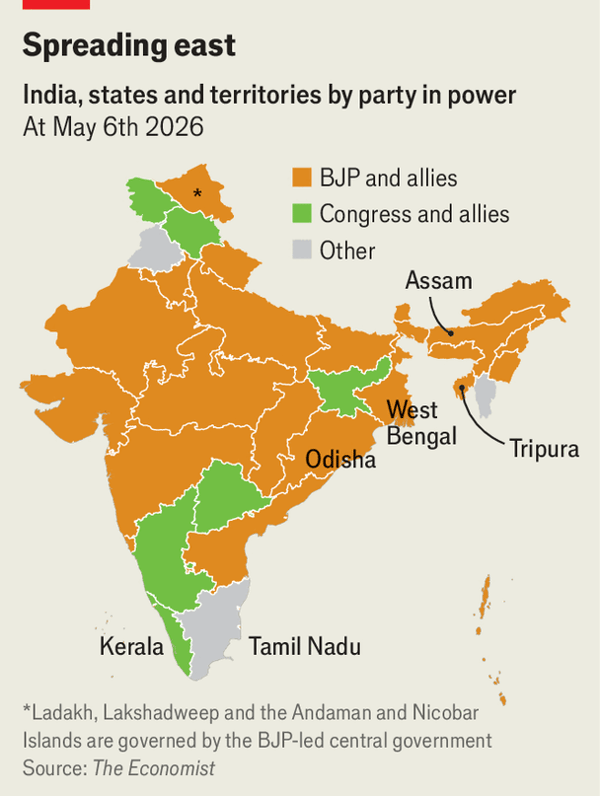
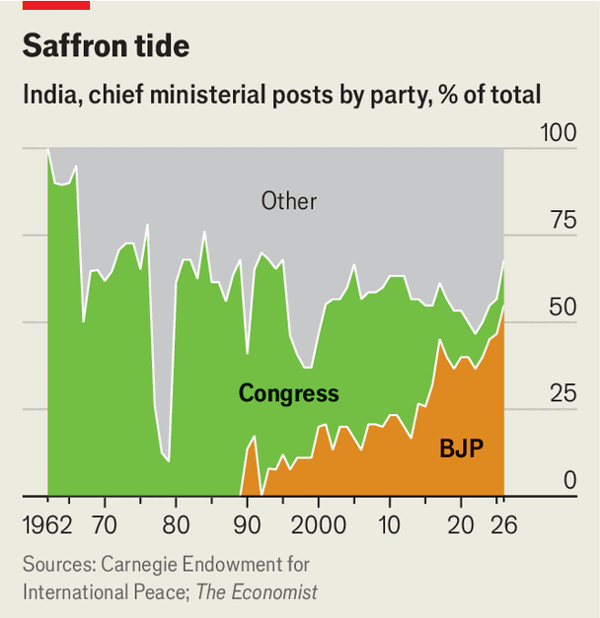
India’s recent state elections, with results announced on May 4, produced a major expansion beyond the BJP’s core Hindi belt: the BJP won West Bengal in a landslide, taking more than 45% of the vote and over two-thirds of seats in a state of 100 million people with 42 Lok Sabha-linked seats, while in Assam it kept a third term with 37.8% of the vote. Building on earlier gains in Tripura (2018) and Odisha (2024), the governing coalition now controls 22 of 31 elected states and union territories, making Modi’s national position look more structurally secure despite having to rely more on allies after 2024.
In a combative nationalist campaign, Modi framed Bengal’s TMC as corrupt (“cut money”) and tied to “infiltration” from Bangladesh, and voters in West Bengal, Kerala, and Tamil Nadu ousted incumbents seen as authoritarian or corrupt: Banerjee’s 15-year rule ended, while Kerala’s Communist government was replaced and Tamil Nadu shifted to Vijay, a two-year-old-party newcomer backed by young urban voters. This produced a broader anti-incumbent pattern and broke long-running local alignments, including the end of almost five decades without a Communist state government in Kerala.
Fraud and fairness concerns were pronounced: more than 9 million names (11% of the electorate) were removed from rolls, 3.4 million appealed but fewer than 2,000 were reinstated in time, and nearly 250,000 armed police were brought in, with reports of intimidation and post-poll violence. Even with those concerns, the core trend is widespread dissatisfaction with incumbents tied to inflation and governance, so Modi’s coalition looks stronger for now but electorates remain potentially volatile if rising prices from the Gulf-war-triggered energy shock continue to bite.
Source: Narendra Modi has extended his grip on India
Subtitle: India’s ruling party scores a historic victory in West Bengal—but should beware voters’ unhappiness with incumbents
Dateline: 5月 07, 2026 06:28 上午 | DELHI