共和党正试图把减税从“零敲碎打”改成一次性可见的现金冲击:2026年平均退税预计为3,800美元,高于前两个报税季约3,000美元,增幅约26.7%。这种前置、集中的退税设计旨在在中期选举前更强烈地影响选民感受。
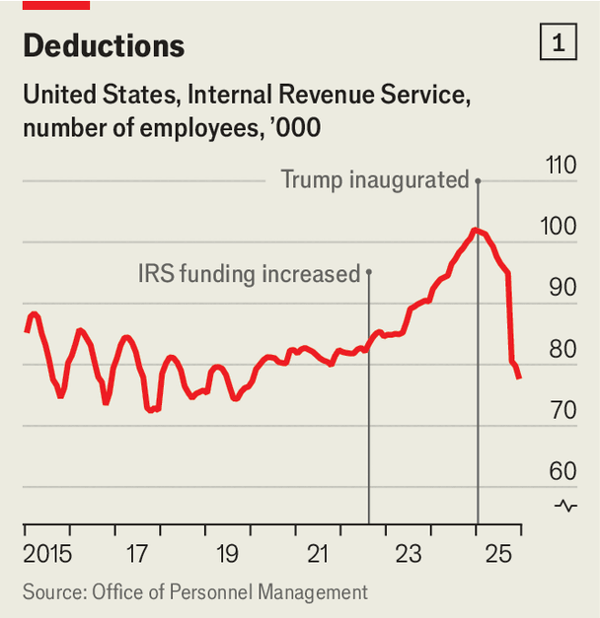
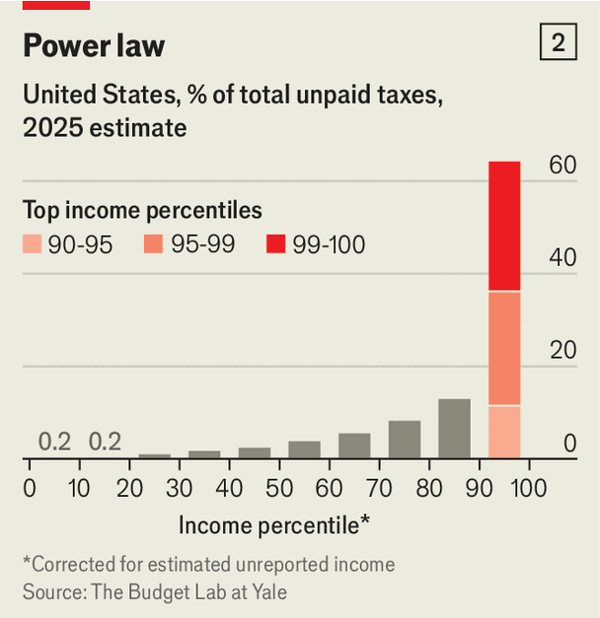
更深层的财政刺激来自执法弱化而非传统补贴:拜登任内给国税局增加的20,000名员工已被逆转,且22,000人的裁员预计将使财政收入今年减少约100亿美元、到2029年减少约200亿美元。研究还显示,对富裕纳税人的审计能力每投入1美元可带来12美元增收,而最富有5%人群约占全部未缴税款的一半,说明收入流失将更集中地惠及高收入避税者。
与此同时,放松股票回购税和合伙结构监管、弱化公司透明度规则,预计未来十年将至少再让企业少缴“数百亿美元”税款;若最高法院否决“对等关税”,过去一年超过1,000亿美元(约占GDP的0.3%)的新增关税收入还可能被退回。总体趋势是赤字扩大与需求被进一步推高,但资金更多流向企业和高收入群体,短期可能形成选前增长脉冲、后续抬升通胀风险。
Republicans are trying to shift tax cuts from barely noticed trickles to a single visible cash shock: the average 2026 tax refund is projected at $3,800 versus about $3,000 in each of the prior two filing seasons, a rise of roughly 26.7%. That front-loaded, lump-sum refund strategy is designed to shape voter sentiment more forcefully before the midterms.
A deeper fiscal impulse comes from weaker enforcement rather than conventional aid: Biden’s 20,000-person IRS staffing expansion has been reversed, and 22,000 layoffs are estimated to cut revenue by about $10bn this year and $20bn by 2029. Research also indicates that each $1 spent on stronger audits of higher-income taxpayers yields $12 in revenue, while the richest 5% account for about half of unpaid taxes, implying concentrated gains for affluent evaders as enforcement falls.
At the same time, narrower buyback taxation, rollbacks of partnership-tax rules, and weaker corporate transparency are projected to reduce business tax payments by at least tens of billions of dollars over the next decade; if the Supreme Court strikes down “reciprocal” tariffs, more than $100bn in tariff revenue from the past year (about 0.3% of GDP) could also be refunded. The combined trend is a wider deficit and stronger demand, but with cash skewed toward firms and high earners, creating a possible pre-election growth sugar rush followed by higher inflation risk.
Source: Donald Trump’s schemes to juice the economy
Subtitle: Watch out for sneaky stimulus
Dateline: 2月 19, 2026 04:45 上午 | Washington, DC