古代到近代的美丽实践显示出高强度成本与高风险并存,从古埃及的腐败物质面膜到伊丽莎白时代的铅白涂层、束身衣,再到中国裹足与希腊以针固定牛毛制成的连眉。这些行为的持续性与跨文化广泛性体现出一个稳定经济逻辑:在长期被排除于正式经济之外的情境中,外貌投资充当少数可影响经济前景的策略。由此形成的“美丽既是负担又是力量”的二元结构在数百年中保持韧性,同时构成持久的高需求产业。
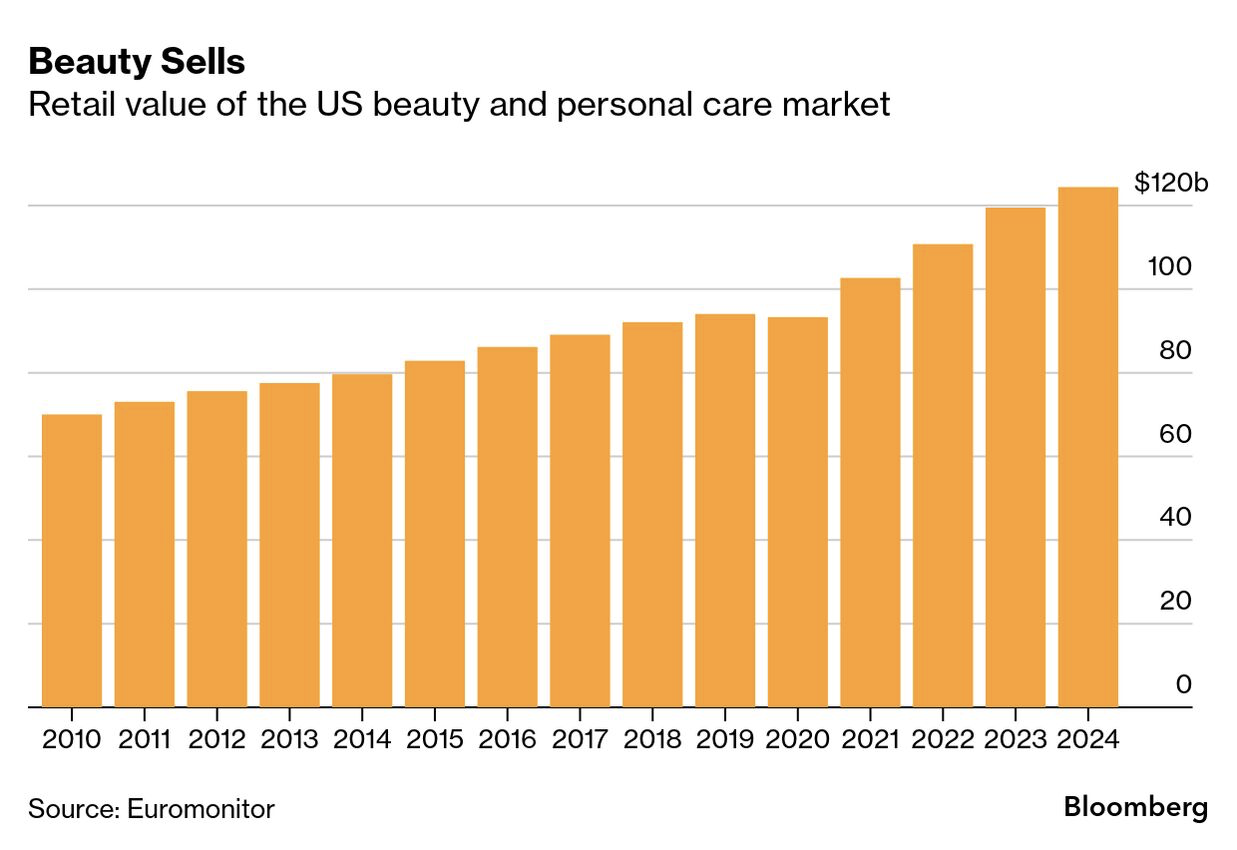
经济衰退期出现的消费结构性替代推动了“口红效应”的统计特征。相关再分析表明,美妆支出在紧缩时期递增的核心机制不是择偶或求职竞争,而是消费者从更高价品类(如服饰、珠宝)转向低价即时满足产品。此类替代性消费在大衰退期间呈现出单身女性支出略低于非单身群体、求职者并未超支的逆向模式。近年来该效应重新增强:整体消费下降,而美妆销售保持增长,并呈现代际倒挂趋势,青少年成为增速最快群体,其动力来源于社交媒体驱动的外貌可视化压力。
持续可见性经济强化了美丽的心理成本与商业价值。从创作者面对关于疲态、发型等外貌评论,到年轻消费者在玻璃肌、肉毒与多层护肤之间进行高频支出,数字环境放大了外貌评价的实时性与竞争性。结果是:在不确定经济环境下,约40美元的美妆购买作为低成本情绪调节工具反复出现,维持美丽产业的抗周期性。无论目的指向情绪补偿、社会关注或身份维护,外貌投资在长期趋势中持续表现为高稳定性消费。
Across ancient to early-modern periods, beauty practices incurred high costs and risks, from Egyptian corrosive masks to Elizabethan lead paint and corsets, Chinese foot binding, and Greek needle-fixed ox hair unibrows. Their persistence and cross-cultural breadth reflected a consistent economic logic: excluded from formal labor markets, women used appearance investment as one of the few levers affecting economic prospects. This produced a long-standing duality in which beauty functioned simultaneously as burden and power, establishing a durable high-demand industry.
During downturns, structural substitution in consumption drives the statistical pattern known as the lipstick effect. Reanalysis shows that rising beauty spending in tight periods stems not from mating or job-search incentives but from shifts away from higher-priced goods such as apparel and jewelry. During the Great Recession, single women spent slightly less than partnered women, and job seekers did not outspend the employed. Recently the effect has intensified: overall consumer spending is falling while beauty sales remain strong, with a generational inversion in which teenagers form the fastest-growing segment, propelled by social-media-driven visibility pressures.
The visibility economy amplifies both the psychological cost and commercial value of beauty. From creators receiving appearance-focused comments to young consumers pursuing glass skin, Botox, and layered regimens, digital environments heighten real-time evaluation and competition. Consequently, a roughly $40 cosmetic purchase repeatedly emerges as a low-cost emotional stabilizer during uncertainty, supporting the sector’s countercyclical resilience. Whether driven by affect regulation, attention capture, or identity maintenance, appearance investment exhibits long-run consumption stability.