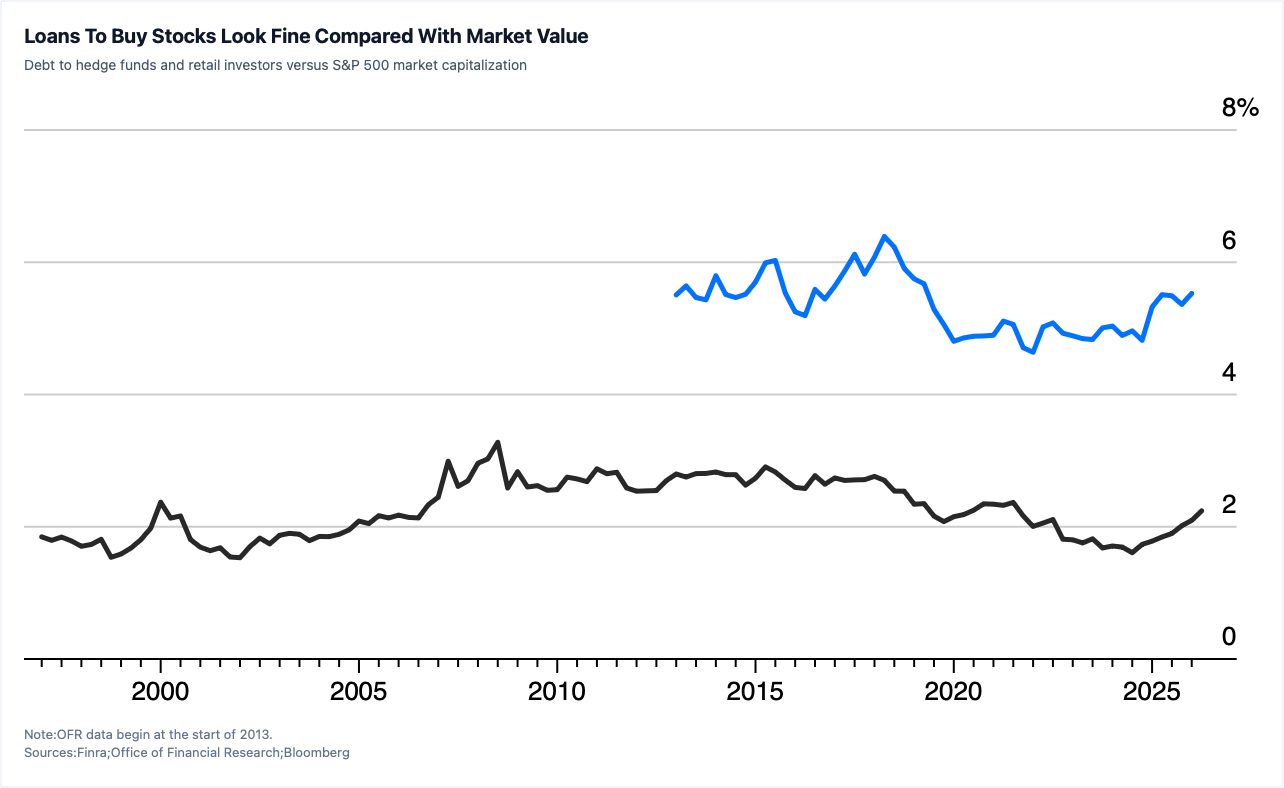
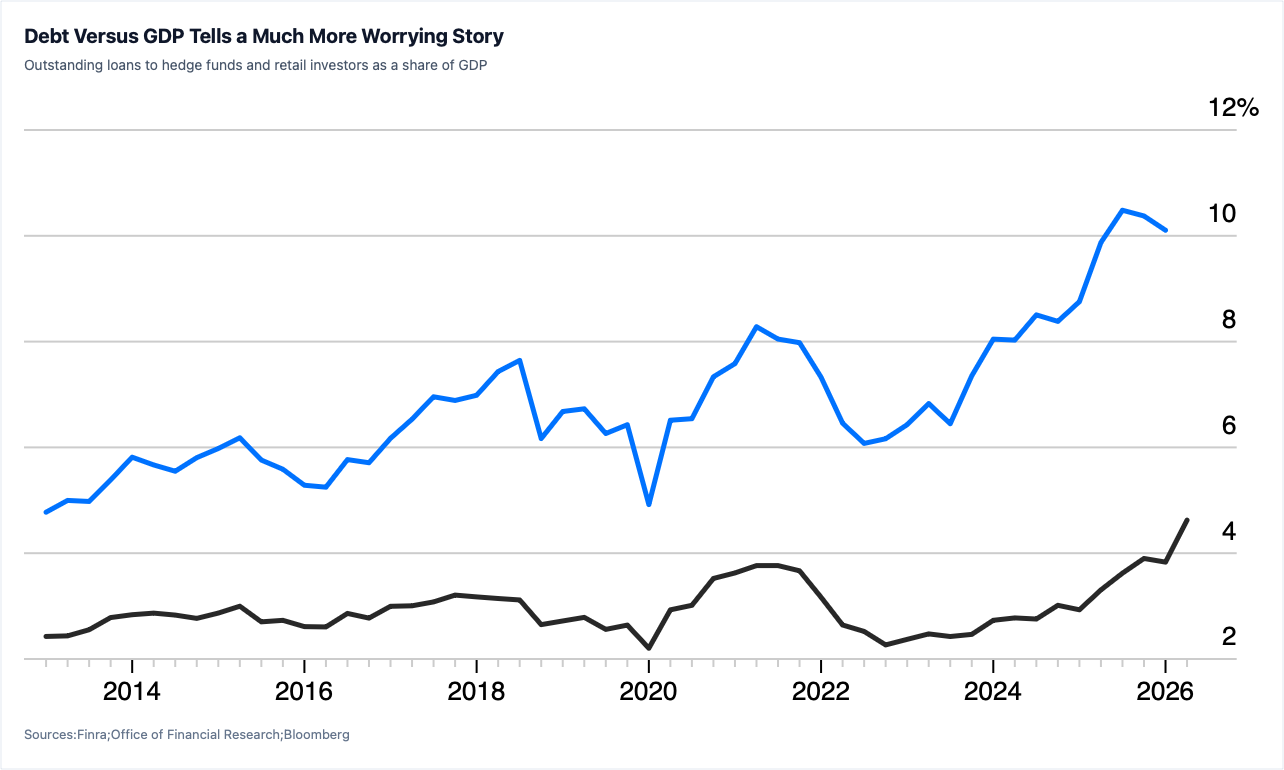
传统上,银行家与投资者习惯以股市总市值来衡量保证金债务是否过高,就如同以房价评估房贷一样。以此标准来看,散户保证金债务仅占标普500市值约2.25%,对冲基金的主经纪商余额占比也未超出历史区间,看似风险可控。然而德意志银行信用策略主管Steve Caprio指出,应以国内生产总值(GDP)而非股票市值作为衡量基准,因为股票本身可能被高估。以GDP为基准,散户保证金贷款在六月底达到创纪录的4.6%,对冲基金的借贷更是超过其两倍,同样可能创下历史新高。
Situational Awareness的危机最终因Ken Griffin旗下的Citadel以折扣价接手其大部分持仓而化解,避免了一场可能波及更多杠杆投资者的连锁抛售。然而独立研究机构Sakonnet Research的Adam Josephson警告,不会每次都有「白衣骑士」出手相救,尤其当多家大型对冲基金同时陷入困境时。文章作者Paul J. Davies认为,这次有惊无险反而可能成为陷阱——投资者非但未从中汲取教训,反而在KOSPI指数单日反弹18%后继续加杠杆买入,将本应是警告的暴跌视为下一波债务驱动投机的跳板。
The AI-driven stock boom of 2026 has been fueled by massive leverage from both hedge funds and retail investors. Aggressive margin borrowing amplified gains in chipmakers and tech stocks, pushing South Korea's KOSPI index up nearly 120% by mid-June before a brutal 40% selloff hit by late July. Around 3.5% of Korean adults received margin calls, and the AI-focused hedge fund Situational Awareness saw its assets collapse from $45 billion to $10 billion in just weeks. While some deleveraging has occurred, total Korean margin debt fell only 10% by the end of July, and hedge fund borrowing remains in the middle of its recent range.
Wall Street's traditional method of measuring leverage risk—comparing margin debt to stock market capitalization—has offered false comfort. By that yardstick, retail margin debt at 2.25% of the S&P 500 and hedge fund prime balances at 5.5% appeared within historical norms. However, Deutsche Bank strategist Steve Caprio argues that debt should be measured against GDP instead, since inflated stock valuations can mask the true scale of borrowing. On that basis, retail margin loans reached a record 4.6% of annualized US GDP at the end of June, while hedge fund borrowing was more than double that figure—levels that historically coincide with the peaks of investment cycles.
The near-disaster was averted largely because Ken Griffin's Citadel stepped in to buy Situational Awareness's holdings at a discount, preventing a fire sale that could have triggered cascading margin calls across the market. Independent analyst Adam Josephson warns that such a rescue cannot be counted on in the future, especially if multiple large funds are in distress simultaneously. Rather than heeding the warning, investors appear emboldened: the KOSPI surged 18% in a single day and the Philadelphia Semiconductor Index rallied sharply in the aftermath. Paul J. Davies cautions that this near miss may prove more dangerous than a full crash, as it encourages further debt-fueled speculation instead of prudent risk management.