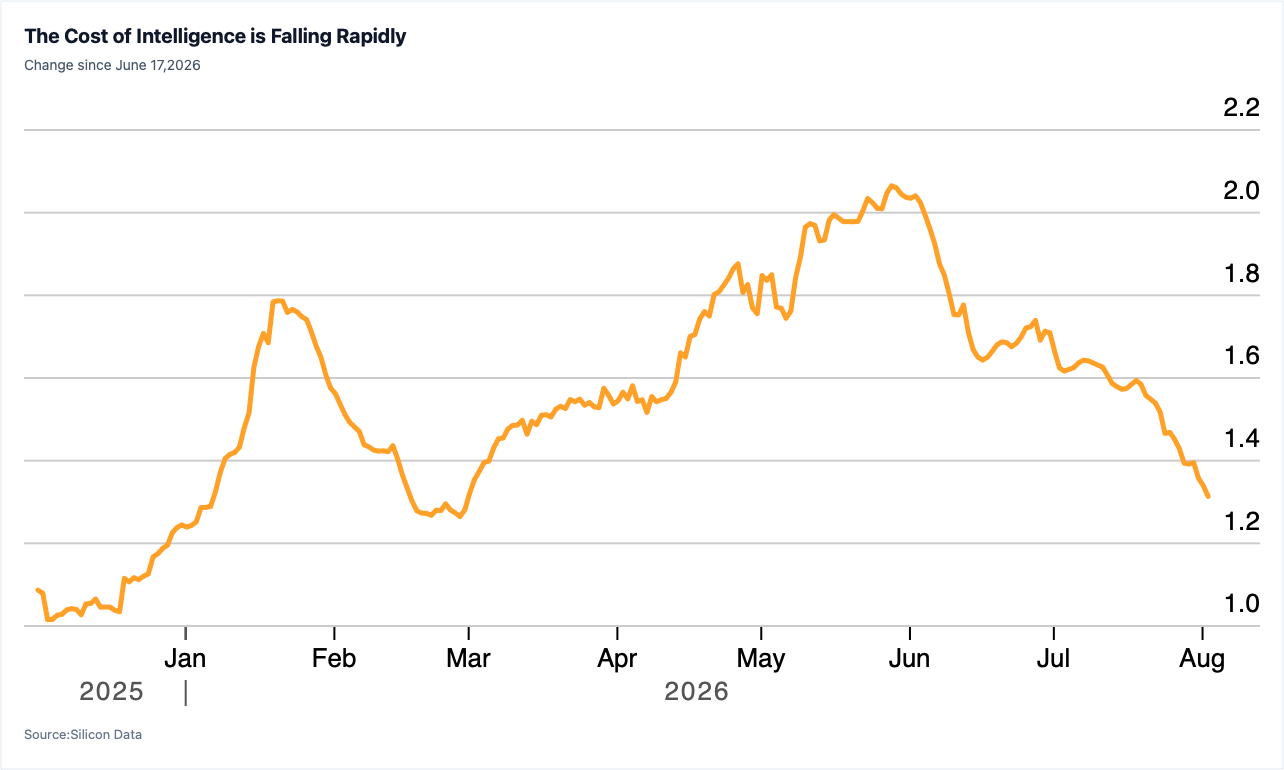
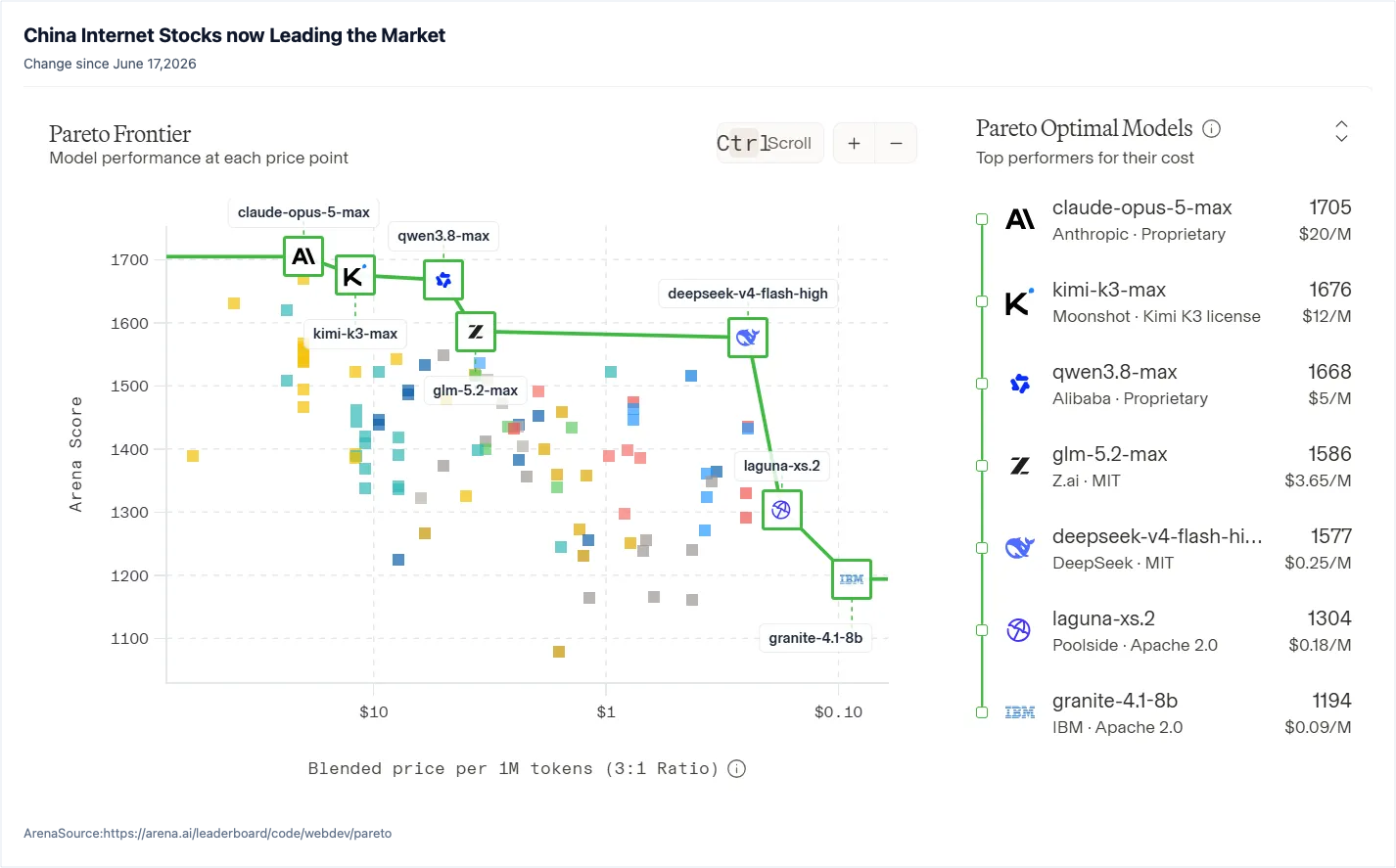
中国开发者在开放权重AI模型方面的竞争力显著提升,与全球领先者的差距不断缩小,同时保持低价优势。阿里巴巴最新的Qwen3.8-Max模型已跻身Arena基准测试中顶尖的编程模型行列。Silicon Data的混合推理价格指数较五月峰值下降了36%,更低的运算成本改善了搜寻、广告、电商及客户服务等业务的经济效益,也使新的AI应用在商业上变得可行。
尽管前景乐观,仍需保持谨慎。中国科技业长期以来偏重规模而非盈利,AI领域或不例外。互联网巨头面临来自DeepSeek、Z AI、Moonshot及字节跳动等对手的激烈竞争,同时阿里巴巴、美团和京东在外卖业务上持续价格战,国内消费需求也依然疲软。不过目前投资者认为,中国云端和互联网股票作为AI成本下降的受益者,重新估值才刚刚开始。
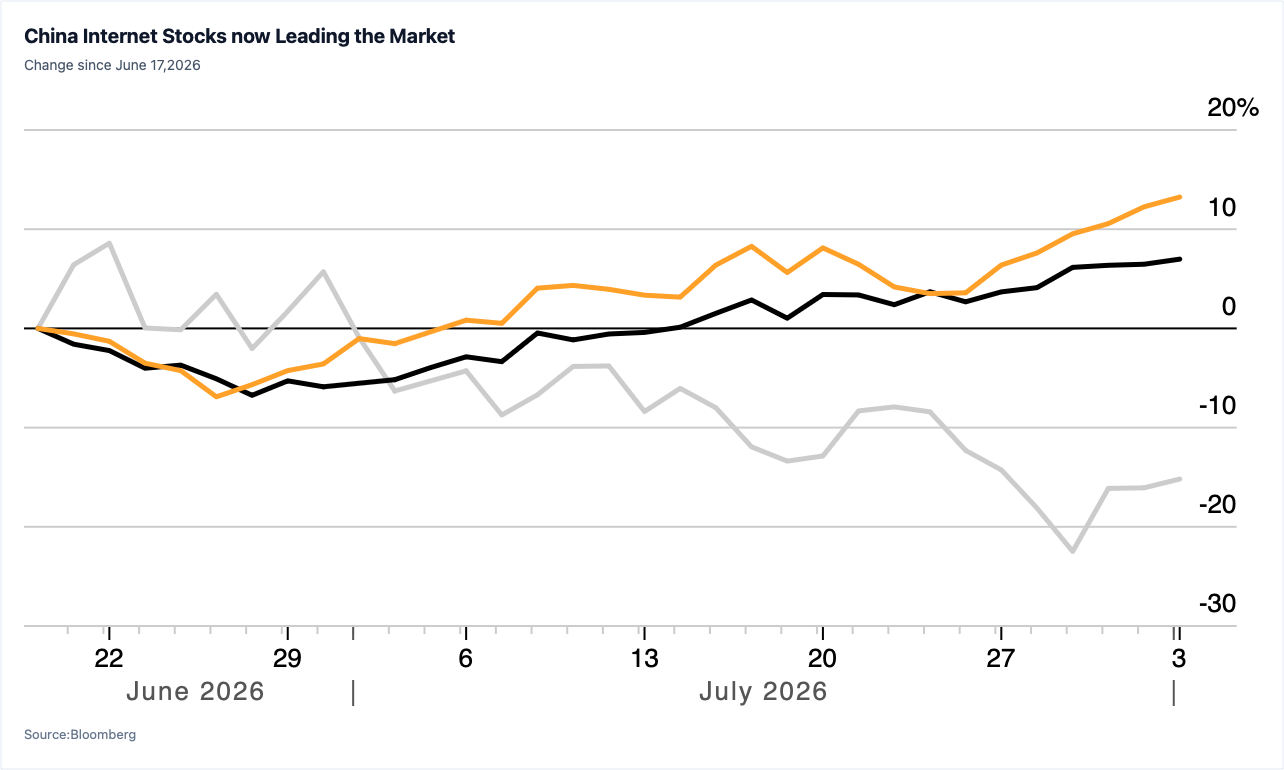
China's rapid advances in low-cost artificial intelligence are bolstering the investment case for its internet giants after years of underperformance relative to chipmakers. Investors increasingly believe that as AI costs fall, industry value will shift toward platform companies owning everyday applications such as search, e-commerce, advertising, and enterprise software. Since late June, the KraneShares China Internet ETF has surged over 20%, roughly doubling the Hang Seng Index's gain, while the Philadelphia Semiconductor Index declined about 11%.
Chinese developers have narrowed the gap with global AI leaders in open-weight models while maintaining competitive pricing. Alibaba's Qwen3.8-Max now ranks among the top coding models on Arena's benchmark. Silicon Data's blended inference-price index has dropped 36% from its May peak, improving the economics of AI-powered services and making new applications commercially viable. Goldman Sachs highlights accelerating token growth and rising capex as reasons to favor China's cloud and data-center sectors, estimating Alibaba Cloud grew 45% in the June quarter.
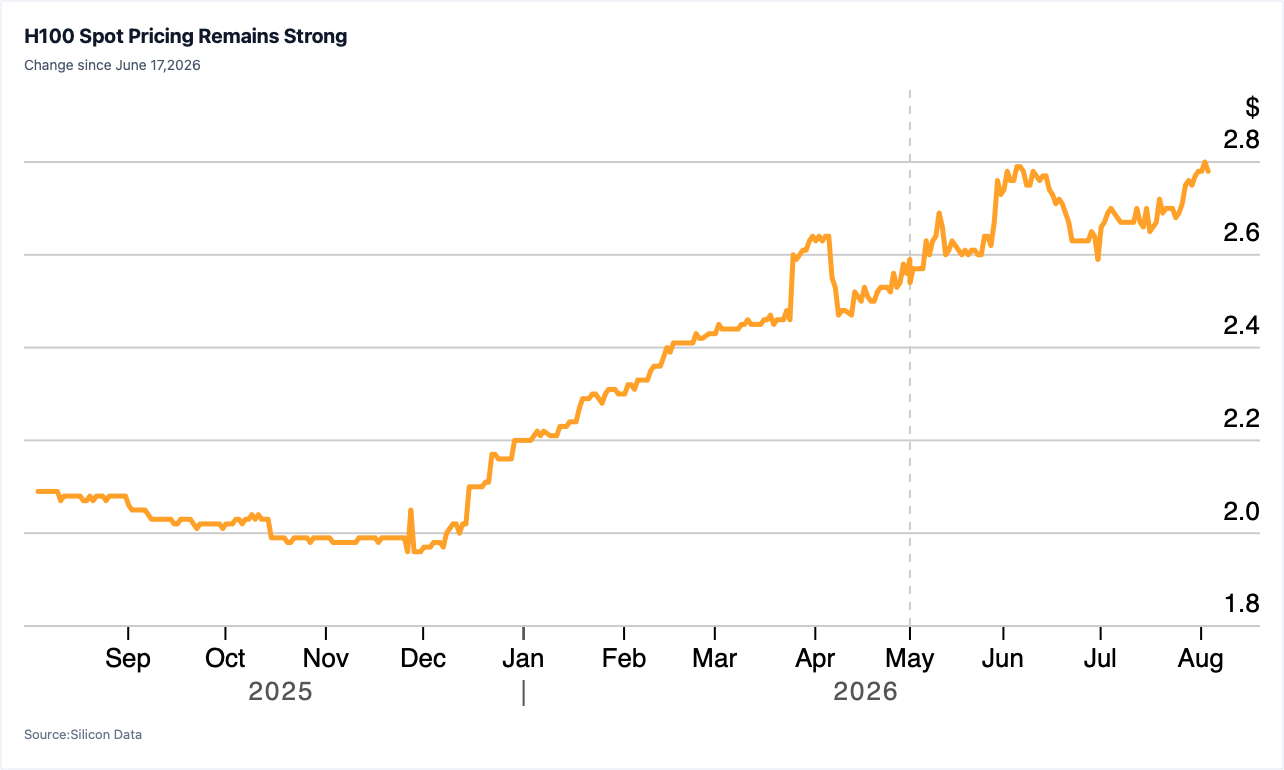
Caution remains warranted, however. China's tech sector has historically prioritized scale over profitability, and AI may follow the same pattern. The internet giants face mounting competition from rivals such as DeepSeek, Z AI, Moonshot, and ByteDance, while Alibaba, Meituan, and JD.com continue battling a price war in food delivery amid sluggish domestic consumer demand. Nonetheless, investors believe the rotation has room to run as China's cloud and internet stocks are only beginning to be re-rated as beneficiaries of declining AI costs, supported by firm GPU rental rates signaling sustained compute demand.