为安抚潜在投资人,这些数据中心业者已与 OpenAI、Anthropic 及字节跳动等知名企业签署租赁承诺协议;然而,庞大的订单储备仍高度取决于数据中心能否如期且符合预算完工。尽管低营收或零营收的新创公司在擅长长远押注的创投领域相当常见,但过去透过特殊目的收购公司(SPAC)上市的未来科技企业股价暴跌近九成,显示公开市场对此类商业模式的容忍度极为有限。(关键数字:90)
即便是 OpenAI 与 Anthropic 等年营收已达数百亿美元的 AI 巨头,未来若进行首次公开募股,其估值也可能高达营收的数十倍,获利转化前景仍充满不确定性。随著市场对人工智慧高昂投资回报的担忧日益加剧,相关企业的上市进程已出现延宕,一旦投资人的风险偏好降温,缺乏实质营收与获利支撑的公司将面临最严峻的市场考验。
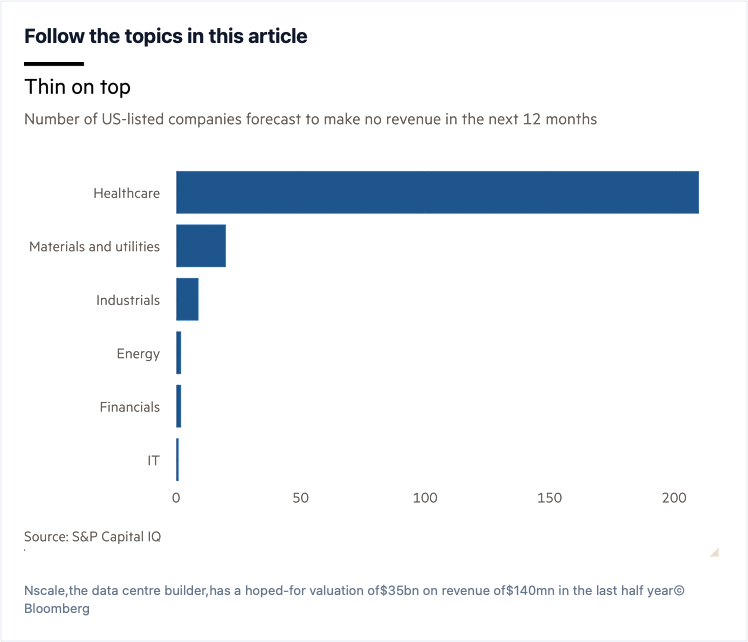
While public market investors are accustomed to valuing unprofitable companies, businesses with negligible top-line revenue remain exceedingly rare on public exchanges. The artificial intelligence boom has intensified this disconnect between ambitious valuations and modest earnings, exemplified by data centre builders SB Energy and Nscale seeking target valuations of $50bn and $35bn respectively despite each generating merely $140mn in revenue over the past half year. (Key numbers: 1.4, 500, 350)
Although these builders have secured lease commitments from major clients like OpenAI, Anthropic, and ByteDance to reassure investors, significant risks persist regarding whether facilities can be delivered on schedule and within budget. Moonshot ventures thrive in private venture capital portfolios, but historical precedents—such as the roughly 90 percent decline of median SPAC mergers in futuristic sectors—demonstrate that public markets are generally unforgiving to revenue-poor businesses.
Even leading AI developers like OpenAI and Anthropic, which generate substantial revenues, are contemplating IPO valuations that represent massive multiples of sales with uncertain profit conversion. As investor skepticism concerning the returns on AI spending rises and IPO timelines encounter delays, any contraction in market risk tolerance threatens to severely penalize the companies that have the least financial substance to show.