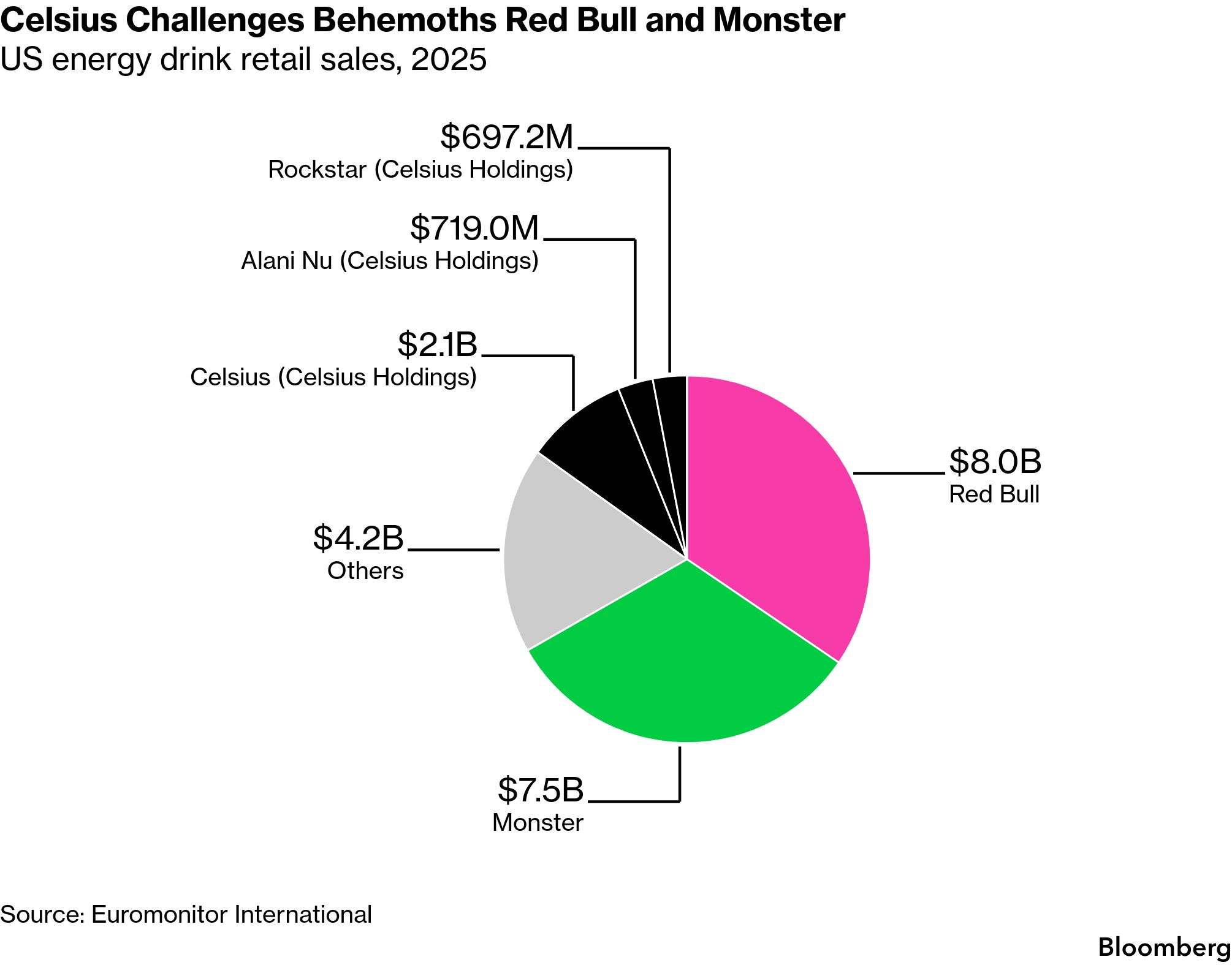
2023 年,Celsius 成为规模 200 亿美元($20 billion)的美国能量饮料市场中排名第 3 的品牌,市占仅次于 Red Bull 与 Monster Energy。随后,Celsius 透过收购排名第 4 的品牌 Alani Nu 进一步扩展市场版图;6 个月后,PepsiCo Inc. 出资 5.85 亿美元($585 million),将其在 Celsius 的持股比例从 8.5% 提高至 11%,并将旗下 Rockstar 品牌业务转移给 Celsius,助力其稳固市占优势。
自现任执行长 John Fieldly 于 14 年前加入当时仅有 12 名员工的 Celsius 以来,公司市值从 2018 年 4 月他接任时的约 2.55 亿美元($255 million)飙升至现今近 90 亿美元($9 billion)。Celsius 透过精准掌握零售通路的「好球带」货架陈列与经销网络,在剧烈波动的饮料产业中成功实现营运转型与持续成长。
Between 2000 and 2013, over 1,600 energy drink brands entered the volatile market, yet most ventures, including Pimp Juice, Cocaine, and the bankrupt Bang Energy, failed to survive, while Coca-Cola Co. discontinued Vault after just five years. In contrast, Celsius Holdings Inc. overcame near-failure and delisting to emerge as a powerhouse. By late 2016, it pivoted to a health-conscious, sugar-free fitness beverage containing 200 milligrams (200 mg) of caffeine per can, successfully appealing to underrepresented demographics such as female consumers.
By 2023, Celsius secured the No. 3 spot in the $20 billion US energy drink market, trailing only Red Bull and Monster Energy. The brand accelerated its trajectory by acquiring the No. 4 competitor, Alani Nu. Six months later, PepsiCo Inc. invested $585 million to raise its equity stake in Celsius from 8.5% to 11% while offloading its Rockstar brand, further cementing Celsius's robust market share despite intense quarterly retail competition.
Under the leadership of John Fieldly, who joined 14 years ago when the team had only 12 employees, Celsius expanded from a market capitalization of approximately $255 million in April 2018 to nearly $9 billion today. This explosive financial trajectory reflects the company’s disciplined execution of classic retail merchandising strategies, maximizing high-visibility shelf placements and securing strategic distribution partnerships to sustain long-term business growth across major national supermarket chains.