从1870年代到1890年代,美国工业化以惊人的速度扩张:石油、钢铁和电力行业高速增长,铁路把全国贯通,至1890年代美国超过英国成为全球领先工业强国。财富却高度集中,洛克菲勒和卡内基等“财阀”积累巨额财产,工人长期低薪高工时和高风险工况下组织化,1886年数十万工人为八小时工作制罢工,海马克特事件导致7名警员与至少4名平民遇害,并有4名无政府主义者被处决,从而使“五月一日”成为国际劳工符号。
移民政策在“需要劳力”与“排外反弹”之间摇摆:同化政策与征地、招聘并行,但移民潮巨大,1910年每7名美国人中就有1人出生于国外;1882年率先通过《排华法案》,1891年成立移民局,1924年几乎全面封锁美洲圈外移民。1896年“普莱西诉费格森案”以7比1裁决支持种族隔离,虽然约翰·马歇尔·哈兰在同案中主张宪法应“颜色盲”,但这一观点直到约60年后才被最高法院真正采纳。
对外政策从贸易和投资扩展转向帝国扩张,1898年的美西战争几个月内驱逐西班牙并接管古巴、波多黎各、菲律宾和关岛,直接增加了约1000万殖民人口。西奥多·罗斯福在进步改革与反托拉斯声望之外,加速了“实干”帝国政策:海军开支增长4倍并推进运河与海外干预,而1907年金融危机也暴露结构性弱点;自1836年以来无中央银行的体制下,J.P.摩根等少数富豪在危机中提供最后流动性,1913年国会警告“金钱与信贷正集中于少数人手中”,并通过联邦储备法。
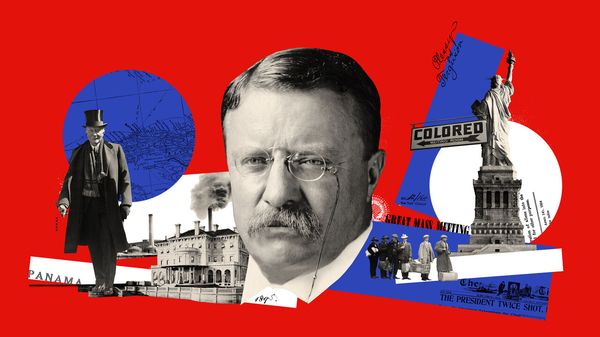
From the 1870s into the 1890s, U.S. industrialization accelerated across oil, steel, electrification, and rail, and by the 1890s the country surpassed Britain as the leading industrial power, while wealth became highly concentrated in figures like Rockefeller and Carnegie. Worker unrest widened, and in 1886 hundreds of thousands struck for an eight-hour day; the Haymarket aftermath killed seven police officers and at least four civilians, led to a controversial trial and four anarchist executions, and gave the event lasting global labor symbolism.
Immigration swung between recruitment and backlash: the Homestead-era settlement and labour recruitment policies drew massive inflows, so by 1910 nearly one in seven Americans was born abroad; restriction climbed quickly with the 1882 Chinese Exclusion Act, the 1891 immigration office, and the near-total exclusion of non-hemispheric migrants by 1924. In 1896 the Supreme Court ruled 7-1 against Homer Plessy in Plessy v. Ferguson, institutionalizing Jim Crow despite John Marshall Harlan’s minority warning that the Constitution was color-blind, a position validated only after nearly 60 years.
Internationally, the 1898 Spanish-American War turned industrial overproduction and expansionist pressure into empire: Cuba, Puerto Rico, the Philippines, and Guam were taken from Spain, adding about 10 million subjects. Roosevelt’s administration combined antitrust rhetoric and imperial action by quadrupling naval spending and asserting a “big stick” doctrine, but the 1907 panic showed financial fragility in a system without a central bank since 1836, when bankers led by J.P. Morgan supplied emergency liquidity; Congress’s 1913 warning about credit concentration in comparatively few men was followed by the Federal Reserve Act.
Source: Industrial liberalism and its critics
Dateline: 3月 26, 2026 04:46 上午