运载能力达200万桶原油的超大型油轮(VLCC)即期平均日租金已飙升至约65万美元,较今年1月暴涨逾6倍,达到9月初水平的近3倍;少数敢于穿越霍尔木兹海峡的油轮日租金甚至突破了100万美元大关。这一创纪录的运价并非由于原油产出大增,而是海湾战事引发的极端物流瓶颈所致。
原油外运体系陷入了空前低效:在美军护航下,海湾自有船队将原油运出霍尔木兹海峡,并驳运至停泊在阿曼近海的外籍油轮上,目前全球约15%的VLCC船队滞留阿曼海域,每艘船平均耗费两至三天等待换装。在红海方向,受也门胡塞武装威胁影响,自沙特延布港出发的油轮被迫经陆上管道横穿埃及转运,再在苏伊士运河以北换装VLCC绕道好望角运往亚洲,加之延布东西向输油管道遭无人机袭击关闭,进一步锁死了航运运力。
超长航线极大地消耗了有效运力,并带动100万桶级的苏伊士型及更小船型运价全面暴涨。大宗商品交易巨头托克(Trafigura)于9月21日宣布拟分拆其油轮部门上市以募集造船资金;各国国家石油公司的恐慌性抢购,更导致船龄10年的二手VLCC售价超过了需等待两年以上交付的新造船。由于全球原油供给短缺将炼油利润推至历史新高,炼厂完全有能力承受每桶超25美元的溢价运费,使船东坐享空前暴利。
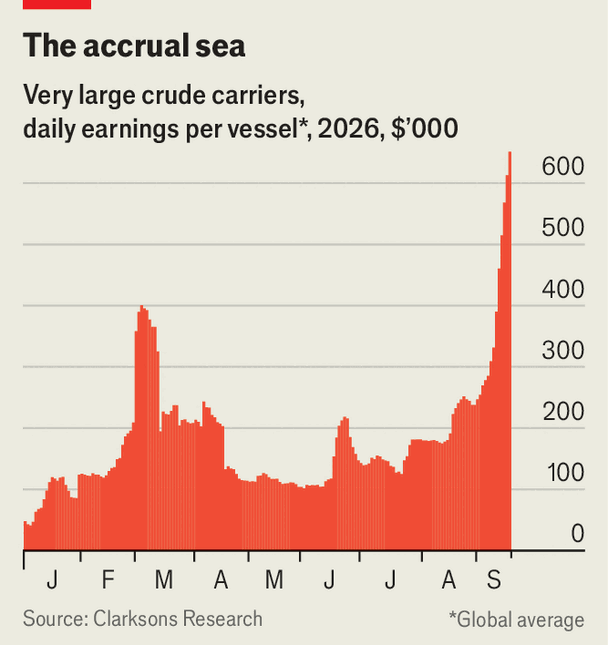
Average daily spot charter rates for Very Large Crude Carriers (VLCCs), each holding 2m barrels of crude, have skyrocketed to approximately $650,000—more than six times their January level and nearly triple rates recorded in early September—with rare voyages traversing the perilous Strait of Hormuz commanding upwards of $1m per day. This historic spike reflects severe logistical friction and inefficiencies precipitated by the Gulf war rather than surging global crude output.
Transport routes are crippled by complex transshipment workarounds: shuttle VLCCs operating under American naval escort convey crude through Hormuz to transfer cargoes to international vessels anchored off Oman, tying up roughly 15% of the global VLCC fleet in multi-day ship-to-ship transfers. Simultaneously, Houthi threats in the Red Sea compel exports from Saudi Arabia’s Yanbu port to discharge crude across Egyptian overland pipelines, where it is reloaded in the Mediterranean for prolonged journeys around the Cape of Good Hope to Asia, an inefficiency compounded by recent drone strikes disabling Yanbu's East-West pipeline.
These extended transit times have effectively absorbed surplus fleet capacity, driving up charter rates for 1m-barrel Suezmax vessels and smaller product tankers in tandem. Amid this windfall, commodity merchant Trafigura announced on September 21st that it would float its shipping arm to acquire more vessels, while aggressive procurement by national oil firms has pushed prices for ten-year-old VLCCs above the replacement cost of newbuilds with two-year delivery backlogs. Crucially, record-high refining margins allow processors to absorb transportation surcharges exceeding $25 per barrel, ensuring unprecedented profits for tanker owners.
Source: Tanker rates are on the crest of a wave
Subtitle: The squeeze in the Gulf has sent the cost of moving crude soaring
Dateline: Sep 24th 2026\n