唐纳德·特朗普宣称中国市场正对美国企业敞开大门,双方在5月北京会晤及9月24日华盛顿峰会期间正式设立贸易委员会,财政部长斯科特·贝森特宣布将原定11月到期的贸易休战延期至次年1月。花旗集团有望设立独资券商,上海美国商会9月10日的调查显示在华美企乐观情绪升至2021年以来高点,英伟达与高通等芯片巨头推动美企在华收入创下历史新高,拉夫劳伦与山姆会员店亦斩获颇丰。
然而,在京沪两地的多数美企高管对前景极为悲观,当下的反弹是在此前连续四年录得历史新低后的微弱修复。地缘政治阴霾挥之不去:特朗普在现有逾20%关税基础上提议加征7.5%的关税(尽管8月中国全球出口同比逆势大涨25%),稀土断供频发,而在互联网与金融支付等关键领域,美国在加入世贸组织初期错失良机,如今已彻底被腾讯和蚂蚁集团等本土巨头占据统治地位。
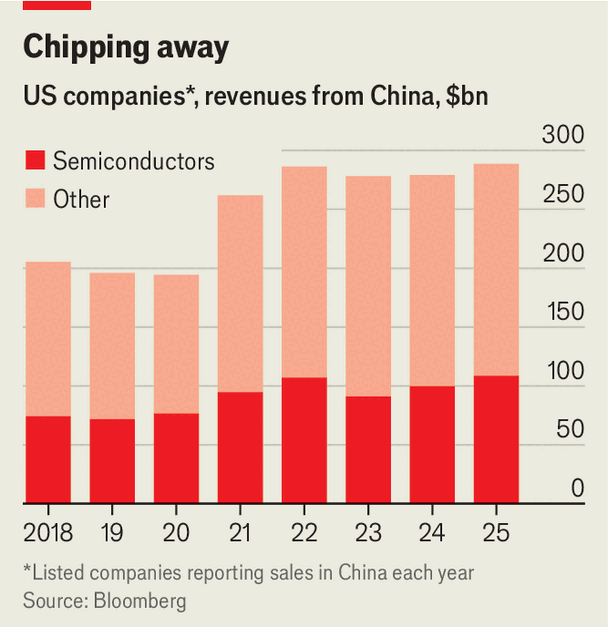
更严峻的挑战在于投资回报率的持续走低与内需疲软:自2023年以来多数在华美企营收陷入停滞,苹果去年在华销售额较2022年萎缩约100亿美元,百事公司收入亦持续下滑。半导体产业虽占去年美企在华总营收的三分之一以上(2025年增长9%),但面临着极大的政策替代风险:中国晶圆制造设备的国产化率已从2020年的仅6%迅速攀升至今年底的近30%,北京对供应链自主可控的追求正不可逆转地压缩美企的生存空间。
Donald Trump claims that China is on the brink of radically opening its markets to American commerce following his May summit with Xi Jinping and their September 24th meeting in Washington. Officials formalized a bilateral board of trade, Treasury Secretary Scott Bessent extended the tariff truce through January, and Citigroup is moving to open a wholly owned brokerage; furthermore, an AmCham Shanghai survey showed business confidence at its highest since 2021, bolstered by robust earnings from Nvidia, Qualcomm, Ralph Lauren, and Sam’s Club.
Nevertheless, American corporate executives in Beijing and Shanghai remain profoundly skeptical, recognizing that this modest uptick follows four consecutive years of record-low sentiment. Structural friction persists unabated: Mr Trump recently mooted an additional 7.5% tariff atop existing levies exceeding 20% (even as total Chinese exports surged 25% year-on-year in August), strategic rare-earth shipments face unexplained disruptions, and Western firms in digital services and payments remain completely locked out by dominant domestic champions such as Tencent and Ant Group.
Moreover, deteriorating commercial returns and sluggish domestic consumption have caused revenue growth to stagnate across most sectors since 2023: Apple’s China revenues contracted by roughly $10bn relative to 2022, while PepsiCo has suffered persistent declines. While chipmakers generated over one-third of total American corporate sales in China last year (expanding 9% in 2025), this critical sector faces severe headwinds from Beijing's relentless import-substitution campaign, which has driven domestic wafer-fabrication equipment self-sufficiency from 6% in 2020 toward roughly 30% by the end of this year.
Source: Donald Trump says China is opening up. American bosses disagree
Subtitle: Chipmakers’ record sales disguise a gloomy picture
Dateline: Sep 24th 2026\n