2022年俄罗斯入侵乌克兰前的重大情报误判——德国联邦情报局局长布鲁诺·卡尔滞留基辅需紧急撤离、法国军事情报局长埃里克·维多将军引咎辞职——彻底打破了中等强国长期依赖和平主义或美国情报保护的幻想。面对俄罗斯日益猖獗的“灰色地带”破坏、台海潜在冲突风险,以及唐纳德·特朗普政府对盟友安全的冷漠与不确定性,诸多中等民主国家正全面重塑其对外情报机构。
各国正加速补齐搜集与反制能力的短板:日本设立国家情报委员会并重组情报机构,力图向“第六只眼”迈进;瑞典计划于明年正式运行独立的对外情报机构;加拿大在遭遇境外暗杀风波及“五眼联盟”地位受挫后展开类似筹建研讨;荷兰扩大了情报机构的年度自主行动权;德国议会则推进立法赋予联邦情报局网络反击乃至海外“动能手段”权限。
在英国军情六处(MI6)和法国对外安全总局(DGSE)引领下,欧洲跨国情报协作达到了前所未有的深度。尽管受制于斯诺登事件揭露的盟友监听阴影及安全审查互信缺失,建立全欧版“五眼联盟”仍困难重重,但各国正通过“核心小组”模式对中俄等硬目标展开分工合作。中等强国不再单纯充当美国情报的消费者,而是通过提升自主情报质效,在动荡的地缘格局中捍卫自身生存底线。
The catastrophic intelligence failure preceding Russia’s 2022 invasion of Ukraine—exemplified by German BND chief Bruno Kahl fleeing Kyiv and France sacking military intelligence head General Eric Vidaud—has compelled middle-power democracies to overhaul their long-neglected espionage capabilities. Confronting Russian hybrid "grey-zone" operations, tensions over Taiwan, and Donald Trump's transactional approach to traditional alliances, countries that long relied on post-war pacifism or American protection are rapidly modernizing their spycraft.
Institutional reform is sweeping key capitals: Japan has instituted a National Intelligence Council to centralize intelligence synthesis and aspire to "Sixth Eye" status, while Sweden will launch an independent civilian foreign-intelligence agency next year. Simultaneously, Canada is weighing an external espionage service following foreign assassination scandals, the Netherlands has streamlined operational approvals for its AIVD, and Germany is legislating to empower the BND with offensive cyber and overseas kinetic capabilities.
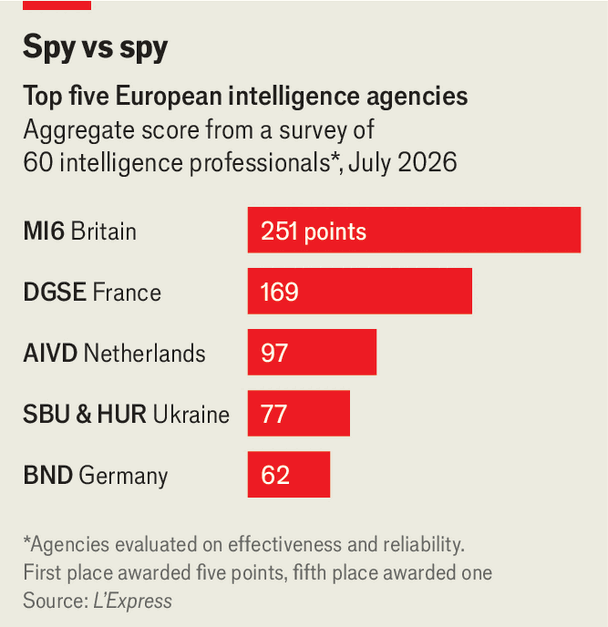
Led by Britain’s MI6 and France’s DGSE—consistently ranked by peers as Europe’s premier services—multilateral collaboration has reached unprecedented levels. While historical distrust and memories of surveillance scandals uncovered by Edward Snowden impede a formal European "Five Eyes," regional spy agencies are forming specialized "core groups" to penetrate targets like Moscow and Beijing. Ultimately, middle powers are determined to develop independent collection apparatuses rather than relying passively on Washington's shifting strategic posture.
Source: How middle powers are rethinking espionage
Subtitle: Allies are grappling with threats from Russia and China—and perhaps America
Dateline: Sep 24th 2026\n