在英国接受政府资助的9.3万名寻求庇护者中,绝大多数人最终将获准定居并成为英国公民,这使得抵英初期的居住安置对其心理健康与长远社会融入至关重要。目前,约有1.6万人被安置在酒店,不到2000人身处集中营地,而近7万人则居住在由普通民宅改建的“分散式住所”中。乌得勒支应用科学大学等学者的研究表明,相较于借住亲友家中的群体,长期居住于官方安置点内的庇护者心理状况明显更差、社会联结严重脱节。
英国建立大规模收容中心的尝试屡屡受挫:内皮尔军营在抗议与高等法院批评声中关闭,而政府耗资1500万英镑(约合2000万美元)购置的诺塞伊旧监狱因场地污染未曾安置一人。与此同时,酒店安置模式不仅成本极其高昂——国家审计署指出酒店虽仅容纳三分之一的庇护者,却消耗了高达75%的住宿预算支出——还屡次成为极右翼暴力抗议的攻击目标。
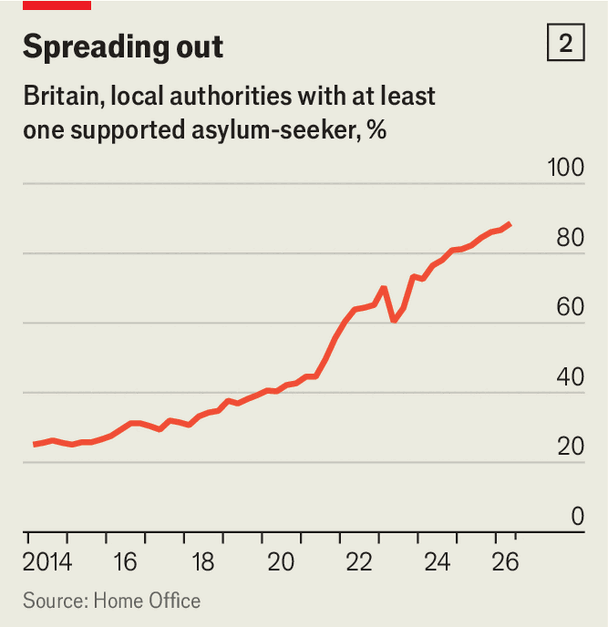
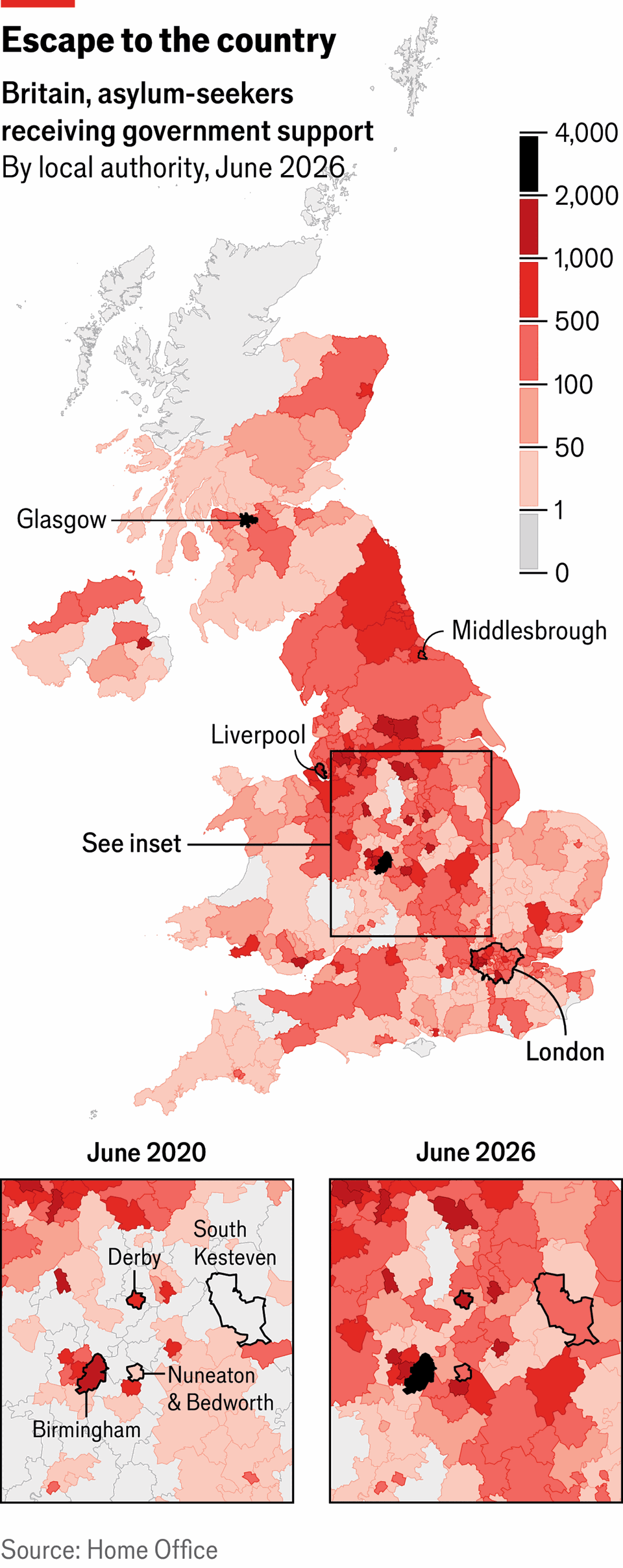
由于营地短缺与酒店成本难以持续,政府将庇护者向全国广泛分散:2014年仅有25%的地方议会设有分散式住所,如今这一比例飙升至90%,如南凯斯蒂文两年内安置人数从3人激增至279人。然而,每周仅能依靠49英镑津贴(住酒店者仅10英镑)维生的庇护者被推向缺乏法律援助、公共交通匮乏且排外情绪滋生的小城镇与乡村,其远离城市就业中心不仅加剧了社会隔离,更严重阻碍了未来国民的经济自立。
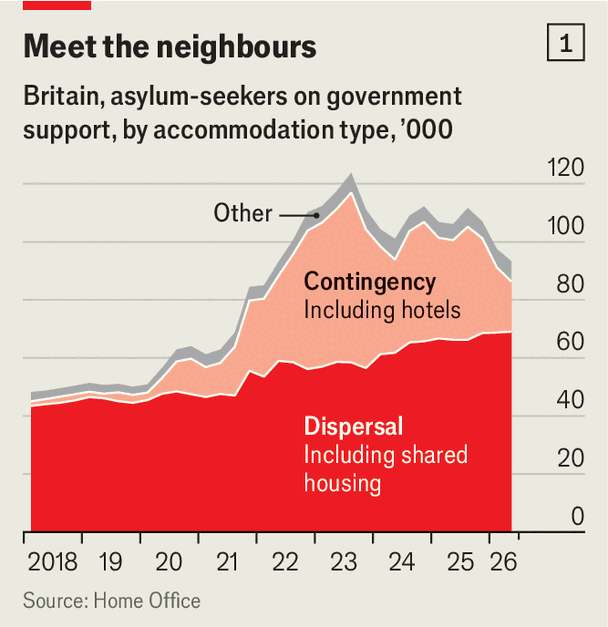
Among the 93,000 asylum-seekers currently supported by the British government, the vast majority will permanently settle and ultimately secure British citizenship, rendering early reception and housing arrangements paramount for long-term psychological wellbeing and social integration. At present, roughly 16,000 reside in contentious hotels, fewer than 2,000 inhabit institutional camps, and nearly 70,000 are housed in shared residential "dispersal accommodation." Academic studies by researchers at Utrecht University demonstrate that claimants confined to state facilities suffer significantly worse mental health and weaker social networks than those residing with relatives or friends.
Official efforts to operate large institutional centres have collapsed amid fiscal corner-cutting and intense local backlash: Napier barracks closed following severe judicial and public censure, while a contaminated former prison in Northeye, acquired for £15m ($20m), housed not a single claimant. Concurrently, commercial hotels consume 75% of total state accommodation expenditure despite housing only one-third of supported asylum-seekers, while repeatedly attracting volatile demonstrations and far-right hostility.
Consequently, the Home Office has aggressively redirected dispersal toward smaller communities: whereas only 25% of local authorities hosted dispersed claimants in 2014, 90% do today, with rural South Kesteven seeing its tally surge from three to 279 within two years. Subsisting on mere weekly stipends of £49 (or £10 in catered hotels), these individuals are increasingly isolated in locales lacking public transit, charitable infrastructure, and job opportunities, needlessly immiserating future British citizens and crippling their long-term socioeconomic prospects.
Source: By housing asylum-seekers so badly, Britain is harming itself
Subtitle: Most will become citizens in time
Dateline: Sep 24th 2026\n