随后,Polymarket 面临内线交易指控,且具有具体数字讯号:Bubblemaps 指出6个帐户在前24小时内入金,并在空袭前数小时下注大额部位;其中一个帐户(「Magamyman」)据报在该空袭市场获利超过500,000美元。文章还引用更早的可疑获利:在 Nicolás Maduro 去职市场超过400,000美元,以及在 Google 相关市场1,200,000美元。其统计模式是:超额利润反复集中于少数、近期入金且匿名化程度高的帐户。
Kalshi 则呈现另一种失灵模式。在 President Donald Trump 宣布 Khamenei 已在轰炸中身亡后,Kalshi 并未将合约结算为「Yes」,而是冻结市场,因其规则排除与死亡直接绑定的结果,并要求以死亡前最后价格结算。交易者质疑规则清晰度与给付公平性;Kalshi 表示其已退还全部费用与净损失,成本为2,200,000美元。这个对照趋势是监管严格性对比市场宽放性,而两种模型各自产生不同的信任风险。
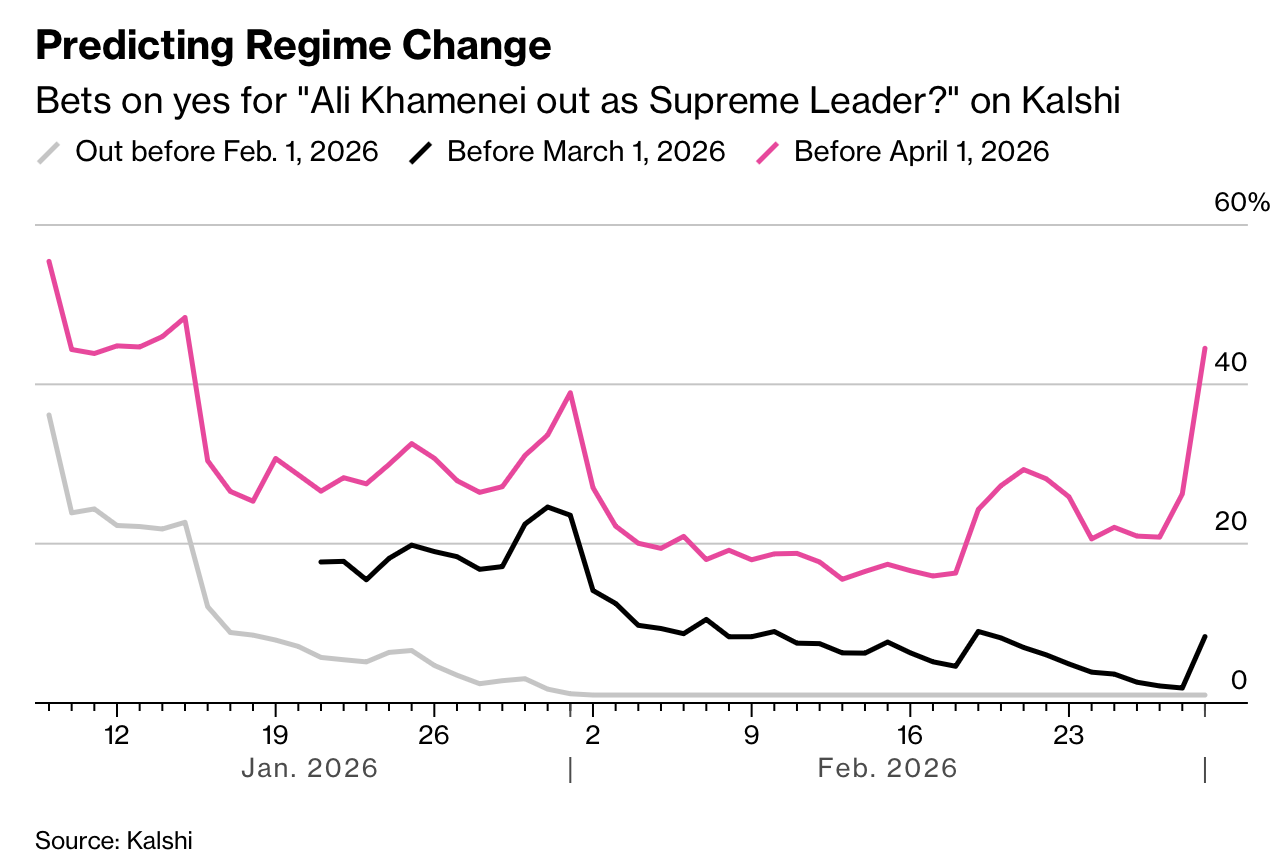
On February 28, 2026, as US and Israeli bombing of Tehran began, prediction markets reacted within minutes: at 1:12 a.m. New York time, Polymarket odds that the US would strike Iran that day spiked, and “Yes” prices rose on both Polymarket’s and Kalshi’s 2026 contracts on whether Ali Khamenei would be out as Supreme Leader. This rapid repricing showed high event sensitivity but also exposed governance stress when markets are tied to war and leadership outcomes.
Polymarket then faced insider-trading allegations with concrete numerical signals: Bubblemaps identified six accounts funded within the prior 24 hours that placed large pre-strike bets; one account (“Magamyman”) reportedly made more than $500,000 on the strike market. The article cites earlier suspicious gains of over $400,000 on a Nicolás Maduro ouster market and $1.2 million on Google-related markets. The statistical pattern is repeated outsized profits concentrated in small, recently funded, pseudonymous accounts.
Kalshi showed a different failure mode. After President Donald Trump announced Khamenei had been killed, Kalshi froze the contract instead of resolving “Yes,” because its rules exclude death-linked outcomes and required settlement at the last pre-death price. Traders contested rule clarity and payout fairness; Kalshi said it reimbursed all fees and net losses at a cost of $2.2 million. The split-screen trend is regulatory strictness versus market permissiveness, with each model producing a distinct trust risk. (Key numbers: 2,200,000)