MAHA推动了一波州级食品监管浪潮:仅在去年,41个州就提出了150项食品法案,而2025年被州卫生官员称为法案“爆发”的一年。变化从标签规则到学校餐食禁令不等,包括得州自明年起要求某些成分加注警示,以及加州计划到2035年把超加工食品逐出学校餐食。
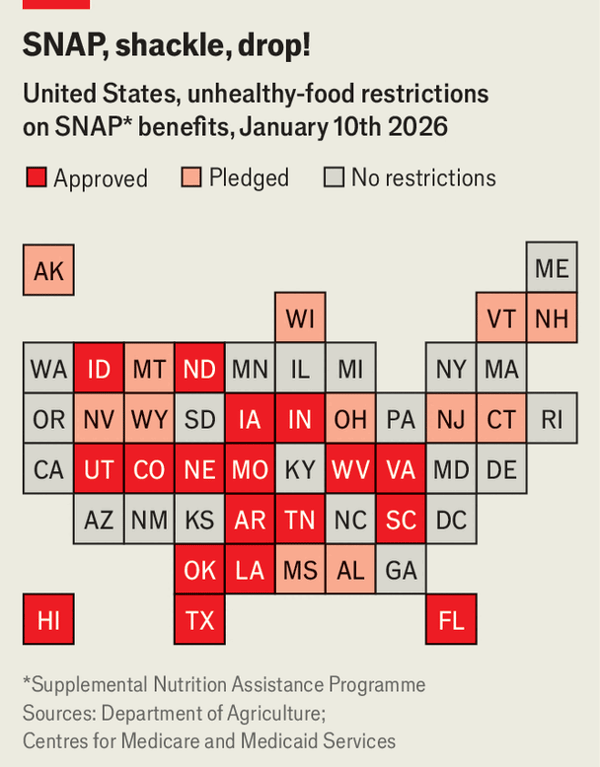
SNAP已成为最广泛的战场之一:30个州已承诺把部分垃圾食品排除在福利项目之外,其中8个州已经实施,但限制范围差异很大。研究表明,若汽水禁令与水果和蔬菜激励配套,饮食可能改善,但到2034年,特朗普的“One Big Beautiful Bill”又将把SNAP支出削减约20%,削弱潜在健康收益。
这种政治格局也已反转:过去15到20年前主要由民主党人推动的食品添加剂限制,如今在小肯尼迪的影响下获得两党支持,并吸引零售商和大食品公司回应。Target已要求所有早餐麦片在5月底前停用认证合成色素,而制造商则联合推动全国标签标准,并在西弗吉尼亚和得州起诉新法律,不过哈佛学者认为各州在标签和添加剂规则上具有坚实法律依据。
MAHA has triggered a surge of state-level food regulation: lawmakers introduced 150 food bills across 41 states last year, and state health officials describe 2025 as a year of legislative “explosion.” The changes range from labelling rules to school-meal bans, including Texas requiring warning labels on certain ingredients from next year and California planning to remove ultra-processed foods from school meals by 2035.
SNAP has become one of the broadest battlegrounds: 30 states have committed to excluding some junk food from benefits, with 8 already enacting changes, though the restrictions vary widely. Research suggests soda bans can improve diets when paired with fruit-and-vegetable incentives, but Trump’s One Big Beautiful Bill will also cut SNAP spending by about 20% by 2034, limiting the potential health gains.
The politics have also flipped: food-additive restrictions that 15 to 20 years ago were mainly Democratic causes now have bipartisan backing under Kennedy’s influence, drawing in both retailers and Big Food. Target has told suppliers to remove certified synthetic colours from all breakfast cereals by the end of May, while manufacturers are pushing for a national labelling standard and suing in West Virginia and Texas, even as Harvard scholars argue states are on firm legal ground over labels and additives.
Source: States are embracing the MAHA food agenda
Subtitle: Robert F. Kennedy junior and company have built a powerful coalitio
Dateline: 3月 05, 2026 06:54 上午 | New York