自12月初以来,至少有8位外国领导人访华,其中有6位来自美国的正式盟友(法国、加拿大、英国、芬兰、韩国和德国),而这一月还将再有一位德国总理到访。与其说关键在数量,不如说在构成:美国盟友正以密集节奏与中国接触。
这些会晤的实质成果总体偏薄、让步有限:加拿大下调了对中国电动车的关税,但配额严格限制了低税率适用数量,英国的主要动作是批准建设中国新使馆。与此同时摩擦迅速回潮,马克龙返程数日后即警告可能加征欧盟关税,而斯塔默访华仅一周后,黎智英被判20年。
统计趋势显示,过去十年“脱钩/去风险”叙事正在降温并转向谨慎再接触;对北京而言,领导人连续到访本身就是提升大国地位与争取战略时间的高价值信号。下一阶段的不确定性在于,中国是否会从“惩罚越线国家”的被动施压,转向“主动塑造他国政策”的更强贸易杠杆,这可能触发更广泛的联合反制。
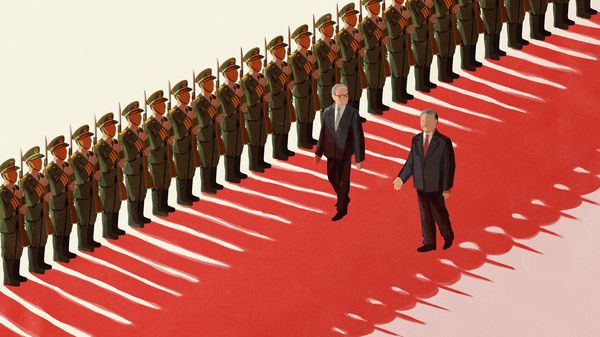
Since the start of December, at least eight foreign leaders have visited Beijing, including six leaders of formal US allies (France, Canada, Britain, Finland, South Korea, and Germany), with another German chancellor due this month. The key signal is less the count than the composition: US allies are engaging China in a concentrated wave.
The material outcomes of these meetings have been relatively thin and concessions limited: Canada cut tariffs on Chinese EVs but a quota tightly caps volumes at the lower rate, and Britain’s main move was approving a new Chinese embassy. Friction has also rebounded quickly, with Macron warning of possible new EU tariffs just days after returning and Jimmy Lai receiving a 20-year sentence only a week after Starmer’s trip.
The statistical trend is that a decade-long decoupling/de-risking narrative is losing momentum and shifting toward cautious re-engagement; for Beijing, the steady flow of visits is itself a high-value signal of great-power status and strategic breathing space. The next uncertainty is whether China moves from reactive punishment of states that cross its red lines to proactive use of trade leverage to reshape policy, a shift that could provoke broader balancing coalitions.
Source: Why American allies are flocking to see Xi Jinping in Beijing
Subtitle: China isn’t using its considerable leverage over them—yet
Dateline: 2月 19, 2026 04:17 上午