全球发达经济体债券市场遭遇历史性剧烈抛售,十年期中位数主权国债收益率攀升至4%,创下15年多来新高,较2015至2019年均值高出逾2.5个百分点。10月5日,美国十年期国债收益率突破5.3%,创逾20年最高纪录;日本十年期国债收益率自1996年以来首次升破3%,其30年期国债收益率更突破4.2%的历史极值。自6月底以来,法国十年期国债收益率跳升约1.3个百分点,意大利上涨1个百分点。引发本轮利率暴涨的核心动力来自三方面:强劲经济与AI繁荣吸纳巨额资本、地缘冲突引发的持续能源通胀,以及恶化的财政赤字与民粹政治风险。
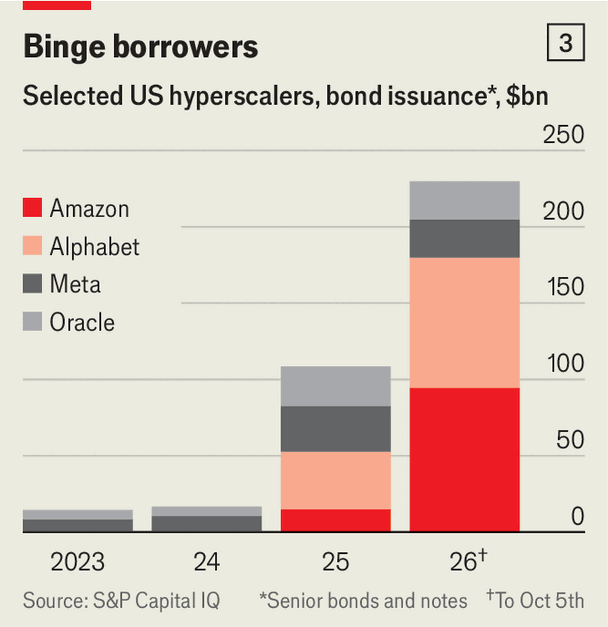
美国经济在二季度录得4.6%的年化强劲私人内需扩张,三季度GDP年化增速预计达3.7%,展现出极强韧性。五大科技巨头(Alphabet、亚马逊、Meta、微软、甲骨文)上半年资本支出达3300亿美元,全年预计达8000亿美元,到2027年将达1.2万亿美元(超美国GDP的3%);今年以来科技巨头已发行2300亿美元债券,推动全球数据中心建设投资预计在2030年前达到5万亿美元。加之美国电力公用事业未来五年规划投资1.4万亿美元,AI对资本的争夺推动实际利率上行约0.5个百分点。与此同时,霍尔木兹海峡受阻导致原油价格飙升约40%,促使国际货币基金组织将全球通胀预期从3.8%上调至4.7%。美联储、欧洲央行及日本央行被迫重启加息或推迟降息,市场对2027年美联储终端利率预期从2.75-3%大幅反弹至4.25-4.5%。
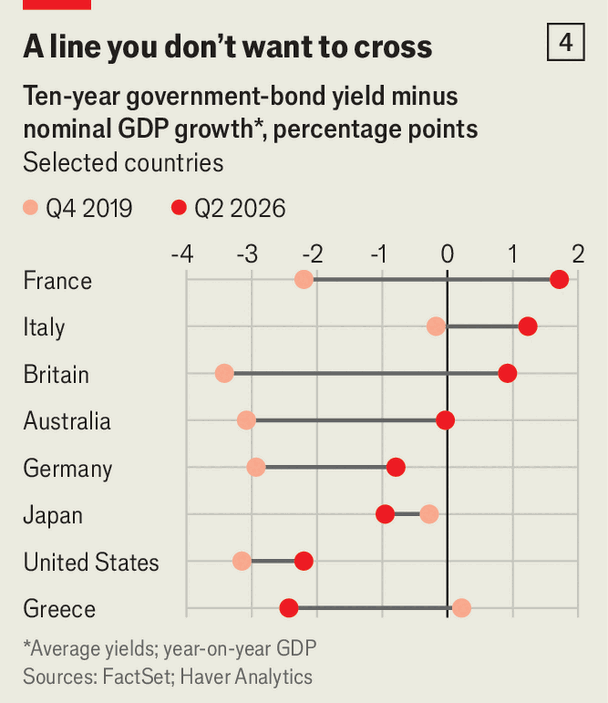
随着OECD国家三分之一的固定利率债务将在2026至2028年间密集到期,利息支出占GDP的3.3%势必急剧攀升。美国年净利息支出已超1万亿美元,高盛预计现行利率将拖累美国2027年GDP增速逾0.5个百分点,十年内联邦利息支出或膨胀至2.8万亿美元。相比美国的高增长,欧洲则面临“弱增长与高利率”的致命夹击。法国债务占GDP比重达120%,赤字连续四年超5%,今年预计达5.4%;其借贷成本高出名义GDP增速约2个百分点,对德十期债利差突破1.5个百分点创2011年以来新高,融资成本甚至反超意大利和希腊。若法国按当前五年期收益率完成全部再融资,需维持占GDP约1.8%的基本盈余方能稳住债务,但在2027大选民粹极化背景下,财政紧缩推进维艰,欧洲主权债务正滑向漫长严酷的紧缩考验。
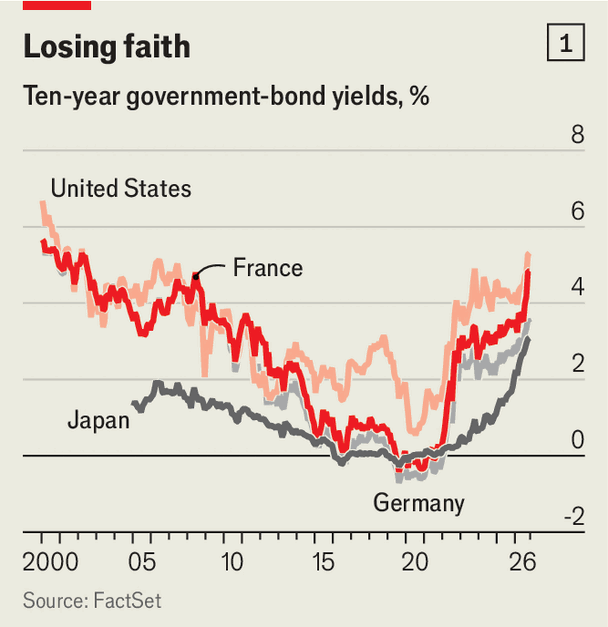
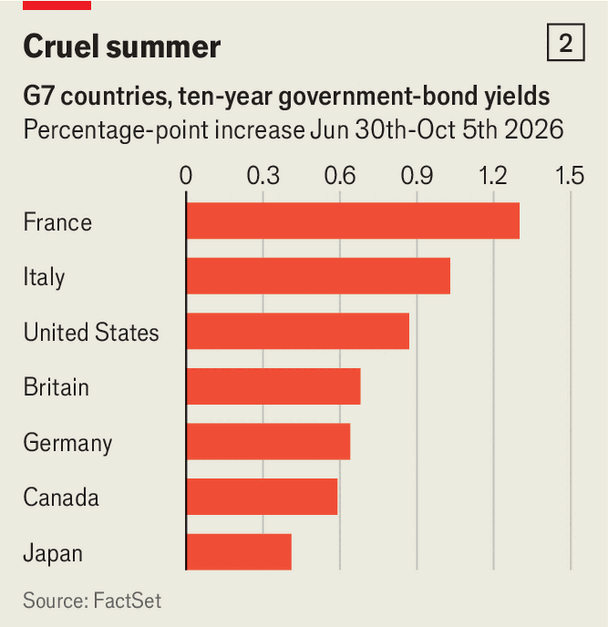

Sovereign bond markets across advanced economies have suffered severe selling, pushing the median ten-year government yield to 4%—a 15-year peak exceeding 2015-19 averages by over 2.5 percentage points. On October 5th, American ten-year Treasury yields breached 5.3% for the first time in over two decades, while Japanese ten-year yields crossed 3% for the first time since 1996, with 30-year yields touching record highs above 4.2%. Since late June, benchmark ten-year borrowing costs rose by 1.3 percentage points in France and 1.0 percentage point in Italy. This surge is propelled by structural drivers: massive capital absorption from artificial intelligence investments, persistent energy-induced global inflation, and fiscal deterioration compounded by political polarization.
Economic resilience and corporate borrowing in the United States have kept interest rates elevated. American private domestic demand expanded at an annualized 4.6% in the second quarter, while third-quarter GDP growth is projected at 3.7%. Capital expenditure by the five major tech hyperscalers reached $330bn during the first half of the year and is forecast to hit $800bn this year and $1.2trn by 2027, exceeding 3% of US GDP. Hyperscalers have floated $230bn in corporate debt this year, competing with $1.4trn in scheduled electric utility investments. Compounding capital pressure, disruptions in the Strait of Hormuz inflated crude oil prices by 40%, prompting the IMF to lift its global inflation forecast from 3.8% to 4.7%. Consequently, the Fed raised rates alongside policy tightenings by the ECB and Bank of Japan, shifting market expectations for 2027 Fed policy rates from 2.75-3% to 4.25-4.5%.
With one-third of OECD sovereign fixed-rate debt maturing between 2026 and 2028, interest payments—already consuming 3.3% of collective GDP—are poised to escalate. Annual American net debt service exceeds $1trn and could approach $2.8trn within a decade. However, while robust American growth buffers higher rates, Europe faces stagnant growth combined with widening spreads. France's public debt stands at 120% of GDP with an annual deficit forecast at 5.4%, creating a two-percentage-point gap where borrowing costs outpace nominal output. French ten-year spreads over German bunds widened beyond 1.5 percentage points to surpass Italian and Greek borrowing rates. To stabilize debt under current five-year refinancing yields, France would require a primary budget surplus of 1.8% of GDP, threatening prolonged fiscal contraction amid contentious electoral politics.
Source: Turbulent bond markets threaten some countries more than others
Subtitle: For those where interest rates outstrip economic growth, trouble looms
Dateline: Oct 8th 2026\n