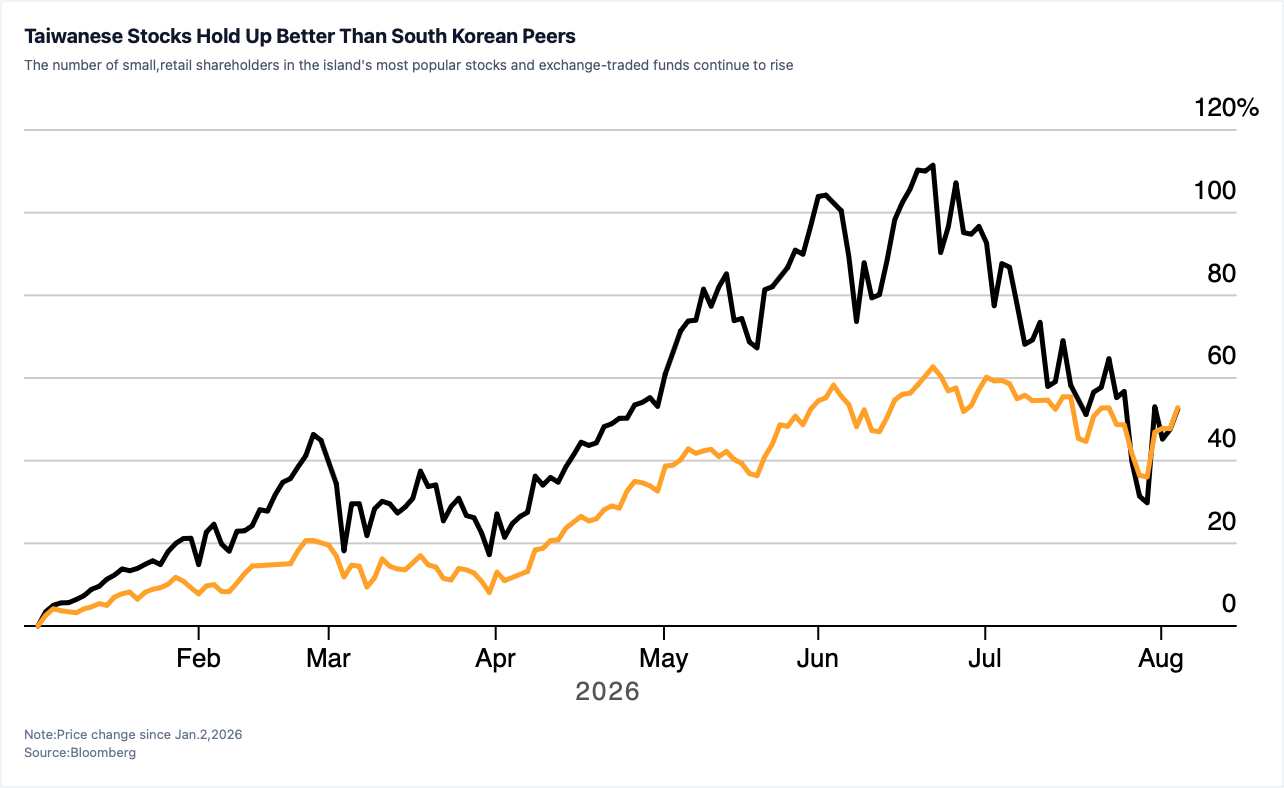
台湾散户的坚定信念根植于近年来的股市荣景。受台积电等人工智慧龙头企业带动,台股在2023至2025年间每年涨幅约25%,投资已成为全民运动。尽管7月台股大盘一度跌幅达6.5%,多数投资人仍选择补缴保证金而非断头出场,融资追缴虽大幅增加,但强制平仓的情况仍属有限。相较于南韩股市同期暴跌22%,台湾市场表现明显抗跌。
金管会近期密切关注市场风险,已与券商会面了解风控措施,并宣布证交所将于9月底前推出杠杆指标仪表板,提升透明度与风险监控。券商也主动在担保维持率降至150%时提前通知客户,低于法定的130%门槛。目前融资余额已自高峰下降约20%,仅占自由流通市值的0.6%。外资也开始回流,8月至今净买超新台币650亿元,显示市场信心逐步回稳。
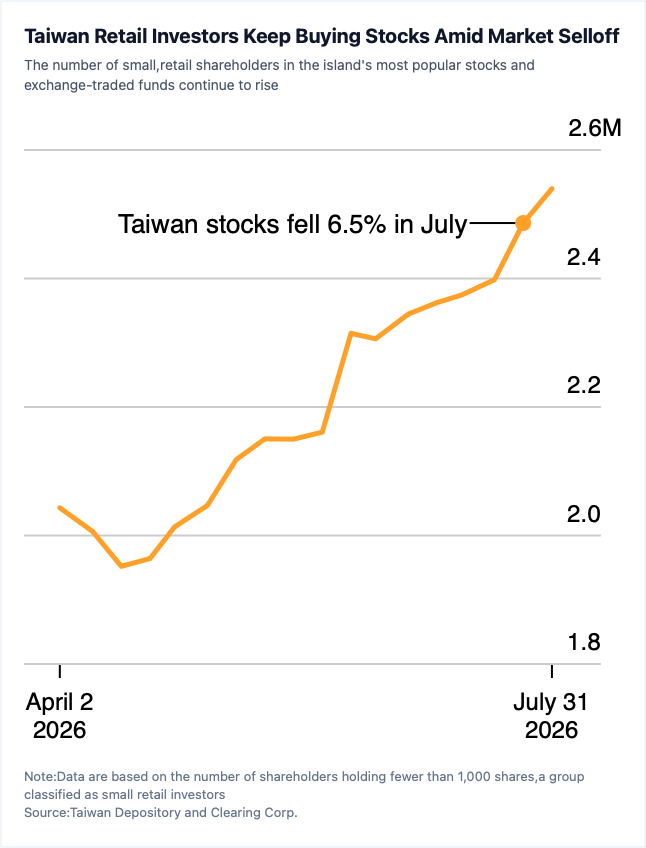
Taiwanese retail investors demonstrated remarkable resilience during the July 2026 market selloff, refusing to panic-sell and instead embracing a buy-the-dip mentality. Dorian Hsu, a 33-year-old office worker, lost over $150,000 in July after leveraging borrowed funds, yet remains determined to invest further. The number of TSMC odd-lot shareholders rose to 2.5 million, and Yuanta's Top Taiwan 50 ETF saw its small shareholder count grow by over 100,000, underscoring continued retail participation.
This conviction stems from Taiwan's extraordinary stock market rally, driven by AI heavyweights like TSMC, which delivered roughly 25% annual gains from 2023 through 2025. While the Taiex slid 6.5% in July, most investors posted additional collateral rather than liquidating positions, keeping forced selling limited. Taiwan stood out as an outlier compared to South Korea, where leveraged single-stock ETF bets unraveled and the Kospi plunged 22% in the same period.
Regulators have taken notice, with the Financial Supervisory Commission meeting brokers to review risk-management practices and announcing plans to launch a leverage-indicator dashboard by late September. Brokerages have proactively sent early margin notices and tightened client monitoring. Leverage has fallen about 20% from its peak, with outstanding margin loans at just 0.6% of free float. Foreign investors have also begun returning, purchasing a net NT$65 billion of local shares in early August, signaling gradually restoring confidence in the market.