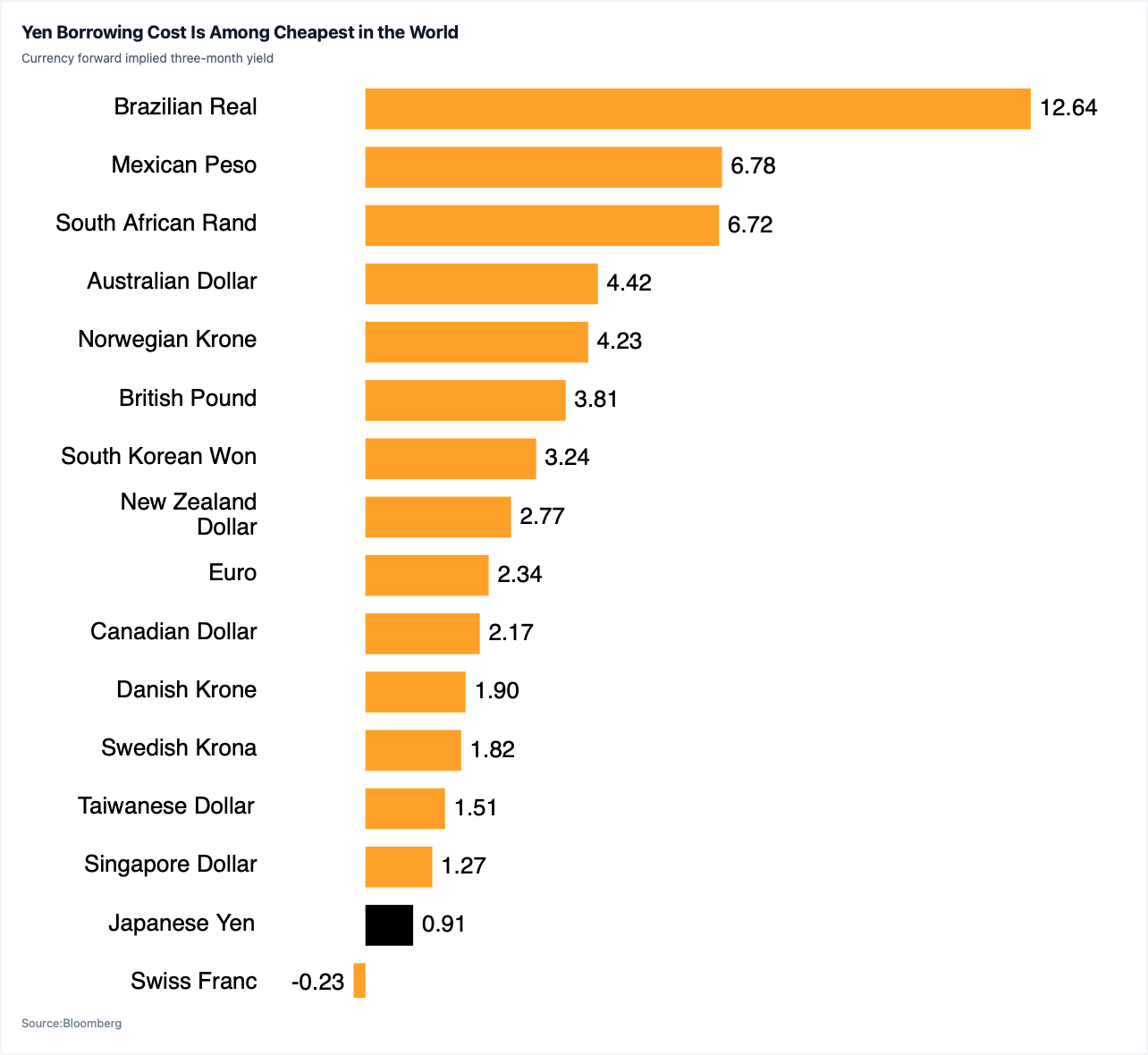
套利交易之所以持续吸引资金,根本原因在于日本与其他主要经济体之间巨大的利差。日本政策利率仅为1%,远低于多数已开发国家,加上财政方面的隐忧,日圆承受持续的贬值压力。高盛策略师指出,日圆套利头寸「减少了,但并未消失」。今年以来,以日圆融资做空、买入哥伦比亚披索、土耳其里拉和挪威克朗等高息货币的交易回报率均超过10%。日本投资者自身也在干预后日圆短暂反弹期间大举买入外国资产,创下两年多来最高纪录。
展望未来,日本首相高市早苗政府据报支持日本央行在九月或十月提前加息,以应对日圆疲软。然而,即便加息一码,也难以大幅收窄与美国的利差。美国财长贝森特重申支持稳定日圆,警告日圆疲软可能引发亚洲货币连锁贬值。市场人士认为,只要日本央行落后于利率曲线,以日圆融资的套利交易就会持续繁荣,但干预风险也意味著波动性将加大,投资者需警惕被迫快速平仓的可能。
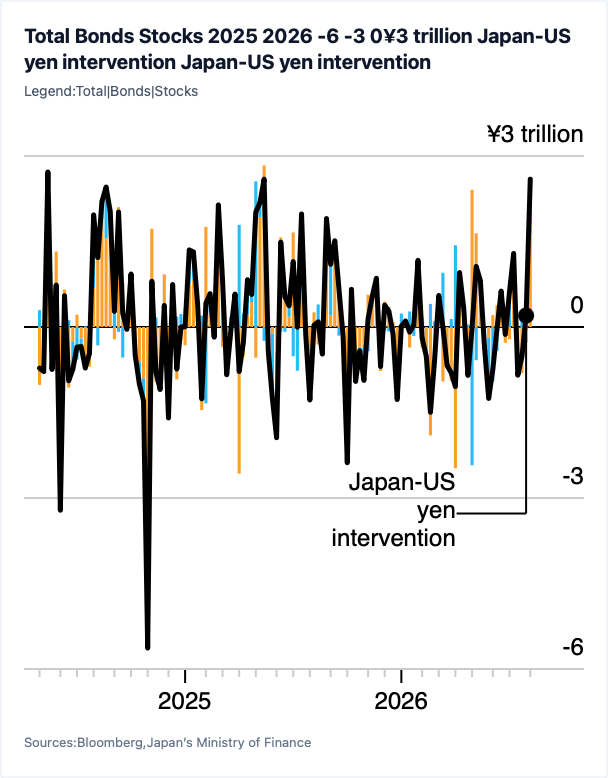
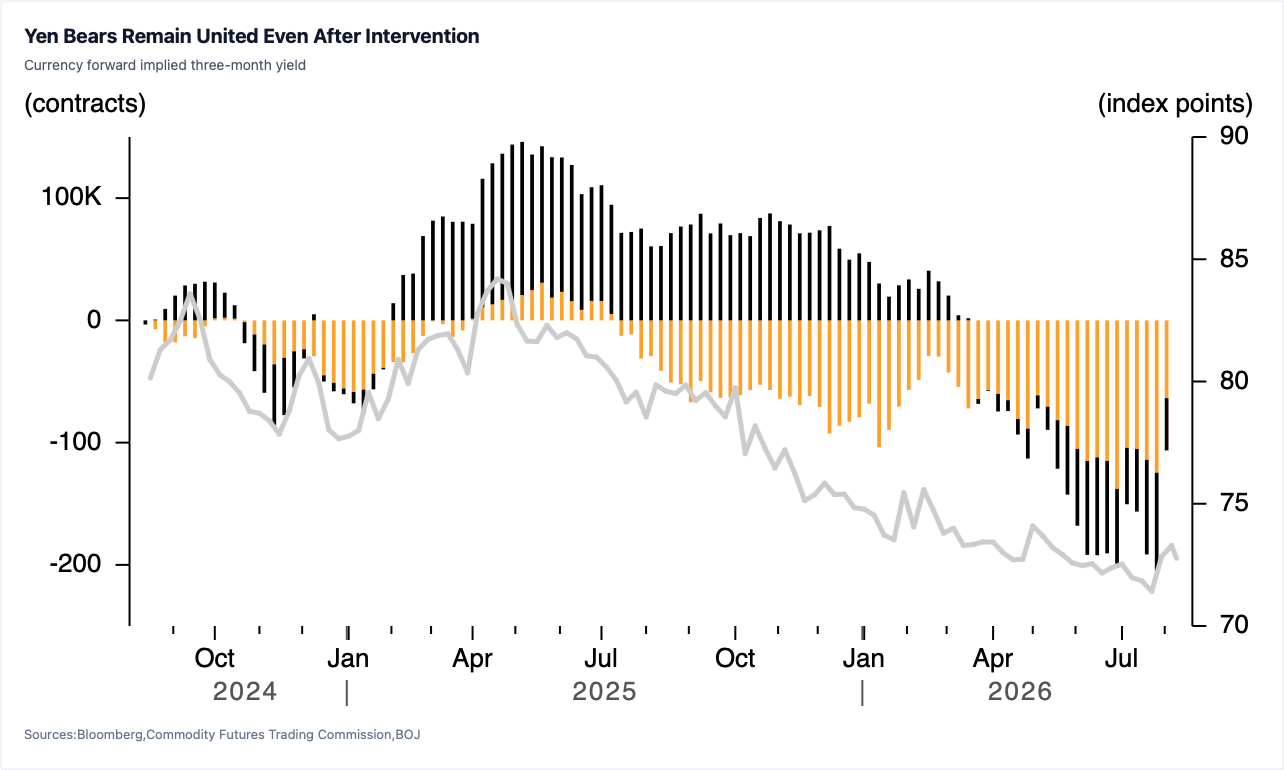
Japan's historic joint intervention with the United States to support the yen has proven largely ineffective. The currency has erased half of its intervention-driven gains, sliding back toward 160 per dollar. Investors view each round of intervention as a fresh opportunity to sell the yen at more favorable levels and re-enter carry trades. While hedge funds have reduced their bearish yen bets, market participants including JPMorgan Private Bank and State Street Bank & Trust report that real-money accounts remain positioned for carry trades, selling the yen against a range of G-10 currencies such as the Australian dollar, euro, and US dollar.
The fundamental driver behind the persistent yen weakness is the wide interest-rate differential between Japan and other developed economies. Japan's 1% policy rate makes the yen one of the cheapest currencies to borrow, enabling investors to fund purchases of higher-yielding assets. Goldman Sachs notes that carry positions are "diminished, not finished." Shorting the yen against currencies like the Colombian peso, Turkish lira, and Norwegian krone has returned over 10% this year. Even Japanese domestic investors have seized the post-intervention bounce to buy foreign assets at the highest level in more than two years.
Looking ahead, Prime Minister Sanae Takaichi's government reportedly supports a near-term Bank of Japan rate hike, likely in September or October, though a single quarter-point increase would do little to narrow the gap with US rates. Treasury Secretary Scott Bessent has pledged to do "whatever it takes" to support the yen, warning that its weakness risks broader Asian currency depreciation. Market strategists believe that as long as the BOJ remains behind the curve, yen-funded carry trades will continue to flourish, albeit with greater volatility driven by the ever-present threat of further intervention and forced position unwinding.