在4月发布的IMF最新全球经济统计中,人口约7000万的英国重新成为世界第五大经济体,挤下拥有14.5亿人口的印度,后者因此降到第六位。此次排名变化主要归因于卢比疲软,但印度的增长速度约为英国的5倍,持续下去可能很快重回第五。
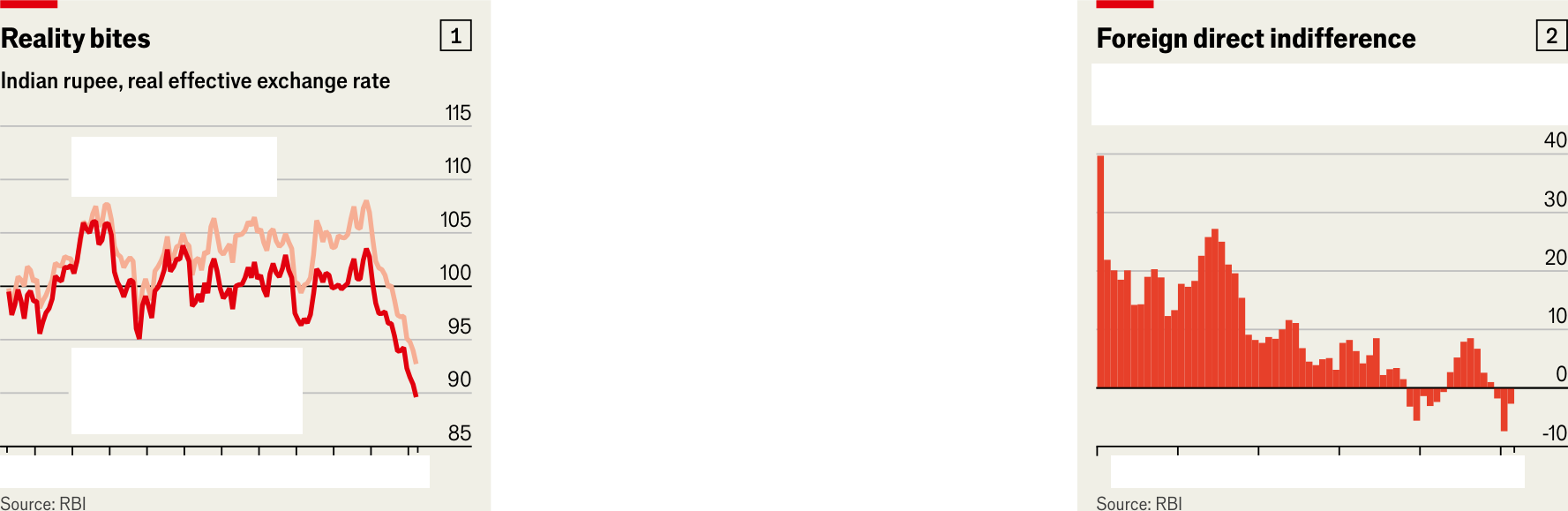
印度卢比在截至3月的财政年度内对美元下跌约十分之一,接近11%,与美国相比在过去12个月印度和美国通胀率都略高于3%。按常识这会压缩印度与美国商品的实际对比价值,并推动实际有效汇率下滑,但该下滑中近三分之二在海湾能源危机前就已发生。
外国投资者持续抛售印度资产,2025年初以来债券和股票净流出约310亿美元,而前两年净流入则接近500亿美元;同时,国内散户推高估值,伊朗导致的下跌前,孟买Nifty 50市盈率约为26倍,而MSCI新兴市场基准篮子仅约17倍。印度缺乏能够吸引投资者的人工智能主题上市公司,像TCS这类大型IT咨询企业也在等待更直接的AI驱动再估值。
In the IMF’s April update to global economic statistics, Britain—about 70 million people—reclaimed the world’s fifth-largest economy spot, pushing India with a 1.45-billion population down to sixth place. This reversal is largely driven by a weak rupee, even though India is growing about five times faster than Britain and is likely to reclaim fifth place if trends continue.
The Indian rupee fell roughly a tenth against the dollar over the fiscal year to March, with an 11% drop despite both India and the U.S. having inflation just above 3% in the prior 12 months. That near-equal inflation means the move translated into a sharp real effective exchange-rate squeeze, and nearly two-thirds of that decline actually happened before the Gulf energy crisis.
Foreign investors have been exiting Indian assets, with about $31 billion net outflows in debt and equities since early 2025 versus nearly $50 billion net inflows in the previous two years, while domestic retail participants pushed valuations higher. Before the Iran-related slide, Mumbai’s Nifty 50 traded near 26 times earnings versus about 17 times in MSCI’s emerging-market benchmark, and India also lacks AI-exciting listed firms, leaving giants like TCS to wait for a clearer AI-led rerating.
Source: No respite for the rupee
Subtitle: MUMBAI India's weak currency reflects deeper problems than the Iran war
Dateline: The Economist May 2nd 2026