在稀树草原,捕食者在水坑守株待兔即可;在雨林,水无处不在,使水坑失去作用,捕食者必须改用其他聚集点。一个合理候选是盐舔地:食肉比食草含盐更高,使食草动物更易缺盐而频繁造访,从而形成可预测的猎物集中。
为克服雨林植被致使观察困难的限制,华盛顿保护慈善机构 Climate Corridors 的 Sam Pottie 结合人工观察与相机监测,并在《Biotropica》报告结果。研究团队在秘鲁东南部雨林的 19 处盐舔地布设了 56 个带运动探测器的视频“相机陷阱”,平均约每处 3 个。
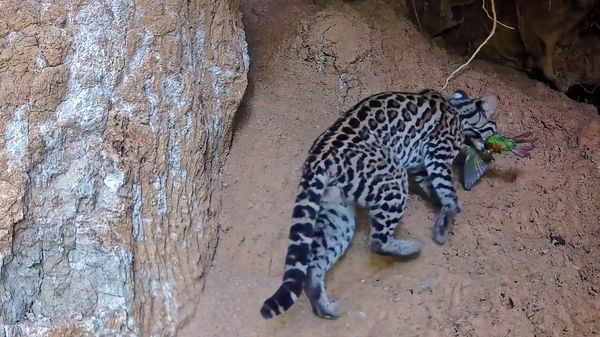
影像记录到多类捕食行为:树蚺与侏儒凯门鳄伏击下落取盐的食果蝙蝠,美洲豹攻击西貒,吸血蝙蝠趁貘分心取血,豹猫捕捉长尾小鹦鹉或袭击吼猴(且有 1 次误判体型而被迫逃跑)。总体显示盐舔地确如稀树草原水坑一般充当捕食者的“粮仓”,把来访动物持续转化为可利用的觅食机会。
In savannahs, predators can simply wait at watering holes; in rainforests, ubiquitous water makes those sites less useful, forcing predators to use other gathering points. A plausible alternative is salt licks: meat is saltier than plants, so herbivores face greater salt shortfalls and visit more often, creating predictable prey concentrations.
To overcome observation limits from dense vegetation, Sam Pottie of the Washington-based conservation charity Climate Corridors paired human watching with cameras and reported the results in Biotropica. Working in south-east Peru, the team placed 56 motion-triggered video “camera traps” at 19 licks—about 3 traps per lick on average.
The footage documents multiple predation patterns: tree boas and dwarf caimans ambushing fruit-eating bats, jaguars attacking peccaries, vampire bats feeding on distracted tapirs, and ocelots striking parakeets or howler monkeys (including 1 case where a size misjudgment forced retreat). Overall, the study indicates salt licks function as predator “larders,” analogous to savannah watering holes, by repeatedly turning visitor traffic into exploitable feeding opportunities.
Source: Where should predators hang out if there are no watering holes?
Subtitle: Salt licks are a good optio
Dateline: 1月 08, 2026 09:47 上午