市场对此反应淡漠的原因大致有三:首先,放缓AI资本支出对科技巨头的现金流而言反倒是正面讯号,甚至可能催生新一代防御型AI产业;其次,许多基金经理人质疑这些警告的真实动机,将其视为科技实验室相互争夺顶尖技术形象的行销手段,或是为商业化瓶颈拖延时间的借口;最后,投资者意识到若AI毁灭人类的终极风险真成现实,金融资产的避险将彻底失去意义。
在这一背景下,投资经理人选择忽视虚无缥缈的极端假设并继续留在股市中,依赖过去数年市场对各种地缘政治冲突与经济危机的快速反弹经验,以及各国央行在市场重挫时习惯性干预救市的预期。没有人愿意因为防范可能仅存在于工程师想像中的末日危机而抛售股票,转而承受确定由财政失控带来的债券亏损,因此在音乐停止前,投资者依旧选择随之起舞。
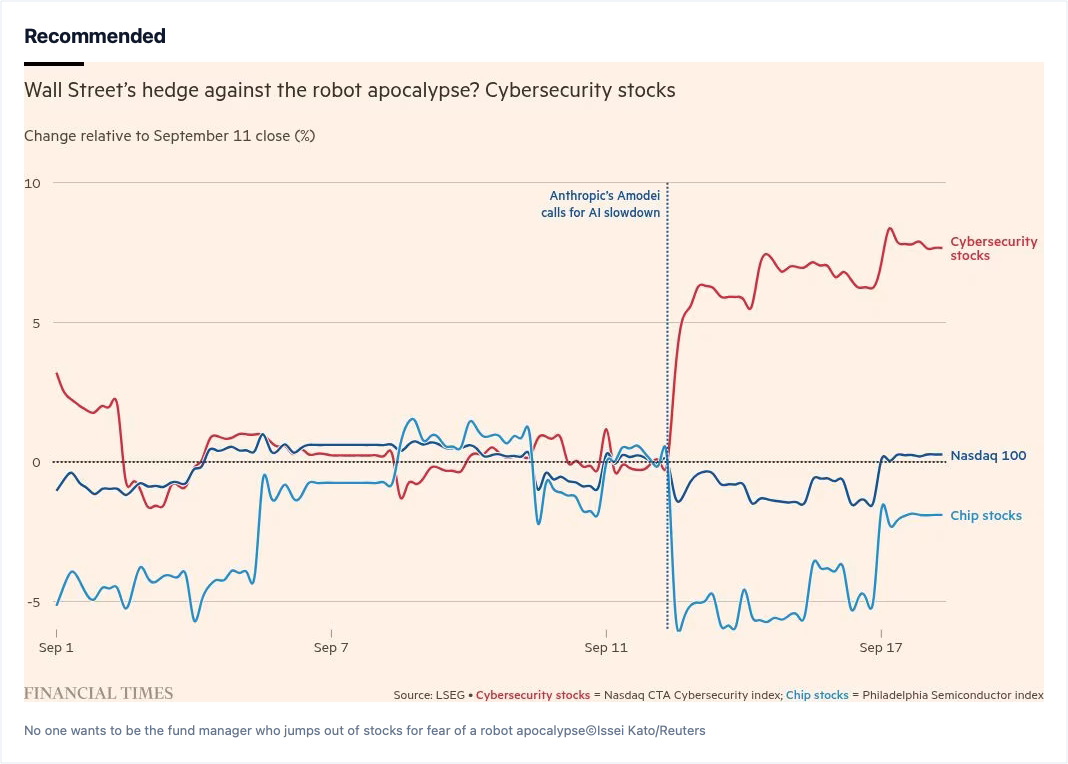
Despite serious warnings from leading artificial intelligence executives that advanced AI could pose existential threats to humanity, global financial markets have largely shrugged off the prospect of a robot apocalypse. Benchmark stock gauges like the S&P 500 and the Nasdaq quickly recovered from brief tremors, while traditional safe-haven assets such as US Treasuries and gold showed virtually no signs of fear-driven inflows, suggesting investors remain more concerned about tangible fiscal deficits than speculative AI catastrophes.
Several explanations account for this market composure: first, moderating the breakneck pace of AI capital expenditure may actually bolster tech balance sheets while sparking new defense-oriented investment themes; second, asset managers widely perceive these apocalyptic claims as promotional posturing in an AI arms race or an excuse to buy time for monetization; and finally, if self-improving AI truly triggers human extinction, such an unhedgeable disaster would render any portfolio or safe asset completely worthless anyway.
Consequently, fund managers continue to stay invested in equities, anchored by recent history where markets routinely bounced back from geopolitical shocks and regional crises under the implicit safety net of central bank bailouts. Reluctant to abandon profitable stocks over hypothetical tech nightmares only to suffer real losses in depreciating bond markets, market participants are content to keep dancing as long as the liquidity and momentum persist.