英国的税收总规模以国际标准衡量并不突出,占国内生产总值(GDP)的比重仍低于经合组织(OECD)平均水平,但预计到2030年将攀升至38%的历史高位。真正严重阻碍英国经济的是其充斥着漏洞与扭曲激励的税制结构,导致英国在税收基金会的税收竞争力指数中位列38个OECD国家中的第32位。所得税与国民保险(NI)每年合计筹集5,700亿英镑(约占税收总额的49%),但其边际税率呈现出荒谬的过山车形态:年薪10万英镑的劳动者边际税率陡增至62%(部分原因在于失去数千英镑的免费育儿补贴悬崖效应),至125,140英镑时反而降至47%;有两个孩子的年入6万英镑家庭边际税率高达54%,但在年入8万英镑时降至42%。
更为有害的是各类收入形式之间的严重税负不平等。受雇雇员除缴纳全额国民保险外,雇主还需额外承担15%的缴费,而自雇人士不仅无雇主缴费且享受较低税率,导致普通全职雇员的纳税负担比同等收入的自雇人员高出55%,房东、养老金领取者及合伙人税负更轻。此外,每年创收1,900亿英镑的增值税(VAT)充斥着政客设置的各种豁免漏洞,每年免税优惠给财政部造成近700亿英镑的损失(相当于英国国防预算总额)。这导致英国的增值税收入比率仅为49%,比OECD平均水平低9个百分点,而高收入阶层反而是这些免税政策在绝对金额上的最大受益者。
即便规模较小的税种也对资源配置造成了严重破坏。自1694年开征的印花税每年创收不足250亿英镑,但其住宅最高边际税率高达12%(在OECD中仅次于比利时布鲁塞尔),不仅抑制了房产流动并阻碍人才随高薪岗位迁移;预算责任办公室(OBR)测算显示,印花税税率每降低1个百分点,住宅交易量将增加约6%。与此同时,依据1991年陈旧评估值征收的地方市政税极其累退,导致梅菲尔豪宅的相对税负竟低于哈特尔普尔的两居室公寓。尽管取消印花税并转向按现值征税、统一个人所得税与国民保险费率、全面普及增值税是显而易见的解方,但政府在面对既得利益受损群体的政治阻力时依然缺乏改革魄力。
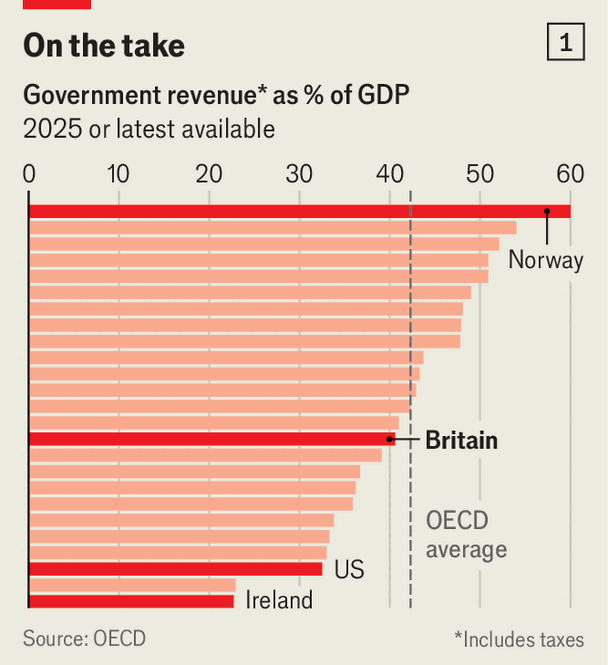
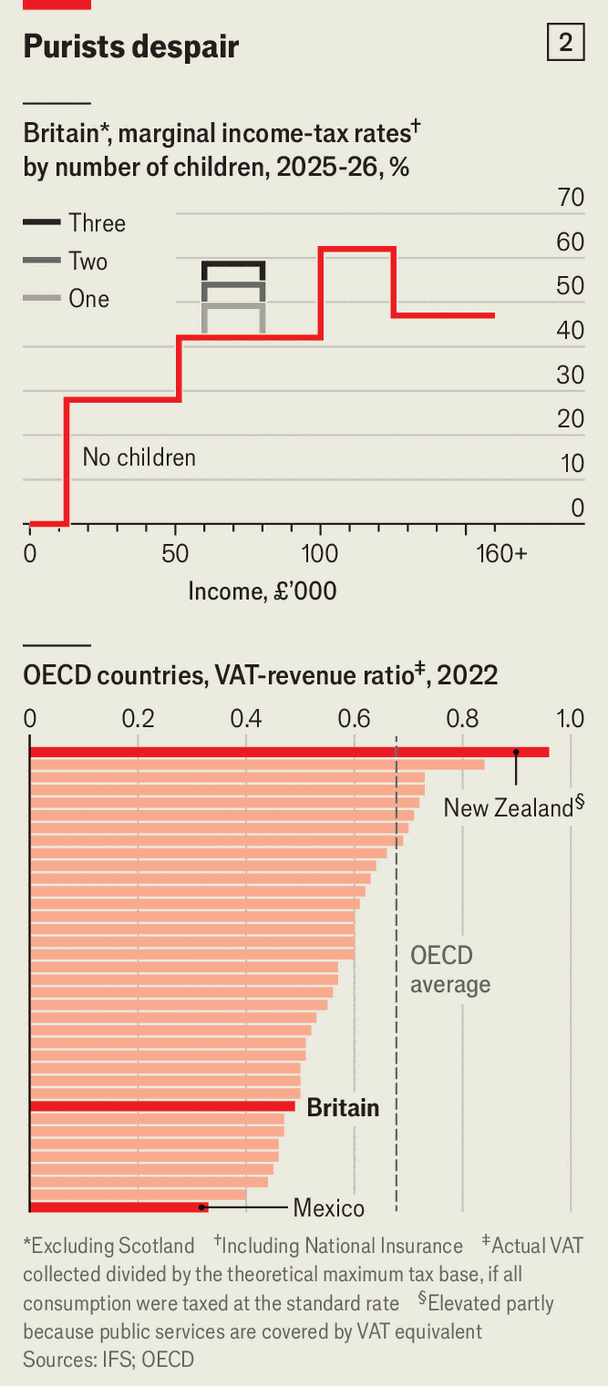
Britain's aggregate tax burden is unremarkable by international standards, remaining below the OECD average despite forecasts indicating it will climb to 38% of GDP by 2030. The defining pathology of the British system is its structural distortion and irrationality, which ranks the country 32nd out of 38 OECD economies in tax competitiveness. Income tax and national insurance, which generate £570bn annually or 49% of total tax receipts, inflict erratic marginal spikes: earnings between £100,000 and £125,140 face a marginal rate of 62%—further compounded by the abrupt loss of child-care subsidies at £100,000—before falling back to 47%, while parents of two earning £60,000 face a 54% rate compared to 42% at £80,000.
Severe inequities across income categories further erode neutrality and distort economic behavior. Regular employees are subject to full payroll deductions alongside a 15% employer contribution, whereas self-employed individuals pay lower rates with no employer levy, resulting in the median employee bearing 55% more tax than an equivalent self-employed contractor. Concurrently, value-added tax (VAT), which generates £190bn per year, is riddled with arbitrary sectoral carve-outs that cost the Treasury nearly £70bn annually—roughly equivalent to the UK defence budget. These extensive reliefs reduce Britain's VAT revenue ratio to just 49%, nine percentage points below the OECD average, and disproportionately benefit wealthier households in absolute consumption terms.
Narrow transaction taxes produce outsized economic damage. Residential stamp duty raises less than £25bn annually but penalizes labor mobility and housing turnover with a top marginal rate of 12%, the highest in the OECD outside Brussels; the Office for Budget Responsibility estimates a one-percentage-point cut would boost transactions by 6%. Meanwhile, annual property taxation through council tax remains tethered to outdated 1991 valuations, creating regressive outcomes where London mansions face lighter proportional charges than northern flats. While rational solutions require equalizing rates across income sources, broadening the VAT base to finance targeted transfers, and transitioning from transaction levies to recurring land-value taxes, political leaders consistently shy away from confronting the concentrated groups of losers these vital reforms would create.
Source: Britain’s taxes are strewn with loopholes and perverse incentives
Subtitle: They need reform
Dateline: Oct 1st 2026\n