2025年全球增速可能约为3%,显著高于春夏的悲观预测;截至目前,2020年代每一年“特氟龙经济”都超过世界银行6月预测。美国在计入移民减少的机械性影响后仅小幅放缓,而全球利率回落以及美国、中国、德国的财政刺激正支撑增长。
这种韧性与保护主义并行:产业政策扩散、供应链碎片化,美国关税达到自20世纪30年代以来最高,但其核心目标——遏制制造业就业下滑——并未实现。调查显示美国制造业自2025年3月起每月收缩,且在过去一年里制造业建设支出与工资单均下降,企业同时抱怨进口零部件成本高企。
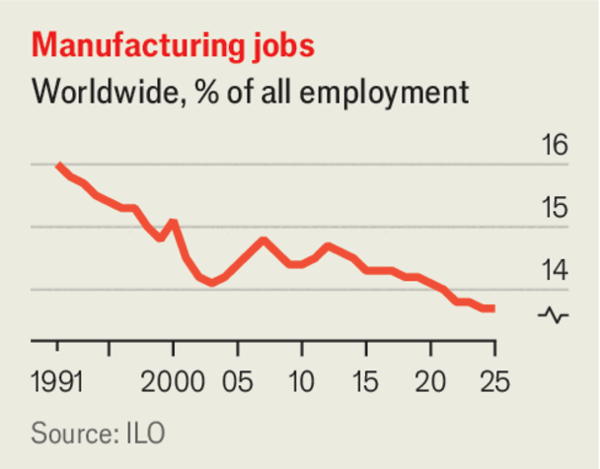
摩根大通测算全球制造业已连续三年落后于总体增长;国际劳工组织认为2019—2025年间除非洲外各大洲制造业岗位占劳动力比重均下降,且2020年代的降速略快于此前三十年,美国工厂岗位空缺也比办公室岗位更快枯竭。中国是例外,其全球制造业增加值占比接近三分之一、几乎是美国的两倍,但国家资金支持造成的产能过剩加剧通缩,而英伟达CEO黄仁勋在1月5日称“机器人领域的ChatGPT时刻已到”的AI驱动自动化或提高产出却使工厂岗位更稀缺。
However, resilience seems tied to protectionism, characterized by fragmented supply chains and high US tariffs. Unfortunately, despite these efforts, US manufacturing has contracted since March 2025, with rising costs impacting construction spending and payrolls.
JPMorgan reports that global manufacturing has lagged behind overall growth for the past three years. The ILO highlights that from 2019 to 2025, manufacturing jobs have dropped as a share of the workforce on every continent except Africa, with the decline in the 2020s being quicker than in the previous three decades. Additionally, US factory openings are diminishing faster than office jobs.
China stands out, contributing nearly one-third of global manufacturing value-added, which is almost double that of the US. However, its state-backed overcapacity contributes to deflation. While AI-driven robotics, which Nvidia praised on January 5, might boost output, they could also lessen the availability of factory jobs.
Source: Do not mistake a resilient global economy for populist success
Subtitle: Protectionism is failing to revive manufacturing
Dateline: 1月 08, 2026 07:16 上午