芯片股近期因市场担忧云服务商过度建设AI基础设施而出现动摇,三星的优异业绩未能引发反弹,而SK海力士的股价也大幅下跌;在此背景下,诸如景顺等基金已大幅减持半导体仓位,以保护客户资金免受过度集中风险的影响。
为了平衡风险,贝莱德等机构正关注能从AI发展中受益的能源和电力基础设施等板块,而摩根资产管理等投资者也对具有强劲商业模式及本土市场、且能避开全球芯片巨头的中国科技企业(如网易、中芯国际和华为)展现出浓厚兴趣。
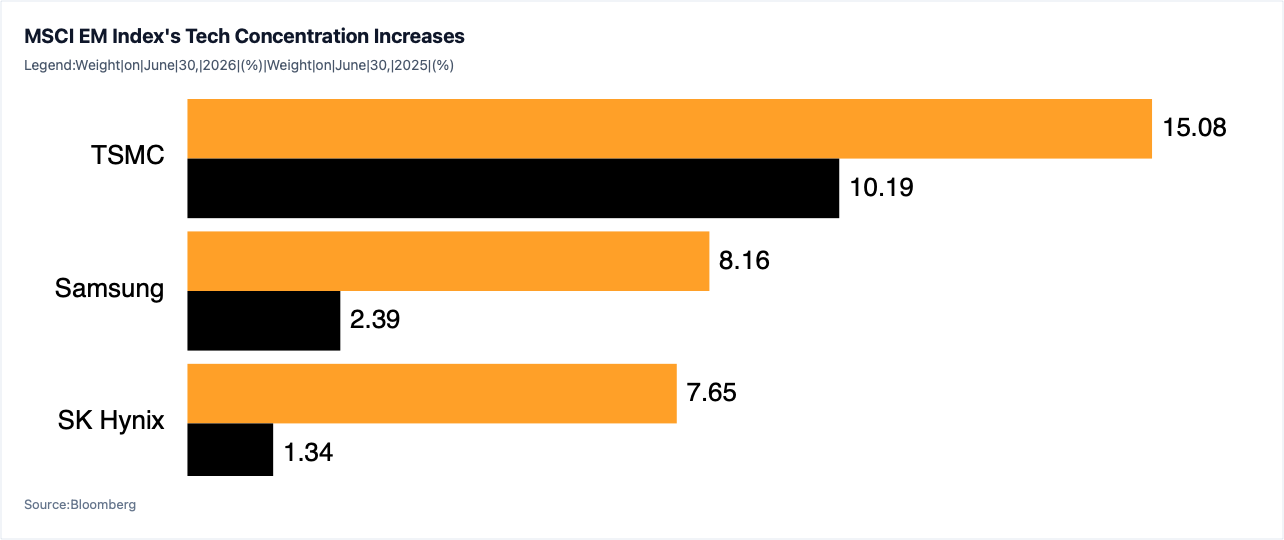
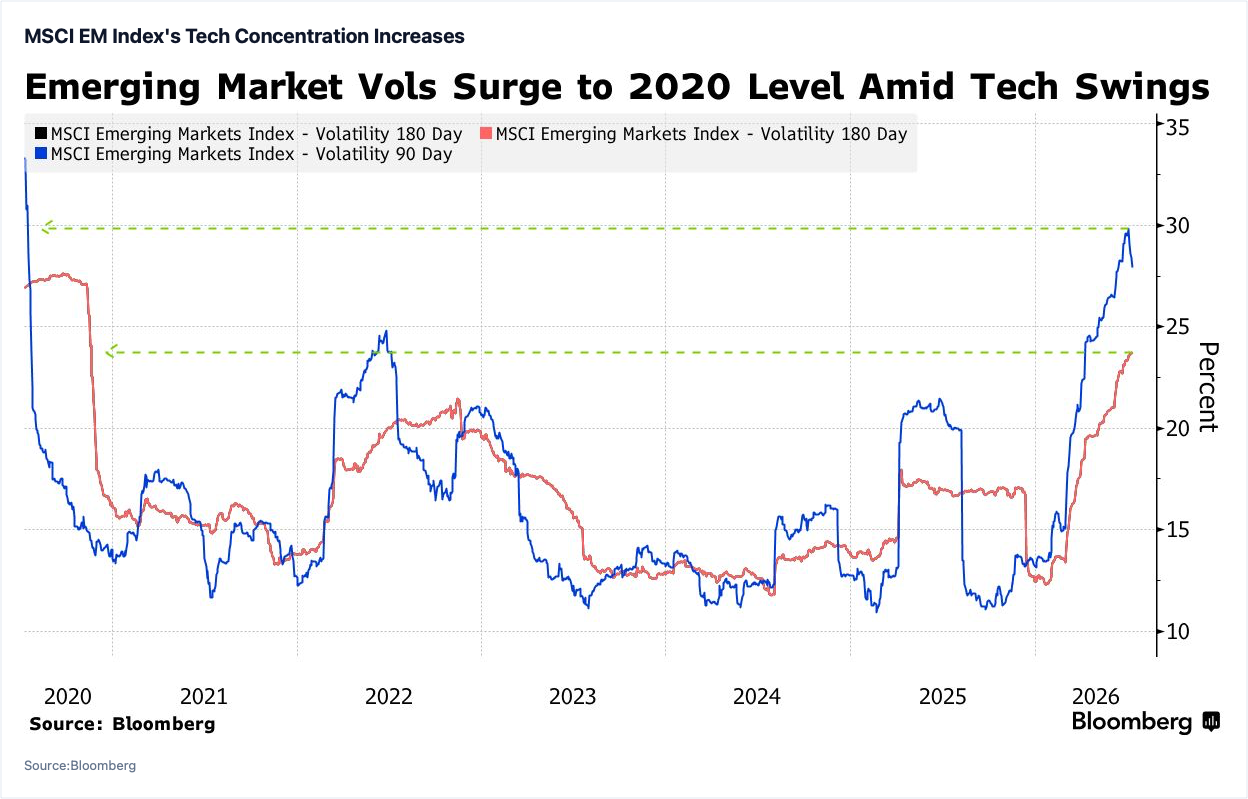
As three technology giants—TSMC, Samsung, and SK Hynix—now make up over 30% of the MSCI Emerging Markets Index, driving its volatility to a six-year high, many investors are rotating away from these AI winners and turning to the broader economy, such as gaming, energy, and even a Vietnamese milk company, to diversify.
Chipmaking stocks have faltered amid concerns that cloud providers have overbuilt AI infrastructure, with Samsung's blowout earnings failing to spark a rally and SK Hynix shares plunging; against this backdrop, funds like Invesco have significantly cut their semiconductor exposures to protect client capital from over-concentration risks.
To balance risks, institutions like BlackRock are focusing on sectors like energy and power infrastructure that benefit from AI developments, while investors like JPMorgan AM are showing strong interest in Chinese tech firms like NetEase, SMIC, and Huawei, which offer robust business models and domestic market exposure away from global chip leaders.