目前全美支票帐户的平均利率仅约0.1%,而AI助理能迅速将资金调动至收益率在3.3%至5.0%之间的帐户,例如SoFi等金融科技公司所提供的4.5%高利存款。Meta近期推出的AI助理Muse迅速攻占应用程式排行榜,更加剧了市场对AI自动化管理现金流的担忧。
美国银行分析师指出,代理型AI与传统聊天机器人的不同之处在于,它不仅能指出利率偏低,还能主动识别过剩流动性并执行转帐,从而彻底打破维持低成本存款的「客户惯性」。受此担忧冲击,包含摩根大通与富国银行在内的主要银行股价应声下跌。
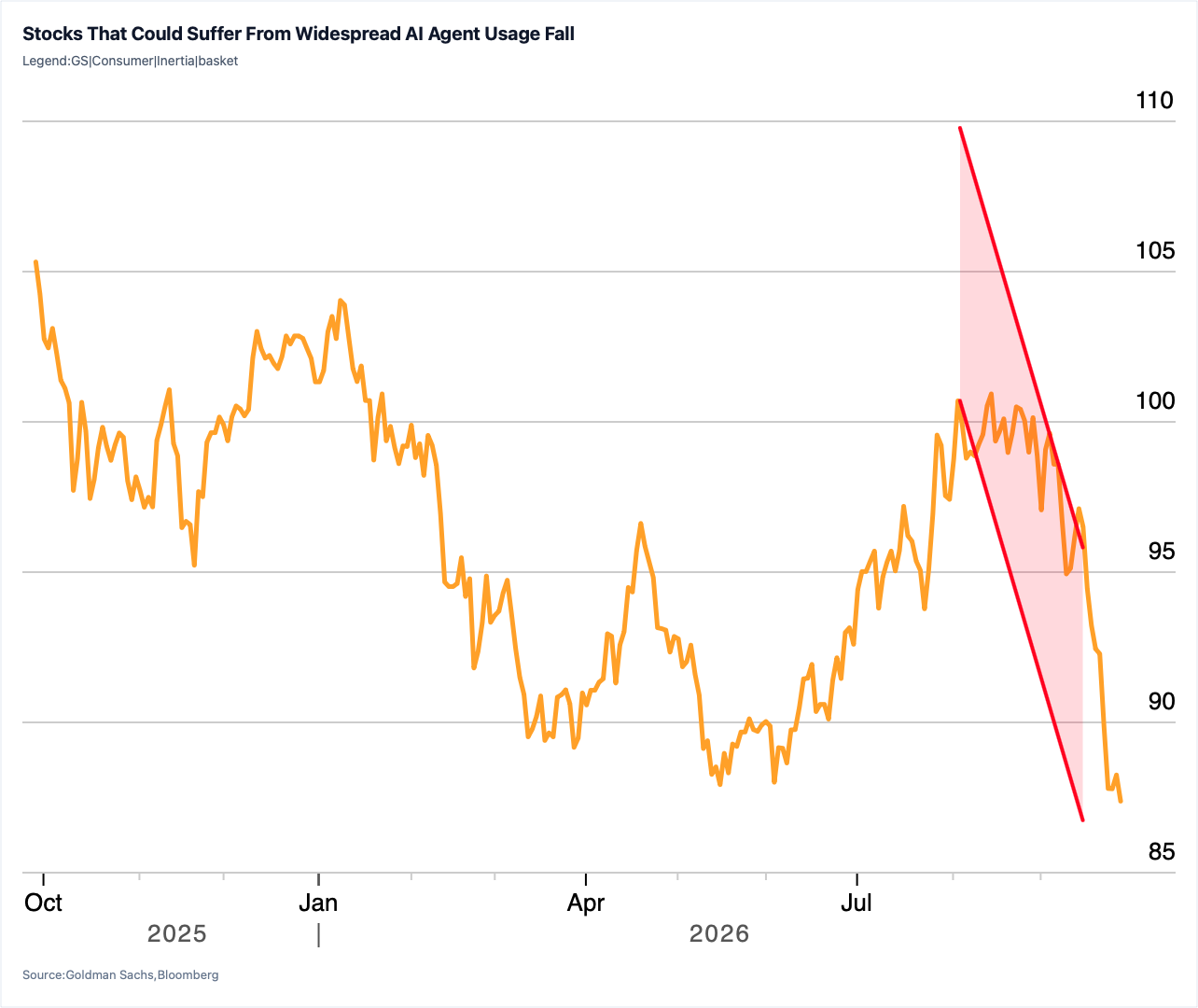
Torsten Slok, chief economist at Apollo Global Management Inc., warned that artificial intelligence assistants could pose a significant risk to the financial system if consumers increasingly rely on them to transfer cash into higher-yielding accounts. He cautioned that if households deploy AI agents to optimize their cash returns, banks could lose substantial low-cost deposits essential for lending, potentially triggering an agentic bank run.
While the national average interest rate on checking accounts sits at just 0.1%, AI assistants can readily reallocate funds into accounts yielding between 3.3% and 5.0%, such as those offered by fintech companies like SoFi Technologies Inc. at 4.5%. The rapid adoption of Meta Platforms Inc.'s newly released Muse assistant has intensified industry concerns over automated cash optimization.
A Bank of America analyst emphasized that unlike basic chatbots, agentic AI can identify excess liquidity, compare yields, and take direct action, thereby eroding the consumer inertia that has long sustained low-cost bank deposits. Triggered by these disruption fears, major bank stocks, including JPMorgan Chase & Co. and Wells Fargo & Co., experienced notable declines.