越南河内一名大学职员一家四口挤在16.5平方公尺的小房间里,估计还要再存10年才买得起房;胡志明市银行员工则预计要存20年。数百万中产阶级既买不起商品房,又多因收入卡在门槛上下而拿不到社会住宅。根据城市土地研究机构统计,河内与胡志明市的房价/收入比与租金占所得比,都高于新加坡、东京与首尔,显示负担压力特别沉重。
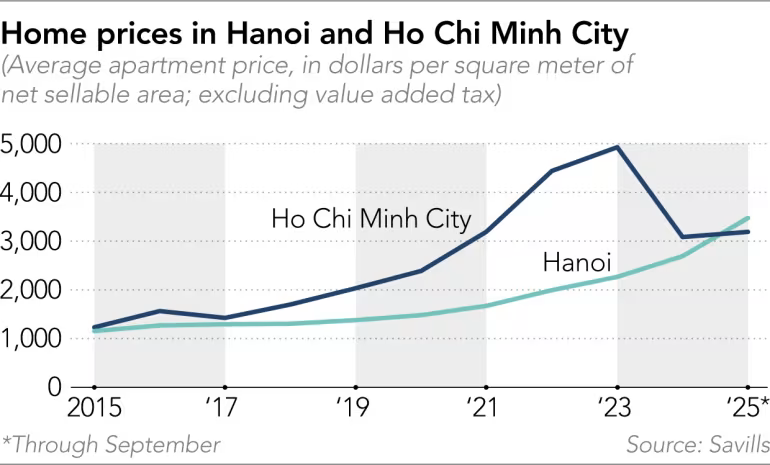
房价飙升加剧了这种压力:2024年第三季,河内新建住宅每平方公尺均价年增约60%,胡志明市约65%。开发商却把91%的新供给都集中在高端与豪宅产品,有专案开价每平方公尺12.5万越盾(约4,737美元),还主打豪华水景等噱头。总理也质疑每平方公尺动辄7,000万到1亿越盾的单价到底谁买得起,房仲公会则警告,价格严重脱离收入基本面,已带有泡沫风险。
低银行存款利率与宽松货币政策鼓励资金涌向房地产,投机客与富裕投资人利用高价豪宅当作抵押品套取更大贷款,进一步推升价格。政府宣布拨出1.97亿美元成立国家住房基金,提高社会住宅申请所得上限至每月2,000万越盾,并计划2030年前提供100万户、要求新商业住宅至少20%为可负担单位,企业如Vingroup也承诺兴建50万户。虽然预计到2035年将完工300公里地铁、疏导外围较便宜住宅区的通勤,许多夹在商品房与社会住宅资格之间的家庭仍感到前景渺茫。
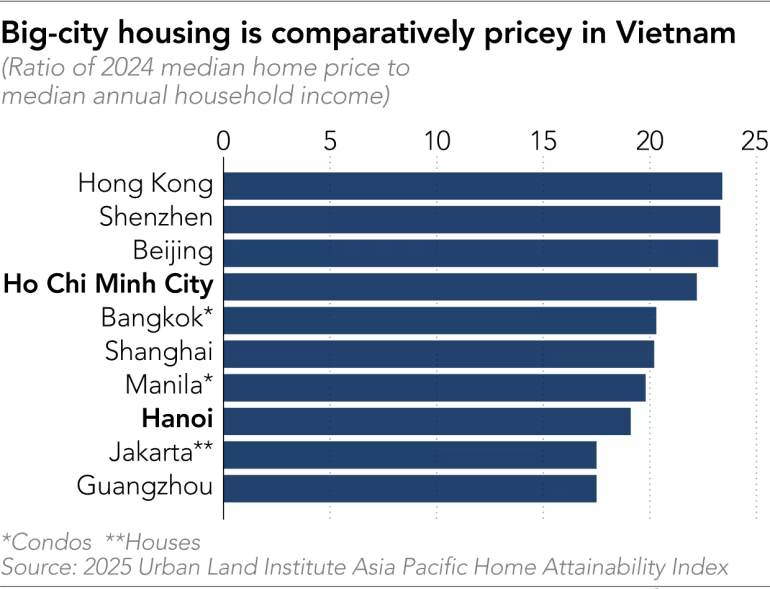
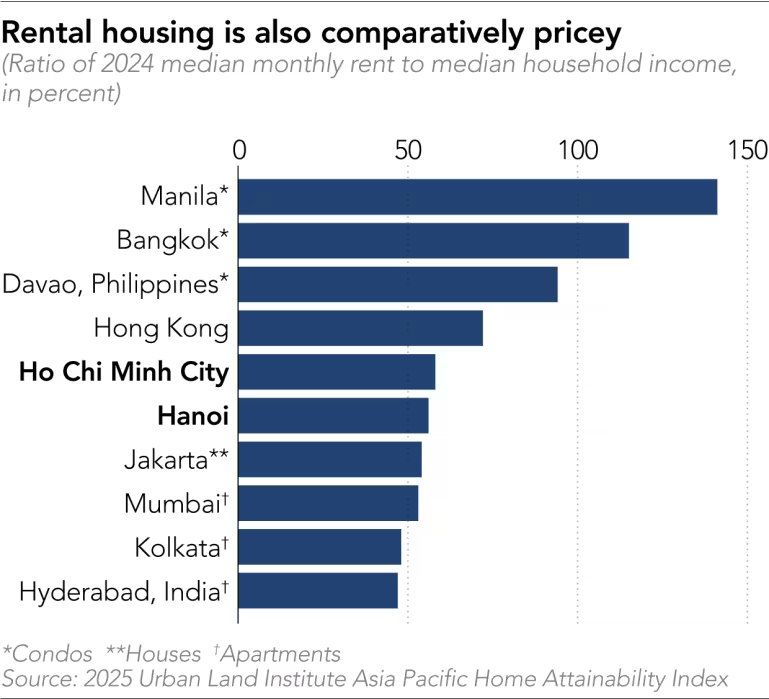
A university worker in Hanoi shares a 16.5‑square‑meter room with her family and expects to save another 10 years to buy a home, while a Ho Chi Minh City banker estimates 20 years of saving. Millions of middle‑class residents are squeezed out of both commercial housing and social housing. Urban Land Institute data show that price‑to‑income and rent‑to‑income ratios in Hanoi and Ho Chi Minh City exceed those in Singapore, Tokyo, and Seoul, signaling exceptionally high housing cost burdens.
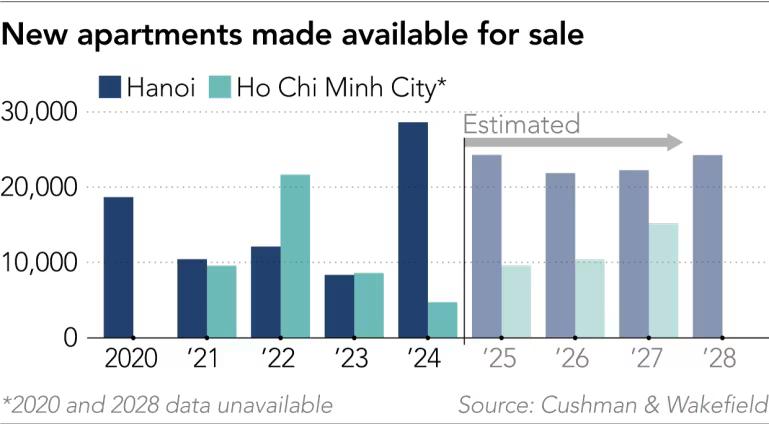
Prices are surging: in the July–September quarter of 2024, average new‑home prices per square meter rose about 60% year on year in Hanoi and 65% in Ho Chi Minh City. Developers directed 91% of new supply into high‑end and luxury units, including projects marketed at 125,000 dong (about $4,737) per square meter with lavish amenities. The prime minister questions who can afford apartments priced at 70–100 million dong per square meter, while realtors warn that prices have decoupled from incomes and show bubble‑like characteristics.
Low bank deposit rates and loose monetary policy push more money into property, as speculators and wealthy investors use marked‑up luxury units as collateral for larger loans, further inflating prices. The government has announced a $197 million National Housing Fund, raised the social‑housing income cap from 15 million to 20 million dong per month, and targets 1 million new units by 2030, with Vingroup pledging 500,000 and a proposed 20% affordable quota in new projects. Despite plans for 300 kilometers of metro lines by 2035 to connect cheaper suburbs, many households caught between commercial and social housing still see little realistic path to ownership.